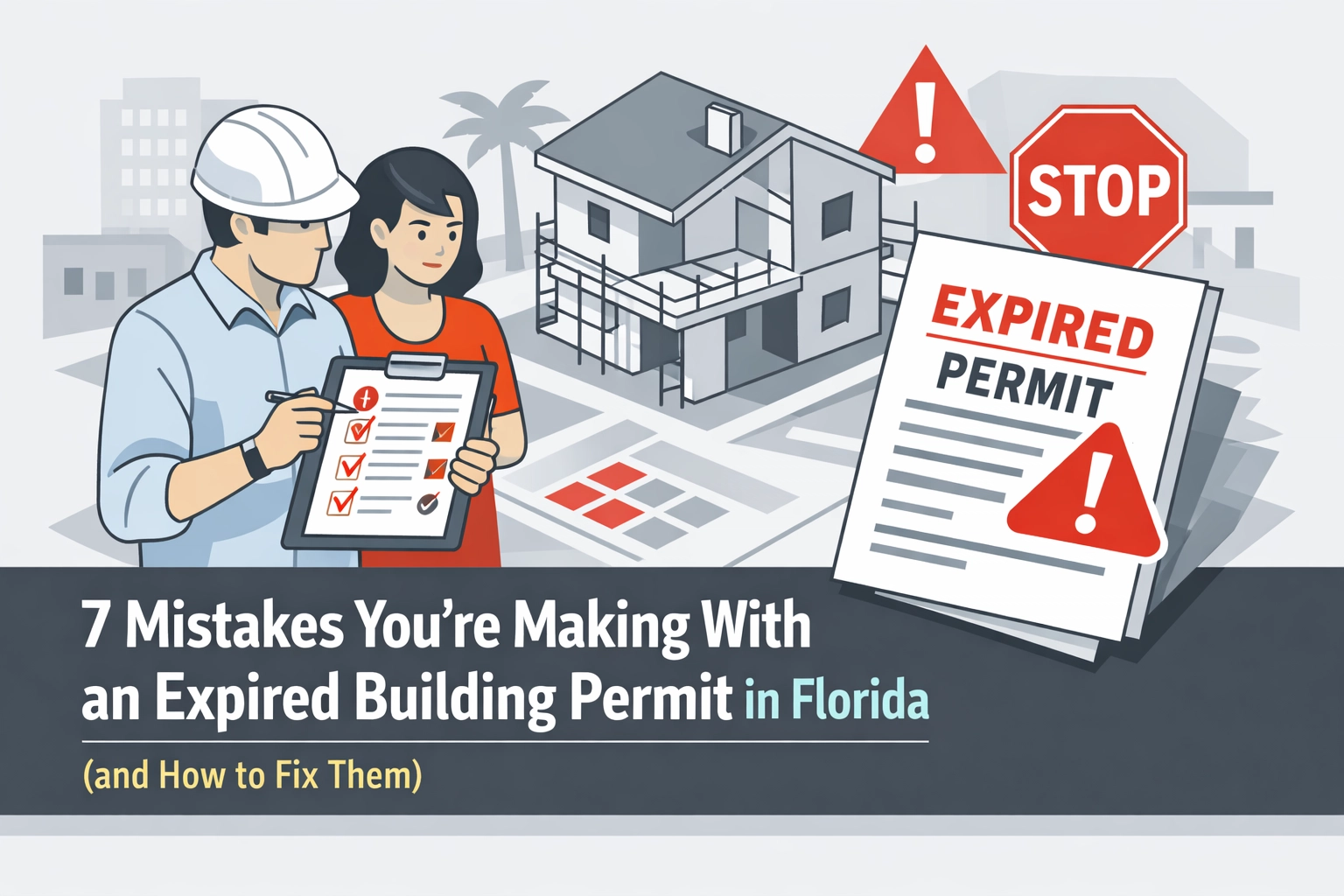
In the high-stakes world of Florida real estate and construction, an expired building permit florida is more than just a minor administrative oversight: it is a ticking financial time bomb that can derail property sales, trigger massive fines, and even lead to legal action. Whether you are a homeowner in Miami-Dade or a commercial developer in Orlando, navigating the complexities of the building department is a mandatory part of property ownership.
Ignoring an expired permit doesn't make it go away; it simply allows the problem to compound. From the implementation of the Florida Building Code 2025 to the aggressive enforcement seen in counties like Hillsborough and Palm Beach, the state is becoming stricter regarding permit compliance. At Violation Clinic, we see property owners make the same avoidable errors every day.
Here are the seven most common mistakes people make with expired permits in Florida and, more importantly, the strategic steps you need to take to fix them.
1. Continuing Work After the Permit Expires
The single most dangerous mistake a property owner or contractor can make is continuing construction after a permit has lapsed. In Florida, a building permit generally expires if work is not commenced within six months of issuance, or if work is suspended or abandoned for a period of 180 days.
If a building inspector notices activity on a site with an inactive permit, they will issue a stop work order florida. This effectively freezes your project in its tracks. Even worse, if the work progresses significantly without the required stage inspections, the city may declare the property a red tagged building. This means you might be forced to tear out finished drywall or flooring just so an inspector can see the electrical or plumbing work that should have been checked months ago.
How to fix it: Stop all physical work immediately. You must contact your local building department to apply for a permit extension or a "re-permit" before another hammer hits a nail.
2. Assuming Your Contractor Is Handling It
Many property owners operate under the "out of sight, out of mind" philosophy, believing that their licensed contractor is managing the permit lifecycle. While the contractor is responsible for pulling the permit, Florida law holds the property owner: not the contractor: ultimately liable for any code violations.
If a contractor walks off the job or loses their license, the expired building permit florida stays attached to your property’s title. We often see owners shocked to find out they have a red tagged building months after they thought the project was finished, simply because the contractor never called for a final inspection.
How to fix it: Always verify the status of your permits independently. You can learn how to find violations on a property by searching the public records portal of your specific municipality, such as the Broward County or Orange County building department websites.
3. Ignoring the "180-Day Rule"
In the Florida building world, 180 days is the magic number. Under the Florida Building Code, a permit is considered abandoned if there is no "validated" inspection within a 180-day window. Many owners think that as long as they are working, they are safe. However, the building department only cares about inspections.
If you go six months without a passed inspection, your permit will automatically expire in the system. Once it expires, it can trigger a notice of violation or a compliance fee.
How to fix it: Create an inspection calendar. Even if the project is moving slowly, schedule partial inspections to keep the permit "active" in the city's system. If you’ve already passed the 180-day mark, you’ll need to work with a specialist at Violation Clinic to navigate the re-activation process without triggering excessive penalties.

4. Underestimating the Financial Penalties
Many people ask, "What is the penalty for not pulling a permit in florida or letting one expire?" The answer is: expensive. When a permit expires, it doesn't just sit there; it often begins to accrue daily fines.
Once the building department sends a formal notice, you may be charged what is known as a compliance fee. This is an administrative cost added to the standard permit fees to cover the city’s time in processing your violation. In cities like Boca Raton or Delray Beach, these fees and fines can quickly reach five figures if left unaddressed.
How to fix it: Address the expiration before it turns into a code enforcement case. If you already have an unsafe structure notice or a lien on your property, you may need to petition for a fine reduction: a process that is much more successful when handled by professionals who understand local ordinances.
5. Waiting Until You Try to Sell the Property
This is perhaps the most common scenario we encounter. A homeowner decides to sell their house in Pinecrest or Wellington, only for the title company to find an open permit from a kitchen remodel done five years ago.
An open or expired permit acts as a cloud on the title. Most buyers cannot get a mortgage on a property with an active building violation, and title insurance companies will often refuse to issue a policy until the permit is closed. This results in "emergency" remediation that costs double what it should because of the tight closing deadline.
How to fix it: Conduct a permit search before you list your property. If you find an expired permit, you can often utilize Florida Statute 553.79(15), which allows for the closure of old permits if the work was substantially completed and poses no safety hazard.

6. Not Staying Current With the Florida Building Code 2025
The building code is not static; it is updated every three years. If your permit expires and you wait too long to renew it, you may be forced to follow the Florida Building Code 2025 standards rather than the code that was in place when you started.
This can be devastating. For instance, if energy efficiency requirements or wind-load ratings have increased, you might be required to replace brand-new windows or insulation just to satisfy the new code's requirements for a permit renewal.
How to fix it: The longer you wait, the higher the risk that the "goalposts" will move. If your permit is expired, renew it as soon as possible to try and "grandfather" in the previous code requirements, though this is subject to the building official's discretion.
7. Ignoring Code Enforcement Notices
What happens if you ignore code enforcement? In Florida, the answer is usually a combination of property liens and a "Special Master" hearing. If you ignore an unsafe structure notice or a permit expiration letter, the city can eventually move to foreclose on the property to satisfy the accumulated fines.
Furthermore, once a case moves to the Code Enforcement Board, the costs skyrocket. You are no longer just paying for a permit; you are paying for legal fees, administrative overhead, and daily penalties that do not stop until the final inspection is signed off.
How to fix it: Never ignore a yellow or orange notice taped to your door. Even if you don't have the money to fix the construction issue right now, showing up to the hearings or communicating with the code enforcement officer can often stay the fines while you work on a compliance plan.

How to Properly Resolve an Expired Permit in Florida
Fixing an expired permit requires a systematic approach. You cannot simply "renew" it online in most jurisdictions. Here is the professional path to compliance:
- Verification: Perform a records search to see exactly when the permit expired and if there are any outstanding compliance fees.
- Assessment: Determine if the work performed matches the original plans. If you changed the design mid-construction, you will likely need "As-Built" plans signed and sealed by a Florida-licensed engineer.
- The Re-Permit Process: You will need to apply for a "Change of Contractor" (if the original contractor is gone) and a "Re-permit." This usually involves paying the permit fees again, sometimes at a 2x or 3x rate as a penalty.
- Inspection Recovery: Schedule a "re-certification" or a series of inspections to catch up on what was missed. In areas like Lee County or Collier County, inspectors may be more or less stringent depending on the age of the permit.
- Final Closure: Once the final inspection is passed, ensure you receive a Certificate of Completion (CC) or Certificate of Occupancy (CO). This is your "get out of jail free" card.
Don't Navigate the Chaos Alone
Dealing with the building department is frustrating, time-consuming, and expensive if handled incorrectly. At Violation Clinic, we specialize in taking the burden off property owners. Whether you are dealing with a stop work order florida, a red tagged building, or simply need help with recertification, our team knows the ins and outs of Florida’s complex regulatory landscape.
Resolving code violations with a compliance expert can save you thousands in unnecessary fines and prevent the stress of a stalled real estate transaction. Violation Clinic helps Florida property owners and contractors navigate remediation and inspections with ease.
Don't wait until the fines accumulate: contact us today to clear your property's title and get back to business.
Disclaimer: Code enforcement and compliance requirements may vary by jurisdiction. Always verify with local authorities or consult a licensed Florida compliance specialist.