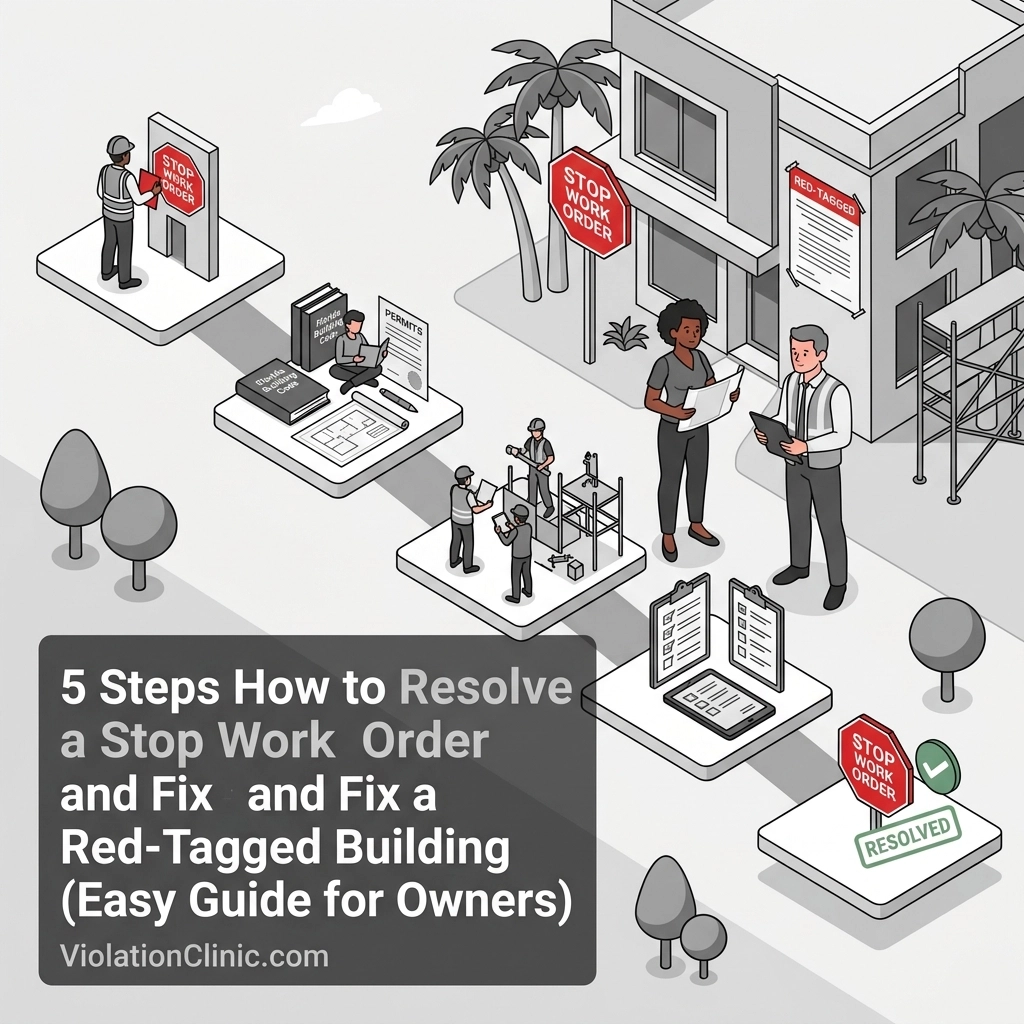
Finding a bright orange sticker or a "Red Tag" on your property can be a nightmare: especially when you have a timeline to meet and a budget to protect. Whether you are a homeowner, a seasoned contractor, or a real estate professional, a stop work order florida notice is more than just a suggestion; it’s a legal mandate to cease all activity on your site immediately.
Ignoring these notices doesn't just stall your progress; it triggers a cascade of legal and financial headaches that can jeopardize your entire investment. Under the florida building code 2025, the regulations are stricter than ever to ensure the safety of residents against structural failures and environmental hazards. In this guide, we will walk you through the essential steps to clear your record, avoid escalating fines, and get your project back on track with the help of experts who understand the nuances of Florida compliance.
The High Stakes of Non-Compliance in Florida
Before we dive into the "how-to," it is vital to understand the "why." Florida’s building departments: whether you are dealing with Miami-Dade building code violations or Broward building code violations: do not take unpermitted work lightly.
The penalty for not pulling a permit in florida often includes double or triple permit fees, plus daily fines that can range from $100 to $500 per day. If you are wondering what happens if you ignore code enforcement, the answer is grim: the city can place a lien on your property, prevent you from selling or refinancing, and in extreme cases, proceed with a foreclosure or an unsafe structure notice that leads to demolition.
A red tagged building is essentially a property that has been deemed potentially hazardous or in direct violation of safety codes. This designation stops all utility services and prohibits occupancy, effectively freezing your asset. To protect your investment, you must act with precision and speed.
Step 1: Review the Basis of the Order Immediately
The moment you receive a notice, you need to conduct a thorough forensic review of the document. A stop work order florida is typically issued for one of three reasons: work being performed without a permit, work deviating from approved plans, or work creating an immediate safety hazard.
Determine the exact scope:
- Does the order apply to the entire job site or just a specific trade (e.g., electrical or plumbing)?
- Which specific section of the florida building code 2025 is cited as the violation?
- Is the violation related to an expired building permit florida that was never properly closed out?
If you aren't sure where to start, you must learn how to find violations on a property by accessing the local municipal portal. Most Florida counties allow you to search by property address or folio number to see active cases, lien statuses, and inspector notes.
Step 2: Hire a Licensed Florida General Contractor
Removing a red tag is not a DIY project. In most Florida jurisdictions, the building department will only communicate or accept remediation plans from a state-licensed professional. You need a contractor who understands how to navigate the bureaucracy of local enforcement.
A licensed General Contractor (GC) is required to:
- Pull the necessary "remedial" permits to address the work already performed.
- Assume responsibility for the site safety and code compliance.
- Liaise with the building inspector to negotiate a path forward.

Hiring the right team: like the experts at Violation Clinic: can be the difference between a 30-day resolution and a year-long legal battle. Professional remediation specialists know how to handle the "after-the-fact" permitting process, which is significantly more complex than standard permitting.
Step 3: Request Inspector Comments and Document Everything
Once you have your professional team in place, you must "demand comments." By law, Florida municipalities must provide the specific reasons for a violation upon request. These comments serve as your roadmap for correction.
Documentation is your best defense:
- Photograph the site: Take high-resolution photos of the "as-is" condition before any corrective work begins.
- Gather old records: Find any previous permits, site plans, or surveys. If you are dealing with an expired building permit florida, you need the original permit number to see how far the previous inspections progressed.
- Create a paper trail: Keep a log of every conversation with code enforcement officers.
Understanding the inspector’s specific concerns allows your contractor to address the "unsafe" elements first, which can often lead to a partial lifting of the stop work order, allowing some work to continue while the larger issues are resolved.
Step 4: Execute the Corrective Work (Remediation)
This is the most critical phase. Your contractor and design professionals (architects or engineers) must create a plan to bring the red tagged building into compliance with current standards.
In some cases, this might involve "destructive testing." If you covered up electrical or plumbing work without an inspection, the inspector may require you to remove drywall so they can see the underlying work. This is why the penalty for not pulling a permit in florida is so high: the cost of "undoing" and "redoing" work usually exceeds the original project cost.

If the violation involves structural integrity, you may be required to undergo a building recertification process to prove the building is safe for continued use. This is common for older properties in South Florida that have been hit with an unsafe structure notice.
Step 5: Request Re-inspection and Settle Compliance Fees
Once the physical work is corrected, you aren't finished until the paperwork is closed. You must schedule a final inspection specifically to clear the stop work order.
Settling the Financials:
After the inspector signs off on the work, you will likely be hit with a final bill. You might ask, what is a compliance fee?
- Compliance Fee: A fee charged by the building department to cover the administrative costs of monitoring your violation case.
- Fine Mitigation: In many Florida counties, if you show a "good faith effort" to resolve the issue quickly, your contractor can help you petition the Special Master or Code Enforcement Board to reduce your accumulated daily fines.
Don't celebrate until you have a "Letter of Completion" or a "Certificate of Occupancy" in your hand. Without this, the violation remains on the property record, which will haunt you during any future sale or inspection.
Common Pitfalls: Why Owners Get Stuck
Many property owners make the mistake of thinking they can "wait out" code enforcement. This is a dangerous strategy. Florida law gives building departments significant power to protect the public.
- Ignoring the Unsafe Structure Notice: If you receive this, the clock is ticking. You often have only 30 to 60 days to pull a permit or face a "demolition order."
- Hiring Unlicensed "Handymen": Using unlicensed labor to fix a code violation is a surefire way to get a second, more severe stop work order florida. The building department will verify the license of every contractor involved in the remediation.
- Failing to Check for Liens: Even if the work is "fixed," if the compliance fee or fines aren't paid, a lien remains. This can prevent you from pulling future permits for unrelated projects, like a roof replacement or AC upgrade.
How Violation Clinic Can Help
Navigating the labyrinth of Florida building codes: from Orange County to Hillsborough: requires specialized knowledge. At Violation Clinic, we specialize in building code compliance and construction services designed to take the stress off your shoulders.
We don't just tell you what's wrong; we fix it. Our team manages the entire process:
- Identifying all active violations on your property.
- Coordinating with engineers and architects for remedial plans.
- Pulling the necessary permits to satisfy the florida building code 2025.
- Representing you at code enforcement hearings to mitigate fines.
Resolving code violations with a compliance expert can save time, fines, and costly corrections. Don't let a red tag turn your property into a liability.
FAQ: Resolving Florida Building Violations
Q: How long does it take to remove a stop work order?
A: Typically, it takes between 60 and 120 days. This includes the time to hire professionals, draft plans, obtain a remedial permit, perform the work, and pass final inspections.
Q: Can I sell a house with a stop work order?
A: You can, but it is extremely difficult. Most buyers cannot obtain financing on a property with an active violation or a red tagged building. You will usually have to credit the buyer significantly or resolve the issue before closing.
Q: What is the most common reason for a stop work order in Florida?
A: Working without a permit is number one. This is followed closely by having an expired building permit florida where the owner thought the job was done, but the final inspection was never called in or passed.
Final Takeaway:
A stop work order florida is a serious legal hurdle, but it is manageable with a structured approach. By identifying the violation early, hiring the right licensed professionals, and following the remediation steps outlined above, you can protect your property value and ensure your building is safe and compliant.
Violation Clinic helps Florida property owners and contractors navigate remediation and inspections with ease. If you're facing a red tag or an unsafe structure notice, contact us today to start your resolution process.
Disclaimer: Code enforcement and compliance requirements may vary by jurisdiction. Always verify with local authorities or consult a licensed Florida compliance specialist.