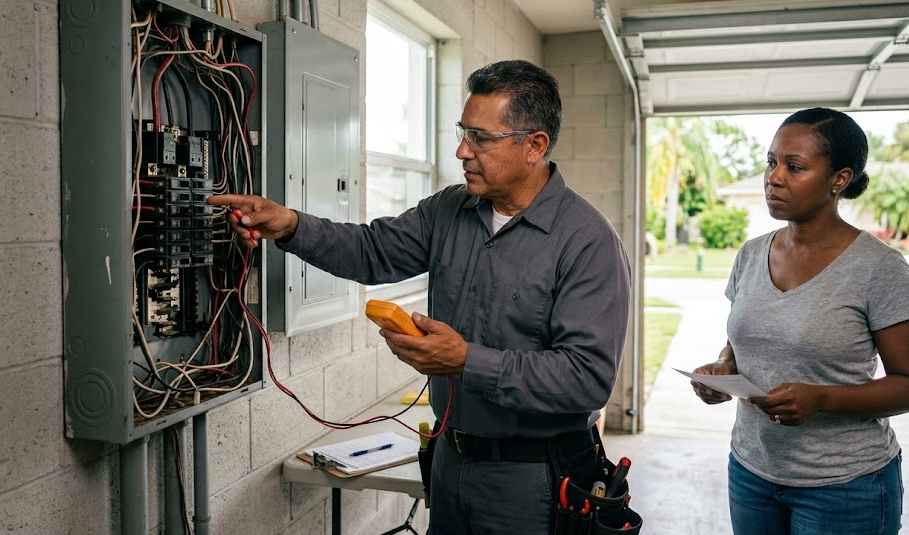
Discovering that your home or commercial property has unpermitted electrical work can be a stressful realization. Whether it was a “handyman special” from a previous owner or a DIY project that grew beyond its original scope, unpermitted work is more than just a paperwork headache- it is a significant safety risk and a magnet for costly municipal fines.
In Florida, building codes are among the strictest in the nation due to high humidity, salt air, and hurricane risks. When the electrical system doesn’t meet these standards, you aren’t just looking at a code violation; you’re looking at a potential fire hazard. This guide explores how to navigate these violations, why they happen, and how to protect your investment.
Why Property Owners Face Code Violations and Fines
Code enforcement officers in Florida are tasked with ensuring that every structure remains safe for its occupants and the surrounding community. While electrical issues are common, they often go hand-in-hand with other types of zoning violations and compliance oversights.
1. Unpermitted Construction and Electrical Mods
The most frequent cause for a “Notice of Violation” is work performed without the required permits. This includes adding new outlets, upgrading a breaker panel, or running electricity to a detached shed or garage. Under the Florida Building Code, most electrical work requires a licensed professional and a permit to ensure the load calculations and grounding are handled correctly.
2. Neglected Property Maintenance
Electrical systems age. Corroded conduits, frayed wiring, or outdated “knob and tube” systems in older Florida homes can be flagged during a routine inspection. If a property appears neglected like the overgrown vegetation interfering with power lines or exposed wiring, the local code enforcement will intervene to prevent a public hazard.
3. Zoning Violations
Sometimes the electrical work itself isn’t the only problem; it’s the use of the space. Converting a garage into a living suite (ADU) without proper zoning approval often leads to electrical violations because the existing system wasn’t designed to handle the additional appliances and HVAC load.
4. Missed Inspections and Building Recertification
In Florida, specifically in counties like Miami-Dade and Broward, certain buildings must undergo Building Recertification. Missing these deadlines is a guaranteed way to incur massive fines. These inspections are legal requirements designed to catch structural and electrical decay before they lead to catastrophes.
The High Cost of Non-Compliance
Ignoring a violation won’t make it go away. In fact, Florida municipalities are known for their escalating fee structures. For instance, failing to comply with building recertification requirements often starts with a fine of $510. If the owner continues to ignore the order, those fines can escalate to $10,000 or more, eventually leading to a lien against the property.
Beyond the financial penalty, unpermitted electrical work can invalidate your homeowner’s insurance policy. If a fire starts due to a circuit that wasn’t permitted or inspected, your carrier may deny the claim entirely.
Actionable Steps to Resolve and Prevent Electrical Violations
If you’ve discovered unpermitted work or received a violation notice, here is how you should proceed to protect your property and your wallet.
1. Obtain “After-the-Fact” Permits
If the work is already done, you must apply for an “after-the-fact” permit. This process typically involves hiring a licensed electrician to inspect the hidden work. They may need to open up walls to show the inspector the wiring, or perform a “static” test to ensure the system is grounded. While the permit fees are often doubled as a penalty, it is the only way to clear the title of your property.
2. Schedule Regular Professional Inspections
Don’t wait for a code enforcement officer to knock on your door. Engaging in proactive inspections can identify “double-tapped” breakers, aluminum wiring, or lack of GFCI protection in kitchens and bathrooms before they become a legal issue.
3. Stay Informed on Florida Building Codes
Florida codes are updated every few years to reflect new safety technologies and weather-resistance standards. Familiarizing yourself with the ICC Digital Codes for Florida can help you understand why certain requirements, like AFCI breakers, are now mandatory in residential bedrooms.
4. Maintain Structural and System Safety
Electrical safety isn’t just about wires; it’s about the environment they live in. Ensure your electrical panels are accessible and not blocked by storage, and that outdoor lighting is properly shielded from the elements. This type of routine maintenance is key to passing any surprise municipal check.
Case Study: The Cost of a “Simple” Kitchen Upgrade
Consider a homeowner in Orlando who decided to modernize their kitchen. They hired a local handyman to install new recessed lighting and a sub-panel for high-end appliances. No permit was pulled.
Two years later, when the homeowner tried to sell the house, the buyer’s inspector flagged the sub-panel. Because there was no record of a permit, the city opened a violation case. The homeowner had to pay:
- $1,200 for an emergency licensed electrician to verify the work.
- $800 in “after-the-fact” permit fees (double the standard rate).
- $2,500 to repair drywall that had to be cut open for the inspector to see the wire gauges used.
By trying to save a few hundred dollars on a permit initially, the owner spent over $4,000 and delayed their home sale by two months. This illustrates the importance of code compliance tips, doing it right the first time is always cheaper.
Florida’s Specific Requirements: Building Recertification
It is worth noting that Florida has unique requirements for older buildings. As buildings reach 25, 30, or 40 years of age (depending on the local jurisdiction), they must undergo a comprehensive electrical and structural evaluation. This includes infrared thermography of electrical panels to detect hotspots that could indicate an impending failure.
If you own a commercial building or a multi-family unit, staying ahead of these dates is critical. You can learn more about these specific requirements via the Violation Clinic’s Building Recertification and Services.
Related Posts
- Can You Fight a Zoning Violation? Yes — Here’s How
- Common Building Code Violations and How to Resolve Them Quickly
- Understanding the Compliance Process From Start to Finish
External Resources for Further Reading:
- Florida Department of Business & Professional Regulation (DBPR)
- NFPA 70: National Electrical Code
- Miami-Dade County Code Enforcement Guidelines
Summary and Conclusion
Dealing with unpermitted electrical work can feel overwhelming, but it is a manageable process when approached professionally. The goal of building codes is not to punish property owners, but to ensure that the infrastructure we live and work in won’t fail us.
At the Violation Clinic, we specialize in helping property owners navigate the violation remediation process smoothly. Whether you need assistance with inspections, violations, or compliance issues, our team is here to help. Don’t wait until it’s too late, take action today to protect your investment and ensure the safety of your property.
For more information or assistance, contact us at (786) 885-2613 or ViolationClinic.com!