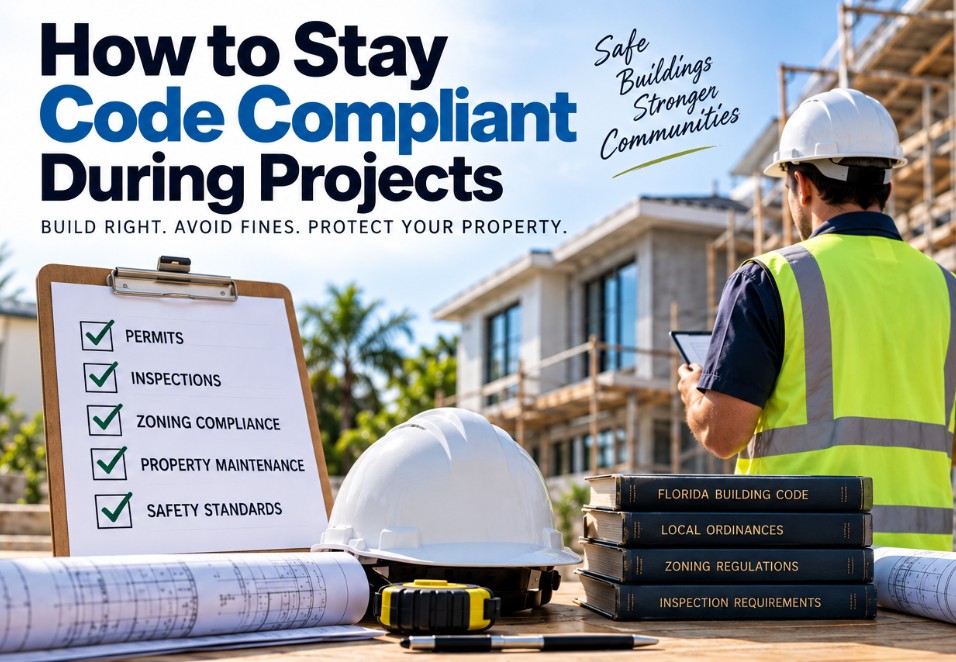
Starting a construction, renovation, or property improvement project in Florida involves more than choosing the right contractor and materials. Property owners also need to understand permits, inspections, zoning requirements, safety standards, and local regulations. Staying compliant from the beginning can prevent costly violations, project delays, fines, and problems when selling or refinancing a property.
The Florida Building Code establishes statewide standards for construction, alteration, repair, and demolition, while local governments retain authority over matters such as zoning, setbacks, land use, and certain local requirements.
Why Do Property Owners Receive Code Violations?
Several issues repeatedly lead to code enforcement action:
Unpermitted construction: Florida law generally requires a permit before constructing, altering, repairing, modifying, or demolishing a building when the work falls within the permitting requirements. Unpermitted additions, renovations, electrical work, plumbing changes, and structural modifications can create serious compliance problems.
Zoning violations: A project may comply with building standards but still violate local zoning rules. Property use, setbacks, lot coverage, parking, and other land use requirements are generally controlled locally.
Neglected property maintenance: Deteriorated exterior elements, damaged structures, unsafe conditions, and other maintenance problems can attract code enforcement attention under applicable local ordinances.
Unsafe conditions: Exposed electrical components, compromised structural elements, blocked exits, or other life safety concerns can result in enforcement action and, depending on the circumstances, an Unsafe Structure Violations case.
Missed inspections: Obtaining a permit is only part of the process. Required inspections must also be completed and properly documented before work can be finalized. Florida law specifically provides for inspections during permitted construction.
Five Ways to Stay Compliant
1. Obtain the Right Permits Before Work Begins
Before starting construction, confirm with the appropriate local building department whether your project requires a permit. Do not assume that work is exempt simply because it appears minor.
If work has already been completed without the required permit, the situation may require additional documentation, inspections, plans, or an after the fact permitting process. Violation Clinic provides resources on legalizing unpermitted construction work.
2. Schedule Required Inspections
Build inspections into your project schedule instead of treating them as an afterthought. Keep copies of inspection results, permit records, plans, approvals, and final documentation.
Florida’s current building code framework includes mandatory inspections for applicable permitted construction, and certain structures can have additional inspection requirements.
3. Maintain the Property
Regularly inspect the roof, exterior walls, drainage, electrical systems, plumbing, mechanical equipment, stairs, railings, doors, windows, and other safety related components.
Good property maintenance also means addressing visible deterioration before it becomes a complaint or enforcement issue.
4. Confirm Structural and System Safety
Construction should not only look complete. It needs to be safe and compliant with applicable requirements. Use appropriately qualified professionals when structural, electrical, mechanical, or other specialized evaluations are necessary.
For properties facing significant compliance concerns, professional inspection and documentation can help identify problems before they become more expensive to correct.
5. Stay Current With Florida and Local Requirements
The Florida Building Commission identifies the Florida Building Code, 8th Edition, 2023, as the current adopted edition while the 2026 code update is being developed.
However, statewide requirements are only part of the picture. Local zoning ordinances, amendments, inspection procedures, and enforcement rules may also apply. Always confirm requirements with the authority having jurisdiction for the property.
Do Not Ignore Mandatory Building Recertification
Some inspections are not simply recommended maintenance. They are legal requirements that apply to qualifying buildings in particular Florida jurisdictions.
Miami Dade County, for example, has mandatory building recertification requirements for qualifying older structures. Local rules have established inspection and reporting requirements, and Miami Dade records show enforcement provisions involving substantial penalties for continued noncompliance.
Violation Clinic reports that in applicable Miami Dade and Broward County situations, initial administrative fines can start at $510 and continued noncompliance can escalate to $10,000 or more depending on the applicable local enforcement rules. These figures should not be treated as a universal statewide Florida penalty.
If your property is approaching a required milestone or you have already received a notice, review Violation Clinic’s Building Recertification Services to understand the next steps.
Practical Examples of Compliance Problems
Example 1: Unpermitted renovation
A property owner begins interior remodeling without confirming permit requirements. A code officer later identifies the work and a Stop Work Order is issued. The owner may need plans, professional evaluations, permits, and inspections before the project can continue. This illustrates why verifying requirements before construction is usually less expensive than correcting unpermitted work afterward.
Example 2: Zoning issue
An owner constructs an addition without confirming the property’s setback requirements. Even if the construction itself meets applicable building standards, the structure may still violate local zoning requirements. Checking zoning restrictions before construction could prevent an expensive redesign or removal.
Example 3: Missed recertification
An owner overlooks a required building recertification deadline. Once enforcement begins, the owner may face additional costs, deadlines, inspections, and potential penalties. Starting the process early provides more time to identify and correct deficiencies.
These are illustrative examples, not documented Violation Clinic project results.
What If You Already Have a Violation?
Do not ignore a notice. Start by identifying the exact violation, applicable code section, compliance deadline, and authority responsible for enforcement.
Depending on the circumstances, professional assistance may involve permit resolution, inspections, Stop Work Order Removal, Certificate Of Occupancy Assistance, or Special Magistrate Representation. Violation Clinic also provides resources for clearing building violations and fixing open or expired permits.
Related Resources
- Property Compliance Basics Every Owner Should Understand
- Steps to Legalize Unpermitted Construction Work
- How to Fix Open or Expired Building Permits
- Steps to Lift a Stop Work Order
Conclusion
Code compliance should be part of the project plan from day one, not something addressed after a violation notice arrives. Obtaining the correct permits, scheduling required inspections, maintaining the property, protecting structural and system safety, and monitoring local regulations can significantly reduce compliance risks.
Florida’s building requirements provide an important statewide framework, but local zoning and enforcement requirements also matter. For property owners, the safest approach is simple: check before you build, inspect throughout the project, document your work, and address compliance issues promptly.
When a violation, permit problem, recertification requirement, or safety concern does arise, getting the right professional guidance early can help you understand the requirements and determine the appropriate path toward compliance.
At ViolationClinic.com, we specialize in helping property owners navigate the recertification process smoothly. Whether you need assistance with inspections, violations, or compliance issues, our team is here to help. Don’t wait until it’s too late, take action today to protect your investment and ensure the safety of your building.
For more information or assistance, contact us at ViolationClinic.com!