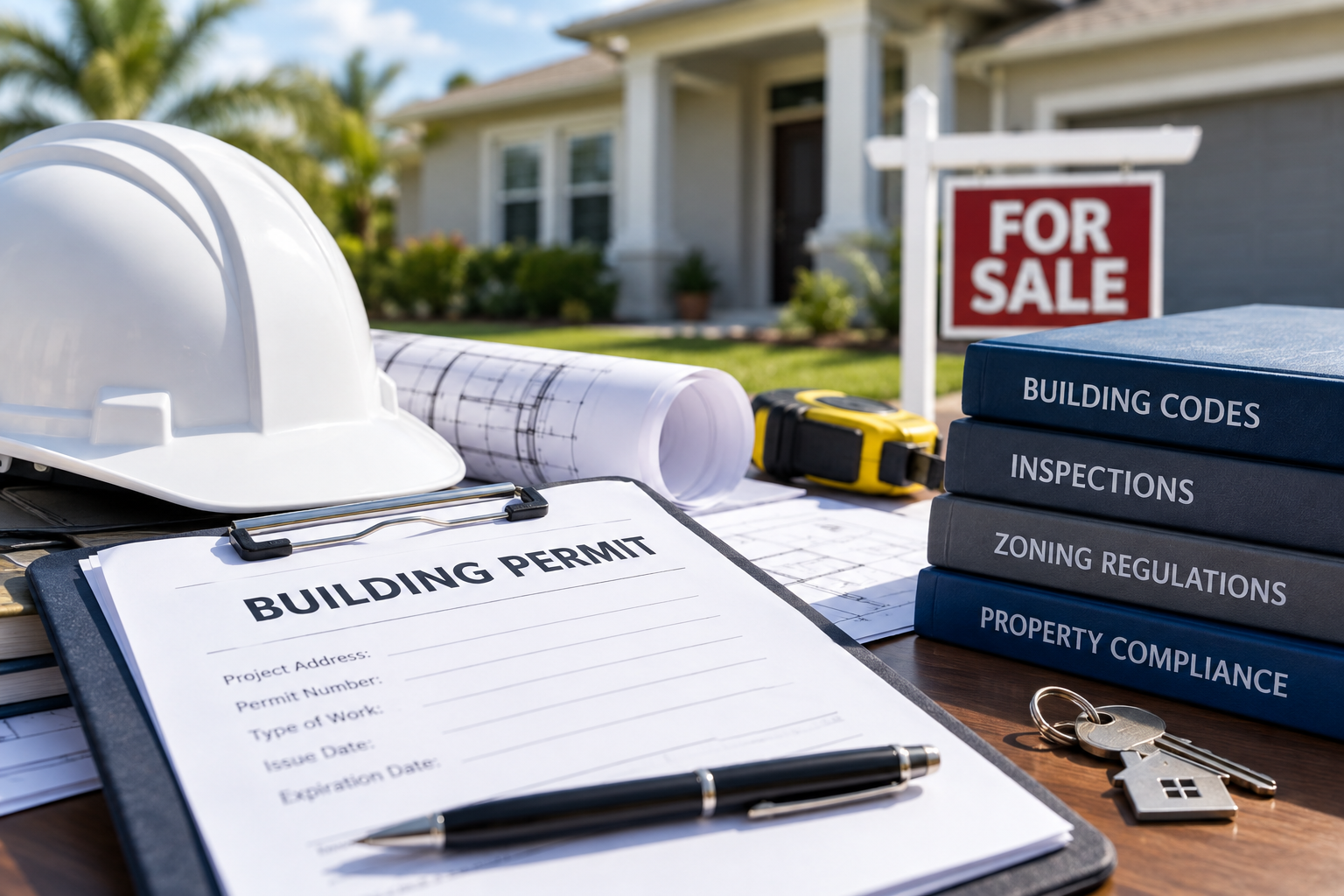
A real estate closing can be delayed by more than financing or title paperwork. Open permits, unpermitted work, zoning violations, missed inspections, and building safety issues can surface late in the transaction and create expensive problems for property owners.
The good news is that many of these issues can be identified and addressed before they become a closing emergency. Understanding Florida building codes and local requirements, reviewing your property records early, and keeping inspections and permits current can make the difference between a smooth transaction and an unexpected delay.
Why Property Owners Receive Code Violations and Fines
Code violations usually come from a handful of recurring issues:
- Unpermitted construction: Florida Building Code Section 105 generally requires owners or authorized agents to obtain the required permit before regulated construction, alteration, repair, or system work begins.
- Zoning violations: A property can be cited when its use, additions, fences, structures, or other improvements do not comply with applicable local zoning requirements.
- Neglected property maintenance: Deteriorated roofs, damaged structures, unsafe electrical conditions, excessive deterioration, and other maintenance problems can attract code enforcement attention.
- Unsafe conditions: Serious structural or life safety concerns can lead to Unsafe Structure Violations and additional enforcement.
- Missed inspections: Completing construction is not necessarily the end of the process. Required inspections and final approvals must be completed so the local building department can officially close the permit.
Florida’s building regulations are supplemented by local ordinances, so requirements can vary between Miami Dade, Broward, Palm Beach, and other jurisdictions. Property owners should always verify requirements with the applicable local building department. The Florida Building Commission provides current code resources and information through its Florida Building Code resources.
Why Permit Problems Matter Before Closing
An open or expired permit can become particularly important when a property is being sold or refinanced. Buyers, title professionals, lenders, and other parties may discover unresolved permits or violations during their due diligence.
For example, consider a hypothetical property owner who remodeled a kitchen several years ago but never completed the required final inspection. The work may appear finished, but the permit can remain open in the municipality’s records. Before closing, the issue is discovered and the owner must determine what inspections, documentation, or corrective work are necessary.
The solution is not to assume the work is acceptable. The owner should obtain the property’s permit history, identify outstanding requirements, work with appropriately qualified professionals when necessary, and complete the required inspections.
For related guidance, see Violation Clinic’s guide to fixing open or expired building permits.
How to Prevent Permit Problems Before They Affect a Sale
1. Obtain the Required Permits
Before beginning construction or major repairs, confirm whether a permit is required. Florida Building Code Section 105.1 establishes broad permitting requirements for construction, alterations, repairs, changes of occupancy, and regulated electrical, gas, mechanical, and plumbing work.
Keep copies of permits, approved plans, inspection records, contractor documentation, and final approvals.
2. Schedule Regular Inspections
Do not wait until a property is listed for sale to investigate its condition. Periodic inspections can identify deterioration, unfinished work, or potential compliance issues while there is still time to address them.
Some inspections are also legal requirements. Florida Statute 553.899 establishes mandatory milestone inspections for certain condominium and cooperative buildings that meet the statutory height and age requirements. The law generally calls for inspection at 30 years and every 10 years thereafter, with local enforcement agencies able to establish an earlier 25 year threshold in certain circumstances.
3. Maintain the Property’s Appearance and Safety
Routine maintenance matters. Keep roofs, exterior walls, fences, drainage areas, electrical components, plumbing systems, and other building elements in appropriate condition.
Address visible deterioration before it becomes an enforcement issue or contributes to more serious structural problems.
4. Address Structural and System Safety
Problems involving structural components, electrical systems, plumbing, mechanical equipment, or fire safety should be evaluated by appropriately qualified professionals.
For older condominium and cooperative buildings subject to Florida’s milestone inspection law, a licensed architect or engineer must perform the required structural inspection. If substantial structural deterioration is identified, additional evaluation and repairs may be required.
5. Check Local Requirements Before Listing
Florida has a statewide building code, but local governments also enforce zoning regulations, local amendments, inspection procedures, and other requirements.
Before putting a property on the market, consider conducting a permit and violation search. Resolving problems early can provide significantly more time to obtain permits, complete repairs, schedule inspections, and address enforcement matters.
Building Recertification and Closing
Building Recertification is particularly important for eligible older buildings. Florida’s statewide milestone inspection requirements apply to certain condominium and cooperative buildings, while jurisdictions such as Miami Dade have additional local recertification requirements.
In Miami Dade, failure to meet applicable recertification requirements can result in civil penalties and enforcement. The county’s code framework has included a $510 level of enforcement associated with recertification and other enforcement matters, while certain violations can escalate to penalties of $10,000 depending on the specific provision and circumstances. These figures should not be treated as a universal Florida penalty schedule.
Property owners who need assistance can review Violation Clinic’s Building Recertification Services, which includes support for older building recertification and related compliance matters.
What If You Discover a Violation Before Closing?
Start by obtaining the official record from the applicable local authority. Then determine:
- What permit or violation remains open
- Whether corrective construction is required
- Which inspections are outstanding
- Whether plans, engineering, or architectural documents are necessary
- Whether fines, liens, or hearings are involved
- What documentation is required for final clearance
Depending on the situation, professional assistance may include Stop Work Order Removal, permit resolution, Certificate Of Occupancy Assistance, Special Magistrate Representation, or assistance with Unsafe Structure Violations.
For example, a hypothetical closing scenario could involve an old open permit discovered during a title review. Rather than delaying the sale indefinitely, the owner could identify the permit requirements, engage the appropriate licensed professional, complete required corrective work, schedule final inspections, and obtain documentation showing that the permit has been properly closed.
The important lesson is simple: resolve the issue based on the official requirements rather than relying on assumptions about what work should or should not require approval.
Summary
Permit and code problems are much easier to manage when they are discovered early. Obtaining permits before construction, keeping the property maintained, scheduling regular inspections, tracking mandatory inspection deadlines, and reviewing local requirements can help prevent fines and closing delays.
For Florida property owners preparing for a sale, the best time to investigate permits and violations is before the property reaches the closing table. Early compliance gives you time to correct problems properly, obtain required approvals, and provide buyers and other transaction professionals with the documentation they need.
If you have an unresolved permit, violation, recertification issue, or property compliance concern, Violation Clinic’s Florida code compliance services can help you understand the path toward resolution.
Related Posts and Resources
- How to Clear Violations Before Closing
- How to Fix Open or Expired Building Permits
- How Code Violations Affect Property Sales
- What Is Building Recertification?
- Florida Building Code Official Resources
At ViolationClinic.com, we specialize in helping property owners navigate the recertification process smoothly. Whether you need assistance with inspections, violations, or compliance issues, our team is here to help. Don’t wait until it’s too late, take action today to protect your investment and ensure the safety of your building.
For more information or assistance, contact us at ViolationClinic.com!