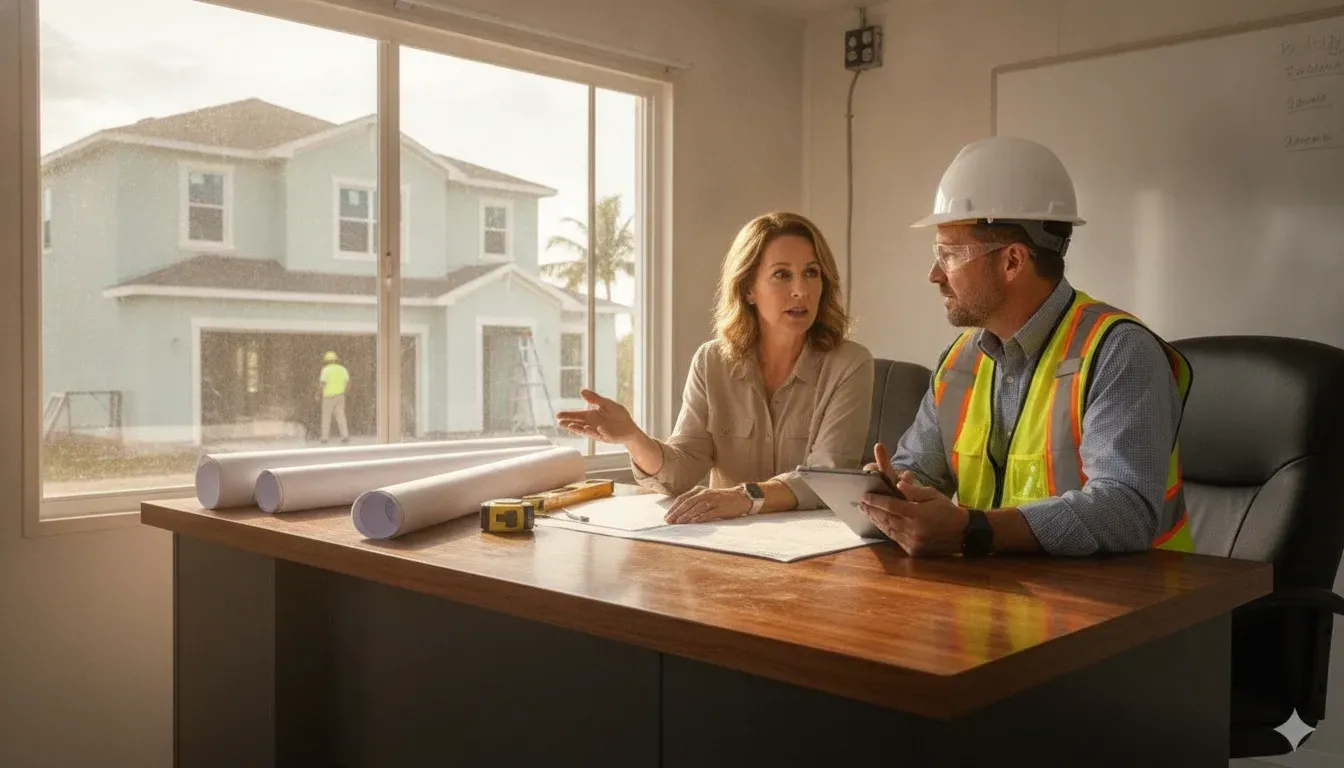
Searching for certificate of occupancy help in Florida usually means a project is close to the finish line, but the final approval is not yet in hand. Before you request a Certificate of Occupancy (CO), organize the permit history, confirm the required finals, and identify anything that could keep the local building department from closing the file.
Contact Violation Clinic for certificate of occupancy help in Florida.
When a Florida property may need a Certificate of Occupancy
A CO is generally issued by the local building department when the approved work is complete, applicable inspections have passed, and the property is ready for the approved use. The exact process depends on the municipality, the project type, and the permits involved.
Owners commonly encounter a CO requirement after:
- New construction or an addition
- A major renovation that affects building systems or life safety
- A change in occupancy or use
- Commercial build-out or tenant improvement work
- Work that began under a permit but never received final approval
- A closing, lease, insurance, or financing review that uncovers missing closeout documentation
Do not assume that a passed inspection, a Certificate of Completion, or an old approval automatically satisfies the current request. Ask the building department what document applies to the project and whether any related permits or approvals remain open.
Start with the permit and project file
Gather the documents that let an owner, contractor, or compliance professional understand exactly what was approved and what remains unfinished. A complete file can reduce repeated requests and make it easier to resolve a discrepancy between the work in the field and the permit record.
- Permit numbers and the original permit applications
- Approved plans, revisions, amendments, and product approvals, when applicable
- Permit descriptions, approved scope of work, and recorded change orders
- Inspection history, failed inspection comments, and correction notices
- Contractor license and subcontractor information associated with the permit
- Notices of Commencement, affidavits, surveys, elevation certificates, or other documents requested for the project
- Engineering, architectural, fire, energy, accessibility, or specialty reports that relate to the permitted work
- Prior Certificates of Completion, Certificates of Occupancy, or other closeout documents
Keep the current property address and permit address consistent across the records. If ownership, contractor, plans, or project scope changed, note that before contacting the department. A Florida local checklist may also require a current license or insurance record, a recorded notice, or a private-provider completion certificate. Those requirements are project-specific, not a statewide checklist that applies identically everywhere.
Confirm every final inspection that applies
A building department may wait for more than one final inspection before issuing a CO. The applicable list depends on the project. It may include building, electrical, plumbing, mechanical, gas, roofing, fire, engineering, site, landscape, driveway, stormwater, or accessibility-related approvals.
Review the permit record and ask the department to identify:
- Which final inspections are required for each permit
- Whether all subcontractor permits are signed onto the main permit, when required
- Whether related or separate permits for the same project are still open
- Whether any failed final needs a correction, reinspection, or new supporting document
- Whether a private-provider inspection or certificate must be attached to the file
- Whether the original permit placard or another site document must be available for inspection
For example, an official Bay County checklist includes final subpermit inspections and project-specific items such as septic, termite, elevation, right-of-way, and commercial fire approvals. Use this type of official checklist as a reminder to ask questions, not as a substitute for the requirements issued by your own jurisdiction.
Check for blockers before requesting final approval
Many CO delays are not caused by one missing form. They come from an unresolved condition elsewhere in the permit or code-enforcement record. Before requesting final approval, check for:
- Open permits, expired permits, or permits with no recorded final inspection
- Failed inspections or correction comments that were never cleared
- Unpermitted work that does not match the approved plans
- Open building, zoning, fire, or code-enforcement violations
- Stop work orders, unsafe-structure conditions, or recorded compliance deadlines
- Outstanding fees, reinspection charges, impact fees, or CO processing fees
- Missing contractor, engineer, architect, affidavit, survey, or testing documents
- Changes in use, layout, occupancy load, or life-safety systems that were not reflected in the permit
- Related site, utility, driveway, stormwater, landscape, or right-of-way approvals that are still pending
An owner can search for a final approval while another open record prevents issuance. That is why it is useful to review both the building permit history and any code-enforcement history tied to the property. If the work is incomplete, do not schedule a final inspection simply to see what happens. First determine what must be corrected, documented, or permitted.
What to do when incomplete work or violations are holding up the CO
If the property has open violations or incomplete work, the next step is usually a scoped closeout plan. The plan may require field verification, revised drawings, licensed trade work, engineering or architectural documentation, permit reactivation, additional inspections, or communication with several departments.
Start by separating the issues into three groups:
- Work that is complete but not recorded: Locate the inspection result, final document, or department action needed to update the file.
- Work that is permitted but incomplete: Finish the approved scope, correct failed items, and request the applicable reinspection.
- Work that differs from the permit or was never permitted: Determine whether a revision, after-the-fact permit, new plans, or additional professional review is required.
When a violation is involved, the CO request may depend on resolving the underlying compliance issue first. Violation Clinic’s building code violation remediation service addresses documentation, professional coordination, agency submissions, and follow-up through clearance. That is different from simply asking for a final inspection, and the distinction matters when an open violation has a separate case number or deadline.
Need help clearing an open permit or violation before final approval? Contact Violation Clinic.
Track the request through final issuance
Once the file is ready, keep a written record of the closeout process. Save the date of each request, the department or reviewer contacted, the permit and case numbers, the documents submitted, and every correction or follow-up request.
Ask the local building department:
- Where the CO request must be submitted
- Whether the request is reviewed by email, an online portal, or the permit counter
- Which person or division owns the final review
- Whether all finals show as passed in the public permit system
- Whether fees are paid and the file is administratively complete
- How the issued CO will be delivered and how to obtain a certified or replacement copy
Do not treat a verbal statement that the project is nearly complete as the final approval. The dependable proof is the official CO or the department’s written confirmation of the approved closeout status. Local procedures may distinguish final, temporary, partial, and other limited approvals. The document and status should match the use the owner intends to make of the property.
Florida Certificate of Occupancy preparation FAQ
What should I gather first for a Certificate of Occupancy?
Start with the permit numbers, approved plans, inspection history, failed inspection comments, related permits, project reports, and any violation or correction notices. Then ask the local building department for the current list of required finals and outstanding conditions.
Can an open violation prevent a Certificate of Occupancy?
It can. Whether it prevents issuance depends on the jurisdiction, the violation, the property use, and how the case relates to the permitted work. Confirm the relationship between the violation record and the CO request before scheduling a final inspection.
Does every Florida property follow the same CO checklist?
No. Florida requirements are administered through local building departments, and the applicable checklist varies by municipality and project. New construction, commercial work, changes of use, site work, and specialty systems can each add different closeout requirements.
How do I know whether final approval was issued?
Check the local permit portal or department record, request written confirmation when needed, and obtain the official Certificate of Occupancy or other document issued for the property. Keep the final document with the permit and inspection records.
Local building departments may apply different procedures and document requirements. Confirm the current checklist with the authority having jurisdiction for your property.