A missed recertification deadline rarely starts as a deliberate choice. More often, a courtesy letter went to an old mailing address, an association changed managers, or the engineer’s report stalled while repairs were scoped. Whatever the cause, once the notice period runs out in Miami-Dade, the problem moves from a paperwork task to an enforcement file. This guide explains what typically happens next, which steps usually matter most, and how a private compliance consultant such as Violation Clinic can help an owner get the building back on track. We are a private company, not a government agency, and every case depends on the specific jurisdiction and the building’s records.
How Miami-Dade recertification deadlines are set
Recertification in Miami-Dade County comes from Section 8-11(f) of the county code. According to the county’s building recertification page, most buildings now reach their first recertification at 30 years of age and then every 10 years after that. Certain condominium and cooperative buildings of three stories or more located within three miles of the coastline, built in 1998 or later, follow a 25-year schedule, and older buildings were placed on transition dates. Single-family homes, duplexes and small buildings with an occupant load of ten or fewer and no more than 2,000 square feet are generally exempt.
The clock that matters is the one in the Notice of Required Recertification. The county describes courtesy notices sent roughly two years and one year ahead, followed by the formal notice. From the date of that formal notice, the owner has 90 days to submit a completed recertification report prepared by a Florida-registered engineer or architect. If the property sits inside one of the county’s municipalities, such as the City of Miami or Coral Gables, the city’s building department usually administers the program, and its letters, portals and procedures can differ.
Condominium and cooperative buildings may also face the separate statewide milestone inspection under Section 553.899, Florida Statutes. The two requirements can overlap, but they are not the same filing, and meeting one should not be assumed to satisfy the other. For a broader overview of the program itself, see our guide to Florida 30-year building recertification.
What happens after a missed recertification deadline
When the 90 days pass without a report, the county states that a citation can be issued without further notice. That citation carries an initial civil penalty, and continued non-compliance can lead to additional accumulated penalties per violation. Unpaid amounts may be referred for collection and can become a lien problem that follows the property. The exact amounts and procedures are set by the jurisdiction and change over time, so the notice in hand is the document to read first.
The citation is not necessarily the end of it. Miami-Dade’s recertification notice warns that failing to submit the report can also lead to referral to the county’s Unsafe Structures Unit, and some municipalities, such as Coral Gables, state that a building that is not recertified on time is deemed unsafe and non-compliant, with possible revocation of the Certificate of Occupancy and disconnection of utilities. That is why a late report should be treated as urgent rather than routine.
A missed recertification deadline can also surface at the worst possible moment: during a refinance, a sale or an insurance renewal. Lenders, buyers and title professionals often ask about recertification status for older multifamily and commercial buildings, and an open citation tends to raise questions that slow a transaction down.
Common reasons owners fall behind
- Notices mailed to a prior owner, a dissolved entity or an outdated property manager.
- An engineer’s inspection completed, but the signed report never submitted.
- Repairs identified during inspection that need permits before the building can be certified.
- Confusion between county recertification and the state milestone inspection for condominiums.
- A recent purchase where the buyer did not know the building had reached its recertification year.
First steps once you realize the deadline has passed
The best first move is to gather facts before making calls or payments. Owners who act quickly and in order often limit how far the case escalates.
- Collect every notice. Locate the Notice of Required Recertification, any courtesy letters and any citation. Note the dates, case numbers and the agency that issued them.
- Confirm the jurisdiction. Determine whether the property is in unincorporated Miami-Dade or inside a municipality, because that decides who receives the report and how penalties are handled.
- Engage a qualified engineer or architect. The structural and electrical report must come from a Florida-registered professional. If one was already hired, find out exactly where the report stands.
- Ask whether an extension is still available. Miami-Dade allows its building department to grant an extension of up to 60 days on a written request that includes a signed and sealed statement from the engineer or architect that the building may continue to be occupied during recertification. Extensions are discretionary and are normally sought within the 90-day notice period, so if that window has already closed, ask the building department whether any extension or compliance schedule is still available.
- Separate the report from the repairs. If the inspection identifies repairs, those repairs generally need their own permits and inspections before the building can be recertified.
- Track every submission. Keep proof of each filing, payment and communication. A clean record helps when asking for penalty relief later.
Reading the engineer’s findings correctly matters here, because the scope of required repairs drives the rest of the timeline. Our article on how to read a building structural inspection report explains the typical sections and what they mean for an owner.
When repairs, liens or unsafe structure notices are involved
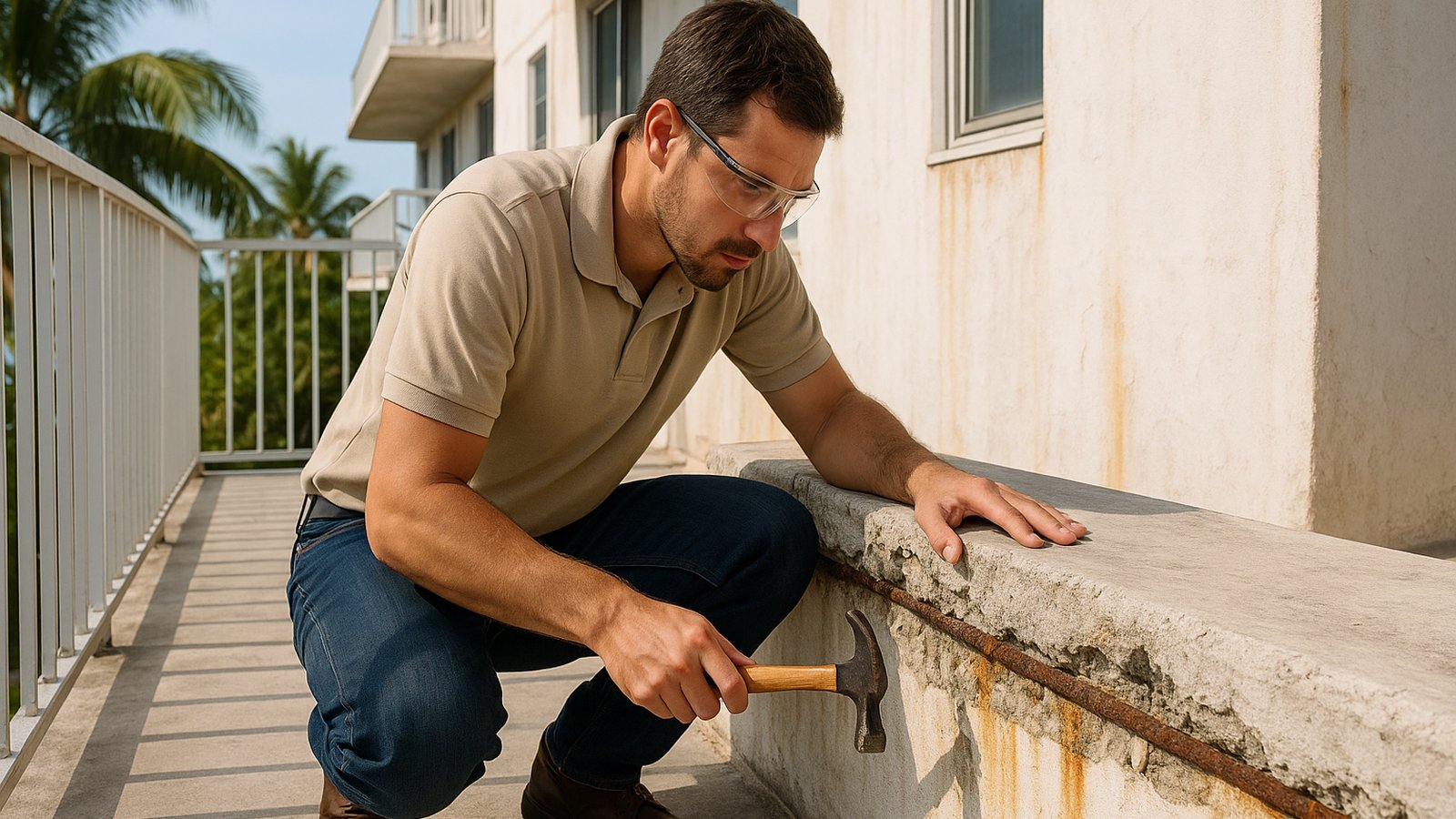
Many late recertifications are late because the building needs work. Concrete spalling, deteriorated balconies, electrical panel issues or missing permits for past alterations can all hold up a report. In those cases, the path back to compliance usually runs through repair permits, inspections and, in some situations, permits for older unpermitted work that the engineer flagged.
If the case has already produced a recorded lien or accumulated fines, resolving the underlying recertification is normally the first condition for any request to reduce or release those amounts. Our lien resolution services page explains how we help owners prepare that request once compliance is achieved. Outcomes depend on the jurisdiction and the hearing body, and no consultant can promise a specific result.
If the building has been referred toward unsafe structures proceedings, the stakes are higher, and timelines may be set by a board or hearing officer. Violation Clinic offers unsafe structure representation to help owners organize engineering findings, repair schedules and documentation for those hearings.
Questions to ask your engineer
- Can the building be certified as safe for continued occupancy in its current condition?
- Which repairs are required before certification, and which can be scheduled later?
- Do any repairs require permits, shoring or special inspections?
- Would you support a written extension request, and on what timeline?
How a private compliance consultant helps
An engineer certifies the building. A compliance consultant coordinates everything around that certification so the owner is not left managing several moving parts alone. Violation Clinic is a private firm; we do not issue permits or certifications, and we are not affiliated with any building department. What we do is help owners in Miami-Dade and Broward understand the notices they received, organize records, coordinate with their design professionals and contractors, and follow the case through submission, permitting and any hearing.
Our building recertification services page outlines how we support owners from the first notice to final acceptance of the report. That support is especially useful for associations, landlords and investors who hold several older buildings and need a consistent way to track deadlines.
Broward County has its own building safety inspection program with different rules and timelines, so owners there should not assume the Miami-Dade schedule applies. Palm Beach County municipalities also run their own programs. In every case, the governing requirements are those of the jurisdiction where the building sits.
Frequently asked questions
Can I still submit the report after the 90 days have passed?
In most cases, yes. A late report is still the main way to resolve the case. Submitting it does not necessarily erase penalties already assessed, but it is usually the first step toward closing the matter and asking for relief.
Will the building be closed if I missed the recertification deadline?
Not immediately, but it is a real risk. County and municipal materials warn that an unrecertified building can be referred to unsafe structures proceedings, which can affect occupancy and utilities. Getting a qualified engineer involved and the report submitted quickly is the most practical way to reduce that risk.
Is the state milestone inspection the same as county recertification?
No. The milestone inspection applies to certain condominium and cooperative buildings with three or more habitable stories under state law. County recertification is a separate local requirement. Some buildings must satisfy both, and the timelines may differ.
Can fines be reduced after the building is recertified?
Sometimes. Many jurisdictions allow owners to request mitigation once compliance is achieved, but the rules, forms and outcomes vary. A clear record of the steps you took and when you took them strengthens any request.
Get help with a late recertification
If you have a recertification notice or citation and are unsure where the case stands, contact Violation Clinic privately. Send us the notice, the property address and any permit or engineering records you have, and we will review the situation and explain the practical options for your jurisdiction. You can reach us through our private contact form.