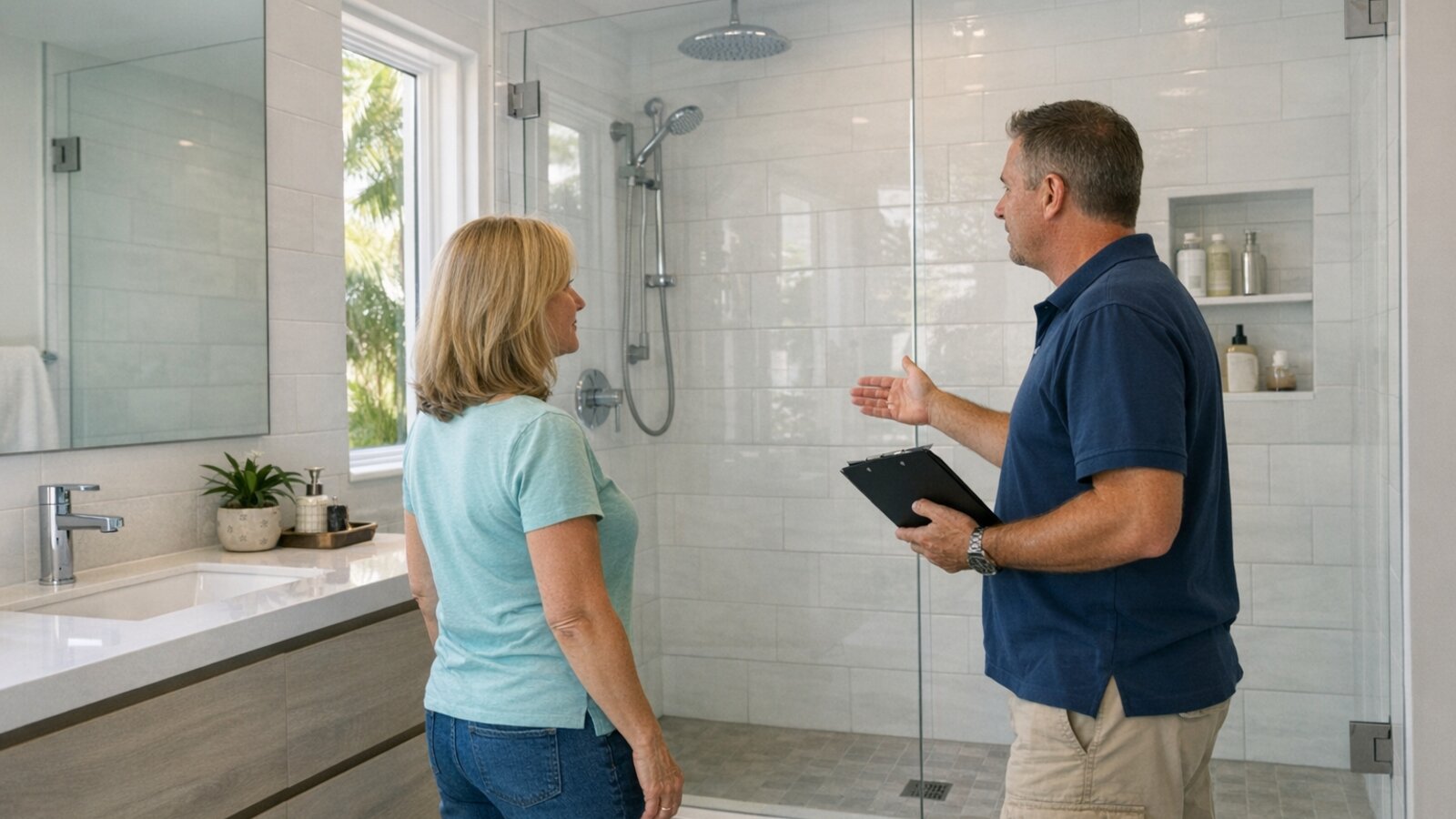
A bathroom remodel is one of the most common jobs owners finish without checking whether it needed a permit, and it is also one of the easiest to uncover later. If you are dealing with an unpermitted bathroom remodel in Florida, the useful questions are what exactly was changed, who can see the gap, and which path closes it with the least friction. This guide walks through those questions for owners in Miami-Dade, Broward and Palm Beach. Violation Clinic is a private compliance consulting company, not a government agency, so the local building department always has the final say on what it will accept.
Why bathrooms are treated differently from cosmetic updates
Florida requires permits for construction, alteration and repair work through the local enforcing agency, as set out in section 553.79 of the Florida Statutes. Local ordinances then decide what counts as ordinary maintenance. Painting, swapping a faucet or replacing a mirror usually sits on the maintenance side. A bathroom remodel often crosses the line because it touches systems that are regulated on their own:
- Plumbing: moving a toilet, shower drain or vanity supply lines, or adding a fixture.
- Electrical: new circuits, relocated outlets, ground-fault protection and exhaust fan wiring.
- Structure and waterproofing: removing a wall, framing a curbless shower or cutting into a slab to relocate a drain.
- Ventilation: a new exhaust duct, especially if it terminates somewhere different than before.
What requires a permit varies by city and county, so treat any rule of thumb as a starting point and confirm with the department that covers your address.
Cosmetic refresh or permitted scope: a practical test
A simple way to sort your own project is to ask whether anything behind the finished surface moved. Replacing tile, a toilet in the same spot and a vanity of the same footprint is a different conversation from relocating the shower drain or enlarging the room by taking a closet. Write down what changed in plain terms before you contact anyone. Typical scopes that tend to be reviewed include:
- Converting a tub to a walk-in shower with a new drain location.
- Adding a bathroom where none existed, for example in a garage conversion or an in-law suite.
- Relocating or adding electrical circuits or exhaust fans.
- Any structural change, such as removing a bearing wall or altering a window opening.
When the work added a bathroom to an area that was never a living space, the problem usually becomes larger than the bathroom itself. Our guide to an unpermitted garage conversion in Miami-Dade covers that situation.
How an unpermitted bathroom remodel gets discovered
- A sale or refinance. A buyer’s inspector may notice a newer bathroom on a house with an older permit history, and a title or lender review can ask for records.
- Insurance. After a plumbing leak or water claim, an adjuster may ask who did the work and whether it was permitted.
- A neighbor or a code officer. Active renovation noise, dumpsters or a contractor’s truck can prompt a complaint, and an officer visiting for another reason may notice new work.
- A later permit. When you apply for another job, a department may compare existing conditions with the file on record.
Water damage deserves special mention. Hidden plumbing is where a poor installation does its harm, so a leak in a remodeled bathroom tends to bring the missing paperwork out at the worst moment.
Unpermitted bathroom remodel in Florida: choosing a path
Start by checking whether the property already has a notice. If a code case exists, the correction period and hearing process described in section 162.06 of the Florida Statutes may frame your deadlines, and our page on Florida code violation help explains how we help owners read a notice and respond.
If nothing has been issued, many departments allow an application after the fact. The general process is described in our overview of the after-the-fact permit process in Florida. In practice that usually means a licensed contractor applies for the permit, the department may ask for drawings or photographs of what exists, and inspections happen on whatever is still accessible. If the contractor did pull a permit that was never finished, the situation is an open permit rather than an unpermitted one, and expired permit resolution describes that route.
The hidden-work problem
The difficulty with a finished bathroom is that the plumbing, wiring and waterproofing are already behind tile and drywall. Departments handle this in different ways. Some accept photographs taken during construction, some accept a licensed contractor’s or engineer’s written verification, and some ask for selective openings in the wall so an inspector can see the work. Owners who kept progress photos, invoices and the contractor’s license details have a real advantage here, so collect them early.
A licensed contractor generally has to support the application and any corrections. If the original installer was unlicensed, plan on hiring a licensed professional to take responsibility for the work, and expect that person to be careful about what they sign. That is a reasonable caution rather than an obstacle, and it is one reason to price the correction work before you commit to a timeline.
Checklist: what to gather before you contact the department
- The contract, invoices, payment records and completion date, with the contractor’s name and license number.
- Photographs from before, during and after construction, including any shots of open walls or floors.
- A sketch of the bathroom showing fixtures, drains, and any wall or window that moved.
- Product information for exhaust fans, fixtures or other equipment installed as part of the job.
- A permit-portal search under your address and folio number, including older address formats.
- Confirmation of whether any code case, fine or lien is attached to the property.
If a closing is already scheduled, read our guide to clearing violations before closing. Your attorney should advise on any credit, escrow or extension discussion with the other side.
What owners commonly get wrong
Assuming the contractor’s invoice proves a permit existed
An invoice shows that work was paid for. It does not show that a permit was pulled or that inspections were passed. Look the record up directly instead of relying on the contractor’s word.
Opening walls before talking to anyone
Demolishing finished surfaces on your own can destroy evidence and cost money you may not need to spend. Ask how the department wants hidden work verified before you pick up a hammer.
Ignoring the second bathroom in the same job
Renovations often cover a primary bath, a guest bath and a laundry. Sort the records room by room so that a single missing permit does not hold up the rest of the file.
Waiting for a buyer to raise it
Problems found during a contract period are harder to handle than problems found before listing, because deadlines belong to other people. If you plan to sell, a records review beforehand keeps you in control of the timing.
Frequently asked questions
Do I need a permit to replace a bathtub with a shower?
It depends on the scope and the jurisdiction. If the drain, supply lines or framing changed, a permit is commonly expected. Confirm with the department for your address.
Can I get a permit after the remodel is finished?
Many departments accept an after-the-fact application. The review may involve verifying concealed work, and a licensed contractor generally has to take responsibility for the application.
Will an unpermitted bathroom stop a sale?
It can complicate one, since buyers, lenders and title companies may ask for records. Whether it actually stops a closing depends on the contract, the lender and what the records show.
Can an unpermitted remodel affect my insurance?
It may complicate a claim related to the work, and insurers differ in what they ask for. Ask your insurer or agent what documentation it expects.
Should I tear out the work and start over?
Not before you know what the department will accept. Many owners can document and legalize existing work, but some jobs do need corrections, so get a clear answer first.
Send us what you have
If a bathroom was remodeled without a permit, contact Violation Clinic privately with the property address, the contractor’s invoice, any photographs of the work and any notice you have received. We are a private consulting company, not a government office, and we will review the records and explain the options before you spend money on demolition or applications.