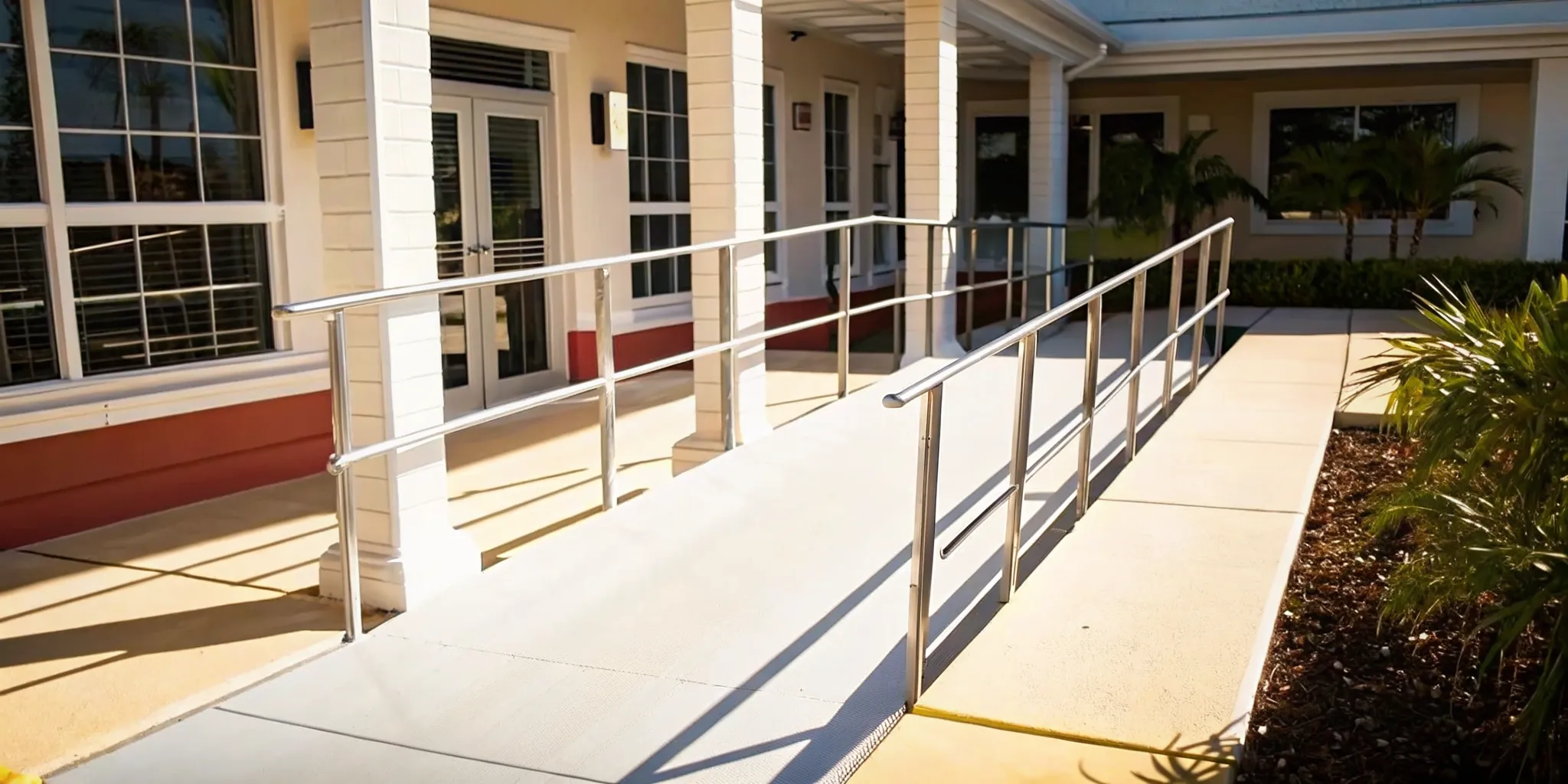
A bad wheelchair ramp can expose a Florida business to a costly federal lawsuit. Many property owners do not see these simple errors until they get a court paper or a city fine.
ADA compliance violations Florida property owners face are often simple physical issues such as incorrect parking markings, steep wheelchair ramps, or heavy doors. These physical barriers violate the federal Americans with Disabilities Act of 1990, which requires equal access in all public commercial buildings. According to legal experts at Property Claim Law, local business owners now face a massive spike in costly federal lawsuits over these minor building errors. To protect your commercial property, you must find these weak spots and take fast, active steps to remove physical barriers before you get fined. Our simple guide helps you spot these dangerous regulatory issues and find the best path to achieve complete compliance for your Florida business.
What are the main building issues that put your business at risk? To help you protect your investment, we will first review the common issues you need to know about. Finding these weak spots is the first step toward safety.
ADA Compliance Violations Florida: Common ADA Compliance Violations in Florida Commercial Properties
Many commercial buildings in Florida face major issues in their parking areas. Owners often fail to paint clear lines or put up the right signs for accessible stalls. A lack of proper parking spaces or incorrect signs is a common barrier for people with disabilities. Under the federal 2010 ADA Standards, these spaces must sit on the shortest accessible path to the building entrance. If the path is too long or has steps, the building is out of compliance. This means that an accessible spot cannot be placed at the far end of a lot. It must be as close to the front doors as possible. This keeps the walk short and safe.
Ramps and entryways
Poor ramps also cause big problems for local shops. A ramp that is too steep makes it hard or unsafe for a person in a wheelchair. Landlords must make sure that ramp slopes are flat enough to meet the rules. Even a small error in a ramp slope can trigger a building code violation or a lawsuit. Along with ramps, narrow doorways can block wheelchair access and lead to big fines. Many older structures in Florida have doors that are too tight. A standard wheelchair needs enough clear width to pass through without hitting the frame.
To avoid these issues, owners should review their essential building code compliance plans. Doors must be wide enough to let people pass. They must also be easy to open. Door pressure that is too high is a common error that is easy to fix but often missed. If a door is too heavy to push, it acts as a barrier. This simple check can save you from a major compliance dispute.
Restrooms and counters
Indoor paths must also meet strict rules. Standard paths through a shop or office must stay clear of physical barriers. There must be enough clear space in halls for a wheelchair to turn with ease. If paths are blocked by displays or files, the firm is out of compliance. Keeping paths open is a simple way to keep your business accessible.
Restrooms are a common spot for complaints. Wrong grab bar spots or high sinks can cause major access issues. The rules cover exact details like sink heights, grab bar spots, and toilet space. In addition, service counters must be low enough for a wheelchair user. Keeping these fixtures at the right height helps you stay compliant and open for business.
What Are the Financial Penalties for ADA Violations in Florida?
Commercial building owners in Florida face high costs if they do not meet federal accessibility rules. A failure to fix these issues can lead to heavy government fines, private claims, and high legal fees. Keeping your building compliant is a key part of maintaining general property compliance standards across the state.
Federal Civil Fines Under Title III
The federal government can issue large civil fines to businesses that violate the law. Under Title III of the Americans with Disabilities Act, a first civil penalty can cost up to $75,000. If a business has more violations later, the fine can rise to $150,000 for each later offense. These fines are set under federal law to enforce the 2010 ADA Standards for commercial buildings.
These federal charges apply to any commercial space that serves the public. The law does not allow for a warning period. If an inspector or a court finds a barrier, the business is liable right away. This is why staying ahead of these civil fines is so vital for local companies.
These fines do not include the cost to fix the physical problems. Owners must still pay to repair the barriers even after they pay the government. This makes quick action the best way to avoid deep financial damage.
The Cost of Private Lawsuits in Florida
While government fines are high, private lawsuits are the most common driver of enforcement in Florida. Any person can sue a business if they find an accessibility barrier. These private claims often lead to costly settlements. The owner must usually pay for the plaintiff’s lawyer fees as well as their own legal costs.
A business that gets sued must pay its own lawyers to defend the case. At the same time, the law says the owner must pay the other side’s legal fees if they lose. These combined fees often exceed the actual cost of fixing the physical barrier itself. Many owners choose to settle out of court to stop these costs from growing.
This risk is growing fast, with over 8,000 web accessibility lawsuits filed under the law in 2024. This was a seven percent increase from the previous year. In Florida, physical barriers like steep ramps or bad signs are also common targets for these claims. Property owners who ignore ADA compliance violations Florida face a major risk of costly, serial legal actions.
Florida Building Code and ADA Requirements: What Property Owners Must Know
Intersection of federal and state rules
Florida property owners must follow both federal civil rights laws and local building codes. While local inspectors check state rules, federal laws apply to how you design public spaces. If you fail to meet both, you face severe risk of general property compliance standards issues and lawsuits.
State and federal laws do not always align. While the Florida Building Code sets the local rules, the federal law has its own requirements. When state and federal standards conflict, you must follow the rule that offers the most access. This double layer of regulation makes compliance a challenge for local business owners.
| Requirement Area | Federal ADA (2010 Standards) | Florida Building Code (FBC) |
|---|---|---|
| Accessible parking spaces | Minimum number based on total spaces; must be on shortest accessible route | Same minimums as ADA; additional van-accessible requirements |
| Ramp slope maximum | 1:12 ratio (8.33% grade) | Adopts 1:12 ratio; local amendments may add landing size rules |
| Door clear width | Minimum 32 inches clear opening | Same 32-inch minimum under FBC Chapter 11 |
| Restroom grab bars | Required on rear and side walls per ANSI A117.1 | Same as ADA; Florida adds specific water closet spacing |
| Signage requirements | Tactile and Braille characters required at permanent rooms | Same as ADA; may add raised character height rules |
| Existing building obligation | Remove barriers when readily achievable | Compliance triggered by alteration permit; no safe harbor |
The main source of ADA compliance violations Florida properties face stems from a mismatch of state and federal law. The federal government set the 2010 ADA Standards for Accessible Design to define clear requirements for business sites. Under Title III of the Act, places of public accommodation must remove physical barriers when it is readily achievable.
Covered businesses and public spaces
Many owners ask who must follow these rules. The law applies to any business that has 15 or more employees. But if your building serves the public, you must comply no matter your employee count. This means restaurants, shops, and offices are all subject to the same standards.
Public accommodations cover almost all businesses that serve the public. This list includes retail stores, hotels, bars, and medical clinics. If clients can walk through your doors, you fall under these strict federal rules. You must not wait for a lawsuit to fix your site access.
The law defines disability in a broad way. Congress expanded this term under the ADA Amendments Act of 2008. Because of this change, more people can now seek protection. This change means properties must ensure their routes and entries are fully open to everyone.
The truth about older buildings
A common myth is that older buildings are grandfathered into compliance. This is false. There is no grandfather clause under federal law. Under the federal standards for alterations, any renovated or altered area must meet current accessibility codes.
Even if you do not renovate, you must still remove physical barriers if doing so is easy and cheap. This means you cannot ignore old compliance gaps. Keeping your property updated helps you avoid legal issues and keeps your space open to all guests.
Serial ADA Litigation in Florida: A Growing Risk for Commercial Properties
Rise of serial lawsuits
Florida business owners face growing legal risks from serial lawsuits. In these cases, serial ADA litigation involves plaintiffs who file many lawsuits to get quick cash settlements. These plaintiffs search for any ADA compliance violations Florida properties might have. This legal trend makes quick compliance checks vital for commercial landlords.
Many local shops and restaurants are hit with these suits without warning. A single plaintiff can file dozens of claims in one county. The goal is often to extract a settlement rather than fix the barrier. This leaves owners facing high legal fees and tight court deadlines.
Targeted technical violations
Many lawsuits target small technical mistakes rather than big access barriers. For example, a slightly wrong ramp slope or a misplaced grab bar can trigger a claim. These small details must meet the 2010 ADA Standards to be fully legal. Even an error of a few inches can lead to a costly legal fight.
Plaintiffs often use a tape measure to find these small errors. They check details like handrail heights and path clearances. If the measurements are off by a fraction of an inch, they file a claim. Landlords are often shocked to learn that minor flaws can cause such big legal issues.
Proactive compliance as a defense
The best way to prevent these lawsuits is to fix barriers before a claim is filed. Regular property checks can find issues before plaintiffs do. Fixing a bad ramp slope is far cheaper than paying a legal settlement. Property owners must take action to secure their buildings against these risks.
An expert review of your property can help you find and fix these weak points. This active step is a key part of the remediation of code violations. Making these changes now keeps your business safe from costly legal claims.
How to Fix ADA Compliance Violations: A Step-by-Step Guide
Many owners think older buildings are safe from federal rules. But the Americans with Disabilities Act does not exempt older buildings from access standards. If you are dealing with ADA compliance violations Florida properties must be fixed to meet federal standards. Failing to address these issues can lead to costly legal disputes.
Rules for Older Buildings
There is no grandfather clause for equal access. If you alter or change a space, you must bring it up to current standards. New builds and changes must follow the 2010 ADA Standards to ensure full access. For existing sites, the law requires barrier removal when it is cheap and easy to do. This means you must remove physical obstacles if the work is readily achievable.
Steps to Fix Violations
A structured plan helps you handle repairs in a logical way. It also helps you budget for needed changes. To bring your building up to code, follow these seven steps:
- Assess your building. Hire a skilled expert to check your building. An expert survey will find any physical barriers on your pathways, in parking areas, or inside your restrooms. This gives you a clear list of what needs to change.
- Document and rank. List all violations and rank them by risk. Focus first on high-traffic spots like parking stalls and main entryways. Fixing these areas first helps the most people and cuts legal risk.
- Develop a plan. Create a clear repair plan with cost details and a timeline. This plan serves as a roadmap for your team. It also shows city officials and courts that you are working in good faith to fix the problems.
- Contract with licensed builders. Choose a licensed general contractor who knows Florida building codes. They must understand the exact spacing and slope rules. Poorly built ramps or wrong grab bars can lead to new violations.
- Remove easy barriers. Start with simple fixes that are cheap and easy to do. This readily achievable barrier removal is required for older buildings under federal law. You can adjust door pressures, add signs, or lower counters quickly.
- Verify the work. Get a final check once physical changes are complete. Keep written proof and photos that show your site now meets all federal rules. This proof is your shield if someone questions your compliance.
- Schedule routine reviews. Keep checking your property to prevent new issues. Gates, ramps, and doors can wear down or shift over time. Regular checks ensure that your building remains open to all.
Lawsuits and Compliance
When a business faces a lawsuit, settling the case does not end the job. You must still fix the physical violations to avoid future legal action. Proactive remediation of code violations protects your business and ensures equal access for all. It is always better to address these issues before a lawsuit is filed.
Why Violation Clinic Is Florida’s Trusted ADA Compliance Partner
Handling access rules can feel tough for any business. When you deal with ADA compliance violations Florida commercial buildings face, you need a team that knows the code inside and out. Violation Clinic is the top partner for fixing these issues across the state. We do not just give advice; we offer real help to protect your site from legal risks.
The insider inspector edge
Our strength comes from our deep background. Our founder, Jeri Goodkin Dausey, is a 39-year licensed General Contractor. She is also a former City of Miami Beach Senior Building Inspector and a top access expert. No other firm has this level of insider knowledge. We know just what county and city inspectors look for because we used to be the ones checking the sites.
Our complete four-step process
We handle the entire process from start to finish. We first run a full survey of your site to find potential issues. Managing a property is complex, and ADA remediation often involves both physical architectural adjustments and procedural updates. We then talk with local city staff to work out terms. After that, we watch over all building work. This ensures everything meets the rules. Finally, we sign off on the work and give you a clean stamp of compliance.
To protect your business, proactive ADA compliance is the strongest defense against serial litigation and costly legal settlements for Florida property owners. For this reason, property owners should focus on ADA assessments conducted by trained experts to find hidden violations before they lead to legal action. Our complete violation remediation services can find these hidden building problems before they trigger a complaint.
Statewide compliance support
Federal laws do not change, but local building rules can vary from town to town. The federal government sets strict scoping rules on the ADA standards page, but Florida cities often have their own local codes. Violation Clinic operates statewide with deep knowledge in more than 50 local areas. Our broad Florida municipal service coverage means we know how to handle local inspectors from Miami to Jacksonville. We can help you fix your site no matter where your commercial building is located.
Frequently Asked Questions
Are older commercial buildings in Florida exempt from ADA standards?
Many owners think older buildings are exempt. However, the federal ADA does not grandfather older properties. If your building was built before 1990, you must still remove physical barriers. This rule applies if the work is easy to do without a lot of cost.
Does a financial settlement resolve an ADA violation in Florida?
Paying a settlement to end a lawsuit does not fix the physical problem. According to Florida legal experts, you must still bring your property into compliance. If you do not make the needed physical changes, other plaintiffs can sue you again for the same issues.
Which Florida businesses must comply with ADA accessibility standards?
According to compliance guides, the law applies to two main groups. First, any business with fifteen or more employees must meet these rules. Second, any business that serves the public must follow them, regardless of size. This includes retail shops, hotels, and restaurants.
What does readily achievable barrier removal mean under the ADA?
This term means you must make changes that are easy to do. Under the federal ADA guidelines, you must remove barriers if the work does not cost too much. Simple changes like adding signs or painting new lines in a parking lot usually fit this rule.
Ready to Resolve Your ADA Compliance Violations?
Not fixing an ADA violation notice in Florida can lead to high daily fines and costly lawsuits. Starting the repair work now stops these fines from growing and protects your business from court cases. Our service takes the stress out of dealing with city inspectors and compliance codes. Our expert team handles the whole building department process so you can focus on your work. You can read about our violation repair services to see how we help owners in Florida. We work with local building officials to secure your property and clear all violations fast.
Ready to protect your business? Call (833) 302-4567 to get a free consultation and book your ADA compliance assessment today.