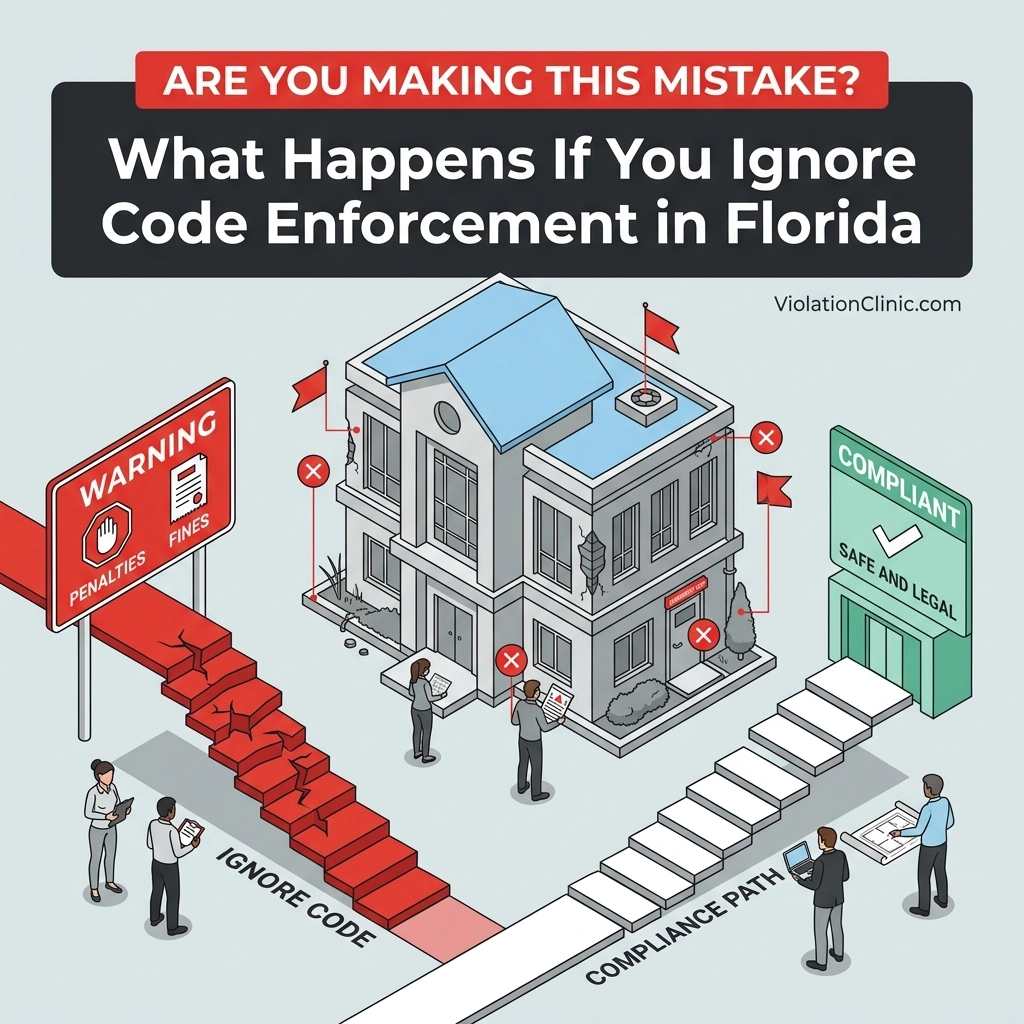
You might think a small oversight on your property: like a fence built a few inches too high or a shed without a permit: isn’t a big deal, but in the eyes of Florida’s local governments, it is a ticking financial time bomb. For many property owners, the initial notice from code enforcement feels like a suggestion rather than a mandate: and that is the single most expensive mistake you can make.
Whether you are a homeowner, a seasoned contractor, or a real estate professional, understanding what happens if you ignore code enforcement is critical to protecting your investment. In Florida, the system is designed to escalate quickly, transforming a minor fixable issue into a legal and financial nightmare that can lead to property liens and even the loss of your building.
At Violation Clinic, we see it every day: proactive owners who address notices early save thousands, while those who wait often find themselves buried under compounding daily fines.
The Immediate Consequences: Stop Work Orders and Red Tags
When a code enforcement officer spots a violation, the first line of defense is often an immediate halt to all activity on the site. If you are in the middle of a renovation and haven’t followed the proper protocols, you will likely encounter a stop work order florida.
A stop work order is exactly what it sounds like: a legal mandate to cease all construction immediately. If you continue to work after this order is issued, you are no longer just dealing with a building code issue: you are potentially facing criminal charges or significantly higher civil penalties.
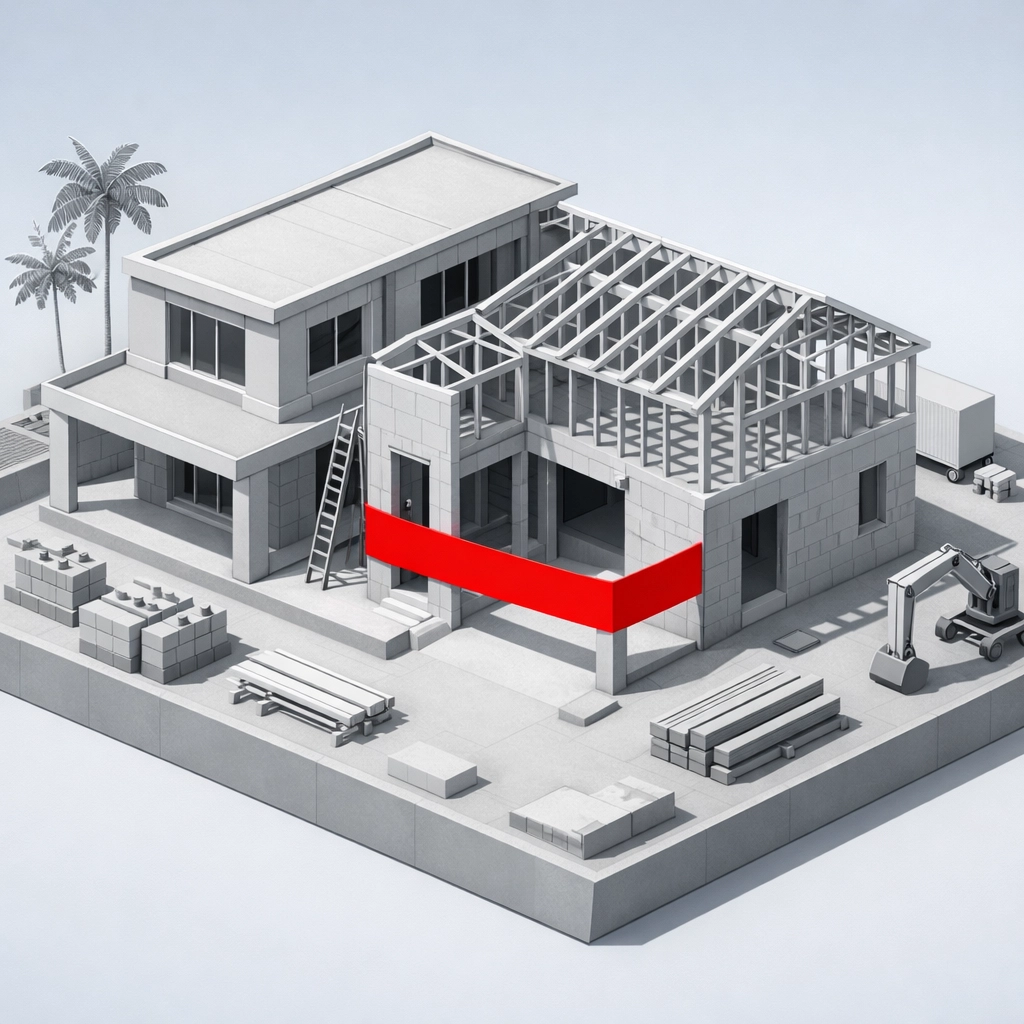
In more severe cases involving structural integrity or safety hazards, you may find your property becoming a red tagged building. A red tag is a visible sign posted by the municipality indicating that the structure is unsafe for occupancy. This doesn’t just stop your renovation; it can force you or your tenants out of the building until the city deems it safe again. This is common when work is done that violates the florida building code 2025 standards or when a structure has deteriorated to the point of being a public hazard.
The Financial Fallout: Daily Fines and Compliance Fees
If you think a one-time fine is the end of the story, think again. Florida law allows local code enforcement boards and special magistrates to impose daily fines that accumulate until the violation is corrected.
1. Daily Accrual of Fines
Once a board determines you are in violation, the clock starts ticking. According to Florida statutes, the rates are often as follows:
- First-time violations: Up to $250 per day.
- Repeat violations: Up to $500 per day.
Imagine ignoring a notice for just two months. At $250 a day, you are looking at $15,000 in fines before you even factor in the cost of the actual repairs.
2. The Irreparable Violation Penalty
In some cases, the violation is considered "irreparable or irreversible." If you’ve demolished a historic structure without permission or cleared protected mangroves, the municipality doesn't just charge you a daily rate. They can hit you with a one-time fine of up to $5,000 per violation: and in extreme cases, this can escalate to $15,000.
3. What is a Compliance Fee?
Many property owners ask: what is a compliance fee? In addition to the fines meant to punish the violation, most jurisdictions charge a compliance fee to cover the administrative costs of the enforcement process. This includes the time spent by inspectors, the cost of mailings, and the legal fees incurred by the city to bring your property into line. These fees are mandatory and are usually required to be paid in full before a violation is officially "cleared" from the record.
The Danger of the Expired Building Permit Florida
One of the most common ways Florida property owners get into trouble is through neglect rather than intent. An expired building permit florida is a frequent source of code enforcement action.
When a permit is pulled, it typically has a lifespan (usually six months of inactivity will void it). If the permit expires before the final inspection is signed off, the work is technically unpermitted in the eyes of the state. This can lead to:
- Difficulty selling the property.
- Insurance companies denying claims related to the uncertified work.
- Code enforcement cases being opened years after the work was actually completed.
If you have an open permit from a project years ago, it is vital to address it before it triggers a formal violation notice.

The Nuclear Option: Unsafe Structure Notice
If a property is neglected for too long, or if unpermitted work has compromised the building’s stability, you may receive an unsafe structure notice. This is the highest level of escalation in the building code world.
An unsafe structure notice typically gives the owner a very short window to either repair the building to meet current standards or demolish it entirely. If the owner fails to act, the local government has the right to step in, hire a contractor to demolish the building, and place a lien on the land for the total cost of the demolition plus administrative fees.
Ignoring this notice is effectively walking away from your equity. At this stage, seeking professional help from a team like Violation Clinic is the only way to potentially save the structure.
The Hidden Cost: Penalty for Not Pulling a Permit in Florida
Many owners try to "save money" by skipping the permitting process. This backfires almost 100% of the time. The penalty for not pulling a permit in florida is usually double or triple the original permit fee.
Furthermore, you will be required to expose the work already completed for inspection. This might mean tearing out finished drywall so an inspector can see the electrical wiring or digging up a foundation to verify the footings. The cost of "undoing" the work to get it inspected often far exceeds the cost of the project itself.
How to Find Violations on a Property
If you are purchasing a home or suspect your contractor didn't follow the rules, you need to know how to find violations on a property. Don't wait for a letter in the mail to find out there is a problem.
- Search Public Records: Most Florida counties (like Miami-Dade, Broward, or Palm Beach) have online portals for code enforcement and building permits.
- Request a Lien Search: A professional lien search will reveal any outstanding fines or recorded code enforcement liens that may not show up in a standard title search.
- Check the Physical Property: Look for "Notice of Violation" stickers or red tags on windows and doors.
- Consult Experts: If you are unsure about the status of a property, the team at Violation Clinic can perform a comprehensive compliance audit to ensure you aren't inheriting someone else's legal headache.

Navigating the Florida Building Code 2025
As we move into the next year, the florida building code 2025 updates will introduce stricter requirements for wind resistance, energy efficiency, and structural integrity. Staying compliant is becoming more complex, not less. Municipalities are also becoming more high-tech, using drone technology and satellite imagery to spot unpermitted pools, decks, and additions from the air.
The era of "hiding" a violation is over. The only path forward is through proper permitting and timely remediation.
Why You Shouldn't Wait
Code enforcement officers in Florida are required to provide a notice and a reasonable timeframe: usually up to 30 days: to fix the issue before fines start accruing. This is your "golden window." During this time, you can negotiate a compliance plan, pull the necessary permits, and avoid the daily financial bleed.
Once that 30-day window closes and a magistrate signs the order, the fines become a matter of public record. These fines can eventually lead to a foreclosure of the lien, meaning the city could theoretically take ownership of your property to satisfy the debt.

How Violation Clinic Can Help
Navigating the bureaucracy of building departments and code enforcement boards is exhausting. Whether you are dealing with an unsafe structure notice, trying to resolve an expired building permit florida, or facing a stop work order florida, you don't have to handle it alone.
Violation Clinic specializes in building code compliance and construction services across the state. We assist property owners by:
- Researching and identifying the root cause of violations.
- Communicating directly with code enforcement officers and magistrates.
- Coordinating the necessary repairs and inspections to achieve compliance.
- Assisting in the reduction of accrued fines and compliance fees.
Don't let a simple mistake turn into a permanent financial scar. If you have received a notice or suspect your property has an issue, take action before the daily fines start.
Contact Violation Clinic today to clear your path to compliance.
For more information on how we can help you resolve your Florida building code issues, visit our press page or see how we've been featured in outlets like The Florida Herald and Sunshine State Today.
Disclaimer: Code enforcement and compliance requirements may vary by jurisdiction (city vs. county). Always verify specific local ordinances with your local building department or consult a licensed Florida compliance specialist.