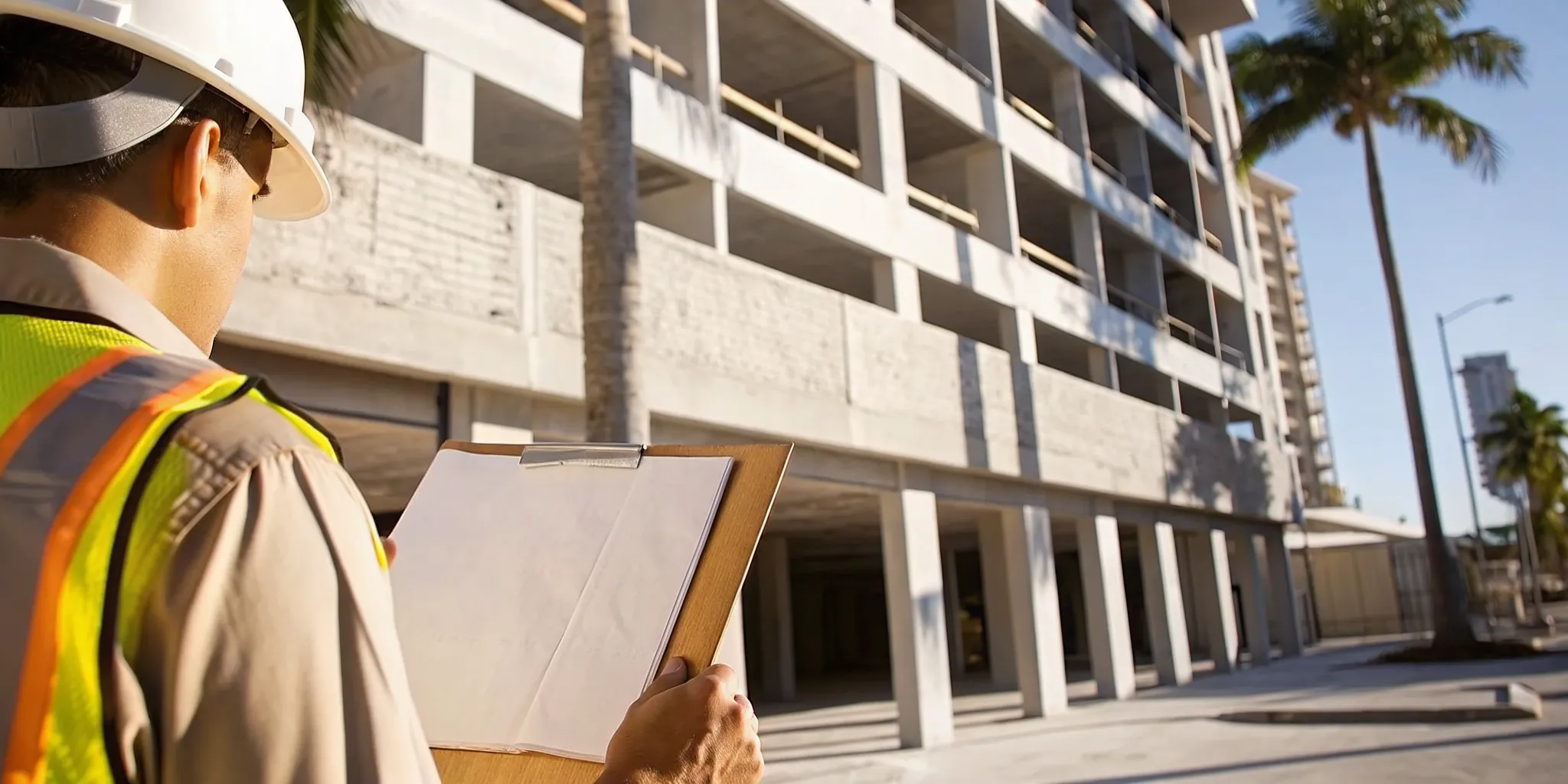
A single hairline crack in a concrete support column can trigger a major building code violation. For Florida property owners and HOA boards, waiting for an official notice to fix aging structures is a costly mistake. Real-world compliance starts with finding these issues early on.
A building condition assessment is a systematic physical review of a commercial property’s structural integrity, electrical systems, and mechanical safety. For Florida property owners and HOA boards, this inspection provides the essential technical data needed to comply with local Miami-Dade and Broward safety programs. Under these local laws, aging commercial and multi-family structures must undergo mandatory safety inspections at the thirty or forty-year mark to maintain occupancy certificates. By identifying hidden concrete damage or structural defects early, this detailed review prevents severe legal trouble, safety hazards, and costly code enforcement violations. Licensed building experts conduct these visual reviews to confirm that the facility remains completely safe for continued use and meets all municipal standards.
Request a building condition assessment today to catch structural issues early and resolve them before a red tag or fine is issued.
Understanding this process is crucial for avoiding costly red tags and maintaining compliance. To protect your investment, you must know what to expect during the evaluation process. We explore these details in What Is a Building Condition Assessment and What Does It Cover? Here’s how
What Is a Building Condition Assessment and What Does It Cover?
A building condition assessment is a systematic inspection, review, and written report on a building’s structure and systems. This work finds defects before they trigger violations. By looking at the whole property, the review gives a clear picture of what needs quick repair. This report helps property managers plan their budgets and keep tenants safe.
Definition and core components
Most often, the assessment includes a full structural review, mechanical and electrical systems inspection, and both exterior and interior walk-through surveys. They check walls, roofs, and foundations. This work finds early signs of damage before they lead to big failures.
A standard report breaks down its findings into clear sections:
- Structural elements: Inspectors check the load-bearing walls, concrete columns, beams, and foundation slabs.
- Mechanical and electrical systems: This part covers the power panels, wiring, plumbing, and climate control units.
- Exterior and interior finishes: Experts scan the roof, windows, doors, and common interior areas for water leaks.
Structural and system reviews
A key part of the review is to look at the main bones of the building. This check is not just about concrete. Under local building codes, inspections must include a general review of the electrical systems. Wiring, power panels, and backup tools must meet safety rules.
Owners can manage these reviews alongside annual municipal safety inspections to keep their properties in line with local codes. This proactive step helps you spot system failures before they cause fines. It makes the final report easy to prepare. It also protects your investment.
Compliance and safety goals
The inspection confirms a building is safe. Under Miami-Dade County rules, this check must match the present occupancy of the structure. This means experts make sure the frame can support its daily use without risk. A detailed report then outlines any needed repairs.
Ignoring these safety needs leads to swift enforcement action. The city can issue heavy fines, and they may even force you to vacate the entire property. A professional review keeps you in control. It gives you the facts to fix issues on your own budget before they become emergencies.
Areas of inspection
An expert visual exam must cover all parts of the property. This includes both habitable and non-habitable areas. According to Miami-Dade structural rules, the inspector must check key unfinished zones like utility spaces, stairwells, and elevator shafts. They must inspect enough structural parts to get a fair view of the entire building.
In most cases, a systematic visual look is enough. If they find signs of distress, they may need more tests. They might need to chip away concrete or open up small parts of the ceiling. This work is kept to a minimum to keep repair costs low.
Why a Building Condition Assessment Matters Before Recertification
Local codes force owners of aging properties in Florida to prove their structures are safe. In Miami-Dade and Broward counties, you must comply with strict safety rules once your building reaches a certain age. Starting with a building condition assessment is the best way to prepare for these rules. This check helps you find structural flaws before they turn into costly code violations.
The Trigger for County Safety Programs
The law forces older buildings to go through routine checks to ensure public safety. For example, the Broward County building safety inspection program mandates a safety report for buildings reaching 40 years of age. You cannot ignore these formal notices without facing steep fines.
To complete this process, you must hire licensed experts. Broward needs inspections by professional engineers or architects to check structural safety. These experts study how time has affected the building’s physical health.
If the inspector finds serious defects, you must repair them quickly. Putting off repairs can lead to building department violations, which cost thousands of dollars. Early planning helps you control these costs.
How Assessments Support Building Safety
Under the Miami-Dade County structural recertification guidelines, the main purpose of these rules is to confirm a building is safe for ongoing use. As structures age, their materials break down over time. Concrete cracks, steel rusts, and wood rots under the hot, humid Florida weather.
A key focus of these county safety programs is studying how original construction materials break down over time. Building materials do not last forever, especially in coastal areas with salt air. Over several decades, salt and moisture soak into concrete, causing inner steel to rust and expand.
A building condition assessment is the key tool used to find these problems early. These recertification inspections show if structural parts broke down beyond safe limits. If they did, you must make repairs before the county will approve your building recertification.
Catching issues early keeps them from spreading and causing major damage. If you wait until the county forces your hand, you might face sudden repair fees. An early assessment gives you the time to plan your budget.
The Structured Steps of Building Recertification
Getting your property recertified involves a clear, multi-step process. You must move from the first check to the final report step by step to please local inspectors. Skipping any part of this sequence can lead to serious fines.
This structured path helps you stay on track and meet every legal deadline. By working with licensed experts, you ensure that you submit the correct paperwork on time. Follow these main phases to secure your building safety permit.
- First, you receive a formal notice from the county. This letter states that your building has reached 30 or 40 years of age and needs a safety inspection.
- Second, you must hire a professional engineer or architect. This expert conducts a thorough building condition assessment to check the structural and electrical systems of your property.
- Third, the inspector records all findings in a formal report. This safety inspection report provides the necessary evidence to meet local building recertification compliance rules.
- Fourth, you must resolve any safety issues found during the check. You must complete all repairs and submit the final report to the county for approval.
Who Typically Orders a Building Condition Assessment
Different groups order a building condition assessment for many reasons. In Florida, the focus is often on safety and local codes. Whether you own a retail space or run a residential complex, you must know the state of your property. These reports give you the facts you need to make smart choices. They show what parts of a building need fast repair and what parts are safe.
Commercial and residential property owners
Florida property owners must track the safety of their structures. If you wait to fix a weak roof or a cracked wall, the costs can rise fast. Owners should focus on building recertification to avoid legal trouble and costly penalties. A proactive check is the best way to prepare for the 30/40-year recertification process. It also ensures the site does not pose a hazard to the public.
Some owners only ask for a check after they get a warning from the city. If a city inspector finds a code violation, the owner must act fast. Violation Clinic helps property owners resolve code enforcement actions, stop-work orders, and expired permits quickly. Hiring a building code violation consultant is the fastest way to handle these notices. An expert can review the building and help you clear the red tags.
Condo and homeowner association boards
Condo and homeowner association (HOA) boards have a legal duty to keep their properties safe. They manage shared areas like lobbies, roofs, and parking decks. Board members order these inspections to find structural damage before it spreads. State laws in Florida say older communities must get these safety checks. For example, Broward County safety inspection rules require a report when a building reaches 40 years of age. This law ensures that boards keep up with needed repairs.
Property managers of aging communities
Property managers run the day-to-day work for local communities. They must plan for future costs while keeping people safe. A building condition assessment helps managers of aging communities manage maintenance budgets. By finding critical repairs before they turn into emergencies, managers can avoid sudden fees. In Miami-Dade, these assessments are used to confirm a building is safe for continued use. This proactive planning keeps buildings safe and protects community funds.
What Inspectors Look For: Structural and System Red Flags
When you hire an expert for a building condition assessment, they focus on finding early signs of damage. These signs are often small at first but can turn into major safety hazards if you ignore them. For a successful recertification, the inspector must check both the inside and the outside of your property. Finding these issues early prevents code violations and helps you keep the building safe for use.
Signs of structural trouble
Inspectors check the walls, beams, and columns of your property. Surface flaws like cracks, sagging, and distortion are major red flags. Inspectors also search for leaks, peeling paint, and bent metal. Under local rules, these surface flaws are clear indications of possible difficulty with the building strength.
Finding these signs early helps you make repairs before they turn into major safety hazards. It also ensures you do not face sudden shut-down orders from the city. The inspector will check for any signs of sagging in the roof or ceilings.
They look closely at concrete slabs to find rust stains, which show that the steel inside is starting to corrode. They check if the walls are still straight or if they have begun to tilt or bow. Even peeling paint or loose plaster can hide water leaks that damage concrete. When these signs appear, they warn the inspector that the building has structural issues.
Where the inspector must look
A proper building condition assessment cannot skip any part of the site. The inspector must check both habitable and non-habitable areas of the building to prove compliance. This means they will look at public spaces, private offices, and empty rooms. They must see every area where structural materials might break down over the years.
They will also look at the roof, the foundation, and the outer walls. To find hidden damage, inspectors must go into spaces that people rarely use. Unfinished spaces like utility rooms, stairwells, and elevator shafts are key locations for these close checks.
These spots have exposed concrete and steel that show the real health of the property. If you own commercial spaces, you should prepare these areas before the inspection starts. Managing this process is similar to preparing for annual municipal safety inspections on your land. Clean, well-lit spaces help the inspector do their job quickly.
When visual checks are not enough
For most older buildings, a systematic visual examination is enough to confirm safety. The engineer will walk the site and write down what they see. They do not need to run complex lab tests on the materials unless they find a major warning sign. Visual checks are the main way to prove the building is safe to occupy.
Most of the time, this simple walk-through will give the city the proof it needs. If the inspector finds a bad crack or deep sag, they may need to look closer. They will not start with heavy, destructive tests that damage your walls.
Instead, they prefer manual procedures like chipping away small parts of the concrete or surface finish. Chipping a small spot lets them check the steel underneath without causing major damage. They only run larger lab tests if these small manual checks show a critical structural failure.
What an Assessment Means for Florida Code and Condo Safety Compliance
Condo safety acts and local laws
Florida building laws are now strict. Under the Florida Condo Safety Acts, county programs require periodic third-party evaluations of older buildings. This check-up is the best way to get facts for local officials. These checks provide the proof needed to satisfy municipal recertification.
These safety laws apply to many types of properties across the state. In places like Broward County, a safety inspection report is required for buildings when they reach forty years of age. This rule applies to both residential and commercial structures. To avoid fines, you must hire a licensed engineer or architect to do this work.
Early detection and cheaper repairs
Waiting for a city notice is a bad plan. A proactive building condition assessment helps you find small structural flaws early. Surface issues like wall cracks, sagging, or water leaks are signs of deeper trouble. Finding these structural issues early allows for cheaper repairs before they get worse. This stops minor damage from turning into major code violations.
When materials degrade over time, the strength of the building drops. If you do not check the concrete, steel, and wood, small cracks can expand. A proper assessment tracks this decay before it threatens the whole frame. Regular maintenance is much cheaper than fixing a building after a red tag or stop-work order is issued.
Remediation and professional guidance
During a safety check, the engineer’s professional judgment remains paramount. There is no single rule that fits every property. An expert must look at how the building has aged and what it needs to stay safe.
Each building has unique wear from the Florida sun and salt air. The expert must check enough structural parts to understand the state of the whole building. This is where experience counts most. A general checklist is not enough to guide major repair decisions.
If an assessment finds a safety gap, you must act fast. Do not ignore the report or hope the city will not notice. Local building officials can issue costly fines or order you to vacate. Fixing these issues requires a clear plan to repair the damage and submit reports to the city.
If your building already has a code violation or a stop-work order, you need fast help. You should choose a building code violation consultant who can guide you through the process. Violation Clinic helps property owners resolve code enforcement actions, stop-work orders, and expired permits quickly. We focus on fixing the core problem so you can pass your inspection and protect your investment.
Building Condition Assessment vs. Property Condition Assessment: What Is Different?
Many people use these terms to mean the same thing. But they differ by goal and context. Condo boards, property buyers, and local officials use them for their own reasons.
Due diligence in commercial real estate
A property condition assessment, or PCA, is common when buying commercial real estate. Buyers use this study during due diligence before they close the deal. It gives a broad look at the land and the structure to help find costly risks. In contrast, a building condition assessment looks only at the building systems. Local officials often need a building inspection to prove that a structure remains safe to use. These safety reviews check structural and electrical parts to avoid fines.
Capital planning and safety compliance
A facility condition assessment, or FCA, helps owners plan upkeep budgets. Condo boards use these reports to forecast costs. This planning is helpful for older buildings that must manage reserves. But if you have open code violations, a routine plan is not enough. You need to focus on local building safety codes to avoid fines. Our team helps you clear up stop-work orders and old permits to keep your site safe.
Meeting local safety standards
In South Florida, these assessments are not just about commercial deals or budget planning. They are a legal must to prove your building is safe to use. Broward County and Miami-Dade have strict programs that mandate a safety report once buildings reach a certain age. These safety checks show how old building parts hold up over time. If structural parts have degraded past safe limits, you must make repairs fast. Starting this process early helps you avoid severe fines and court cases.
The table below summarizes how the three most common assessment types differ by their purpose and when owners typically use them.
| Assessment Type | Primary Purpose | Typical Trigger | Main User |
|---|---|---|---|
| Building Condition Assessment (BCA) | Inspect and report on a building’s structure and systems. | Recertification, compliance, and safety reviews. | Property owners, HOA boards, and county officials. |
| Property Condition Assessment (PCA) | Broad ownership risk review for a purchase decision. | Commercial real estate due diligence before closing. | Buyers, lenders, and investors. |
| Facility Condition Assessment (FCA) | Plan upkeep budgets and capital reserves over time. | Long-range maintenance and reserve planning. | Condo boards and property managers. |
We know that navigating municipal safety inspections can be hard. Knowing the difference between these reports is the first step to staying compliant. A clear plan keeps your property safe and protects you from local enforcement actions. When you face open violations or need to begin your building recertification, we are here to guide you. We turn complex building codes into plain steps to get your property back on track.
Speak with a compliance expert about your building condition assessment and get a clear remediation plan before enforcement action begins.
Frequently Asked Questions
Does Broward County require a building safety inspection at 40 years?
Yes. The safety inspection program in Broward County requires a safety report for buildings when they reach 40 years of age. Licensed engineers or architects must perform these inspections to confirm that the structure remains safe for continued use under local codes. This process helps find structural issues before they trigger code violations.
What is the purpose of a Miami-Dade building structural recertification?
Under the Miami-Dade County code, the main goal of a structural inspection is to confirm that an older structure is safe for continued use. The inspection checks the building’s current state and looks for cracks, leaks, or rust. It does not check if the building matches its original design, but makes sure the structure is safe to occupy.
How do you resolve a building code violation or stop-work order in Florida?
To fix a building code violation or stop-work order, owners must work with the local building department to find the right path to compliance. Hiring an expert like Violation Clinic helps you resolve code enforcement actions and fix expired permits. We also handle needed inspections quickly so you can avoid high fines and legal trouble.
Ready to Schedule Your Building Condition Assessment?
Ignoring your aging Florida property can lead to severe structural failures, expensive county code violations, and sudden stop-work orders from your local building departments. Taking action now ensures you identify potential structural hazards early and resolve them before they become costly safety emergencies that disrupt your tenants or guests. By starting this vital compliance process today, you will protect your investments and meet the strict Florida building recertification rules with absolute confidence.
Ready to secure your commercial property and ensure full compliance with municipal building codes? Do not wait for a costly red tag or fine to disrupt your daily operations. Contact Violation Clinic today to speak with our compliance experts and schedule a building condition assessment review.