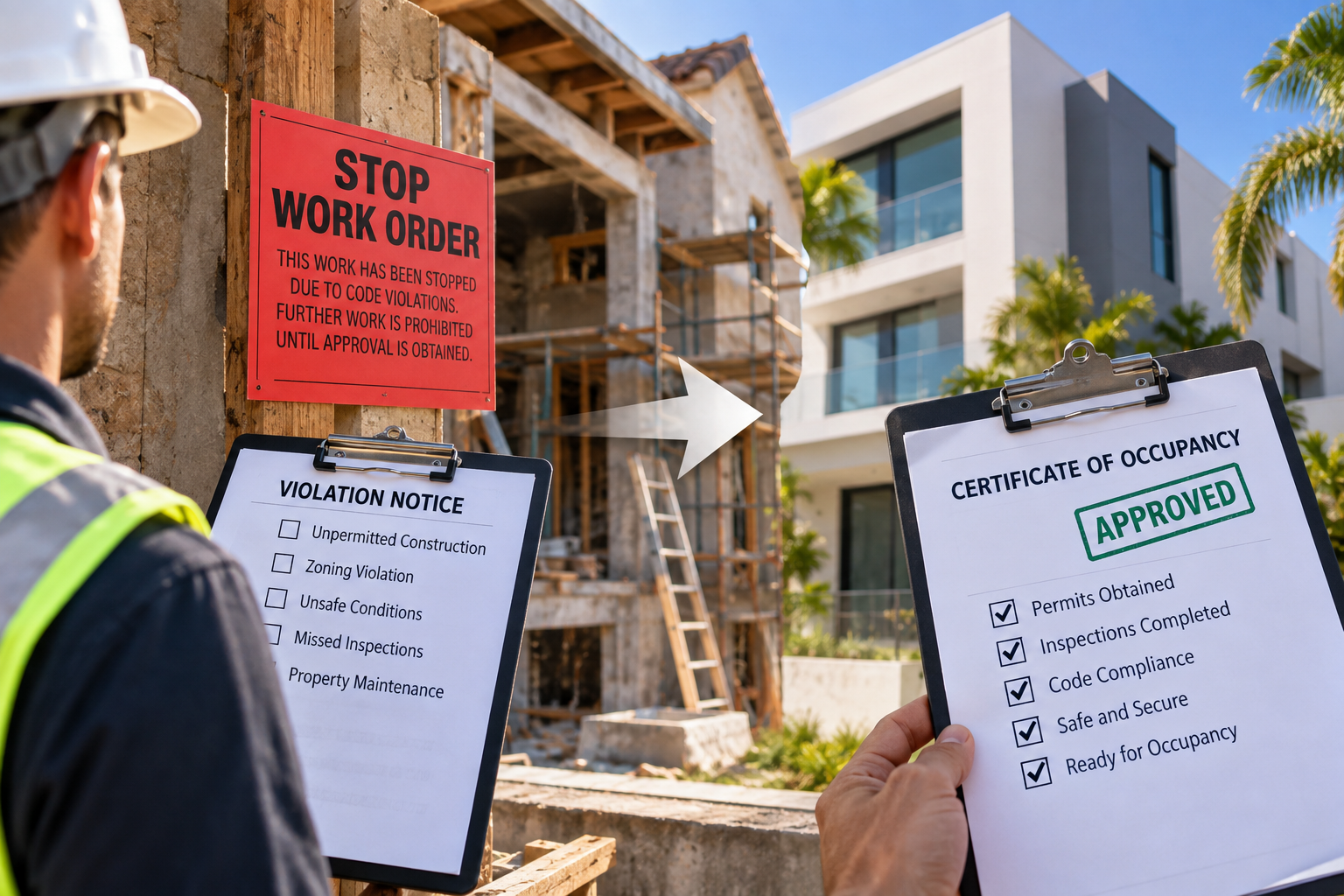
A building code violation can begin with something that seems minor: an unpermitted renovation, an overlooked repair, a zoning issue, or a missed inspection. But when a violation is left unresolved, the consequences can grow into fines, liens, project delays, and restrictions on property use.
Florida properties are governed by the Florida Building Code as well as local city and county requirements. The current statewide code is the Florida Building Code, 8th Edition (2023), effective December 31, 2023, while local governments may have applicable amendments and enforcement requirements.
Why Do Property Owners Receive Code Violations?
Common causes include:
- Unpermitted construction: Remodeling, additions, structural changes, or system work may require permits and inspections before work begins.
- Zoning violations: Property use, setbacks, parking, signage, additions, and other site conditions must comply with applicable local zoning regulations. Understanding Zoning Violations
- Neglected maintenance: Deteriorated exterior surfaces, unsafe conditions, accumulated debris, or other property maintenance issues can attract enforcement attention.
- Unsafe conditions: Structural deterioration, electrical hazards, damaged building components, or other dangerous conditions may require immediate correction.
- Missed inspections: Required inspections and legally mandated programs cannot simply be skipped because a property appears to be functioning normally.
From Violation to Compliance: A Practical Example
Consider a hypothetical example, not a documented Violation Clinic project: a commercial owner begins an interior renovation without confirming which permits are required. A building official discovers the work and issues a Stop Work Order.
The correct response is not to continue construction and hope the issue disappears. The owner should stop the work, obtain the violation documentation, determine exactly what was performed, involve the appropriate licensed professionals, obtain required permits, complete the necessary corrections, and schedule the required inspections.
Depending on the circumstances, resolving the matter may involve Stop Work Order Removal, after the applicable requirements have been satisfied. If final approvals are missing, Certificate Of Occupancy Assistance may also be relevant.
For matters that proceed to an administrative hearing, owners may also need Special Magistrate Representation or other professional assistance.
Building Recertification Is a Legal Requirement
Some inspections are not optional. Florida law requires milestone inspections for qualifying condominium and cooperative buildings that are three stories or higher. Under Florida Statute 553.899, the standard milestone occurs when the building reaches 30 years of age and every 10 years afterward. Local enforcement agencies may require an earlier 25 year milestone when local circumstances justify it.
Miami Dade County has its own building recertification requirements. Failure to obtain required recertification can result in a $510 initial penalty, with additional accumulated penalties potentially reaching $10,000 per violation, along with possible lien collection action.
Property owners can review Violation Clinic’s Building Recertification Services for assistance with this process.
How to Prevent Code Violations and Fines
Prevention starts with making compliance part of normal property management.
- Obtain permits before construction.
Check with the local building department before beginning structural, electrical, plumbing, mechanical, or other regulated work. - Schedule regular inspections.
Do not wait for an enforcement notice. Periodic professional inspections can identify deterioration and maintenance problems early. - Maintain the property.
Keep exterior areas, roofs, walkways, landscaping, common areas, and building components in safe and serviceable condition. - Monitor structural and system safety.
Pay attention to cracking, water intrusion, corrosion, electrical problems, deteriorating concrete, damaged railings, and other warning signs. - Track local requirements.
Florida has a statewide building code, but local requirements and amendments matter. The Florida Building Code Information System provides access to code resources and local amendments.
For additional prevention guidance, see How Property Owners Can Prevent Code Fines.
What Happens When a Violation Is Ignored?
Ignoring a violation rarely makes it disappear. Depending on the violation and jurisdiction, enforcement can involve additional penalties, hearings, liens, or orders requiring corrective action.
Florida law gives local governments authority to enforce building construction requirements, while local code enforcement procedures can vary by jurisdiction.
That is why addressing the underlying problem is generally more useful than simply responding to the notice itself. The objective should be documented compliance.
Related Posts and Resources
- What Is Building Recertification?
- Understanding Zoning Violations
- Steps to Legalize Unpermitted Construction Work
- Building Recertification Inspection: What Inspectors Check
- Florida Building Code Information System
Summary and Conclusion
Going from violation to compliance is rarely about fixing one isolated problem. It requires understanding the notice, identifying the applicable code or local regulation, correcting the underlying condition, obtaining required permits and inspections, and documenting completion.
For Florida property owners, proactive compliance can help prevent avoidable enforcement problems. Whether the issue involves unpermitted work, zoning, an Unsafe Structure Violations concern, a Stop Work Order, or mandatory Building Recertification, acting early gives owners more time to understand their obligations and complete the required steps.
For regulatory questions, always confirm the requirements with the applicable local building or code enforcement authority and the current Florida Building Code.
At ViolationClinic.com, we specialize in helping property owners navigate the recertification process smoothly. Whether you need assistance with inspections, violations, or compliance issues, our team is here to help. Don’t wait until it’s too late, take action today to protect your investment and ensure the safety of your building.
For more information or assistance, contact us at ViolationClinic.com!