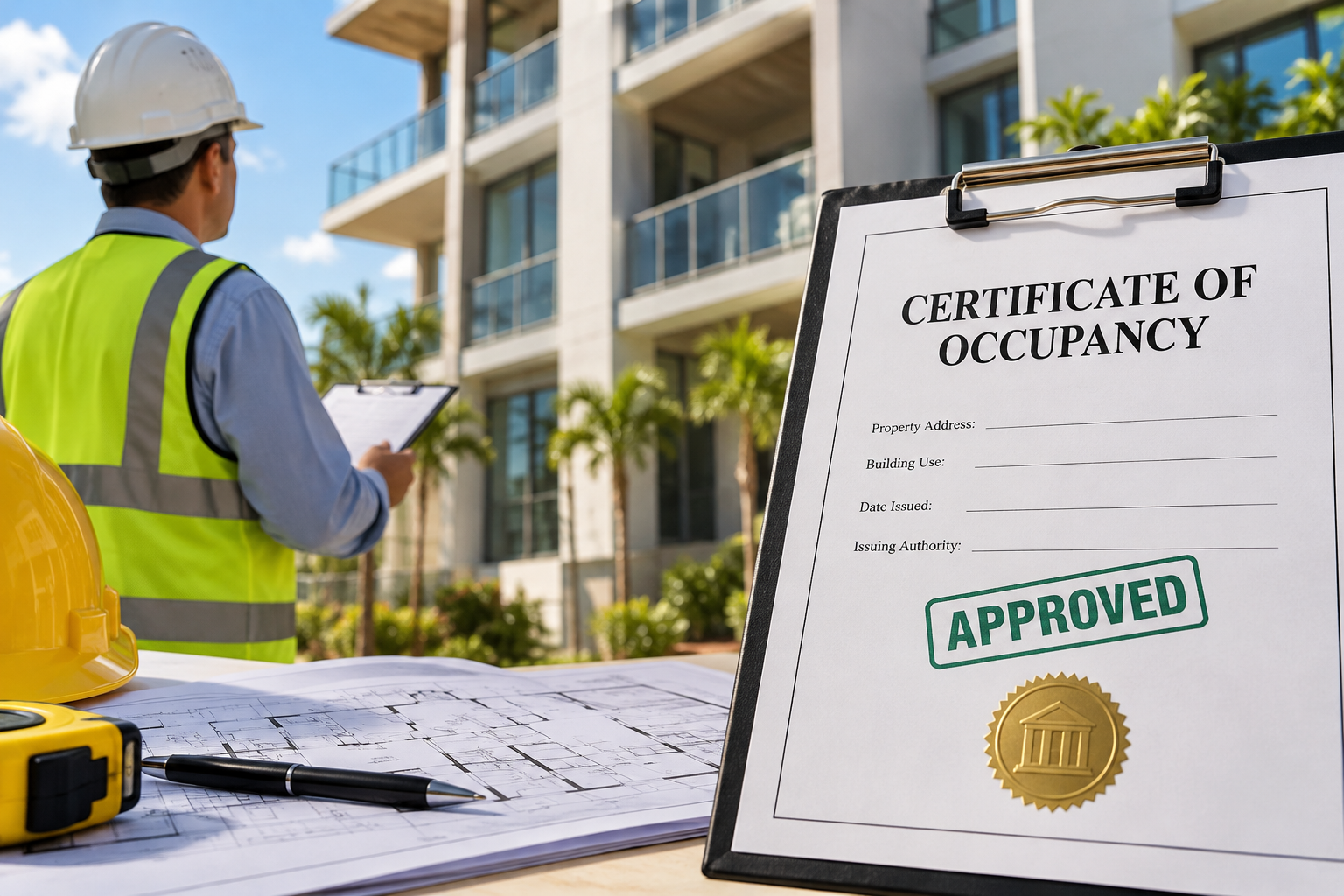
A Certificate of Occupancy is an important document that confirms a building is approved for occupancy under applicable building regulations. For property owners, investors, landlords, and commercial property professionals in Florida, obtaining the necessary approval can become complicated when permits remain open, inspections are incomplete, or code violations have not been resolved.
Understanding the requirements early can help prevent unnecessary fines, occupancy delays, and complications during a property transaction.
What Is a Certificate of Occupancy?
A Certificate of Occupancy, commonly called a CO, is issued by the appropriate building authority when applicable requirements for occupancy have been satisfied. Depending on the project and jurisdiction, approval may involve building inspections, fire safety requirements, approved construction plans, and final permit signoffs.
Florida Statutes Section 553.79 establishes permit and inspection requirements for covered construction. Review the official Florida Statutes and consult your local building department to determine which approvals apply to your property.
Common Issues That Delay Occupancy Approval
Several problems can prevent a property from receiving the required approvals.
Unpermitted construction: Renovations, additions, electrical work, and plumbing modifications may require permits. Work completed without approval can require additional documentation, corrective construction, and inspections.
Zoning violations: A property may not comply with local rules governing permitted uses, setbacks, or building placement. Confirm zoning requirements before changing a property’s use or expanding an existing structure.
Neglected maintenance and unsafe conditions: Deteriorating structural components, damaged exterior features, and unsafe electrical systems may prompt enforcement action. These concerns can lead to Unsafe Structure Violations requiring professional evaluation and corrective work.
Missed inspections and expired permits: Projects that lack required inspections or final approvals may remain unresolved in municipal records. Depending on the circumstances, owners may need additional inspections or assistance with Stop Work Order Removal before construction can continue.
Addressing these problems early can make the approval process more manageable.
How to Obtain a Certificate of Occupancy
If your property needs occupancy approval, take these practical steps:
- Review existing records. Contact the local building department to identify outstanding permits, inspection results, zoning concerns, and required approvals.
- Correct outstanding violations. Determine which repairs, documents, or permit applications are necessary to bring the property into compliance.
- Arrange professional inspections. Use appropriately qualified professionals when structural, electrical, or other technical evaluations are required.
- Complete required inspections. Schedule inspections with the relevant authority and resolve any deficiencies identified.
- Confirm final approval. Verify that outstanding requirements have been satisfied and obtain the applicable occupancy documentation.
For complicated cases, Certificate Of Occupancy Assistance can help property owners understand outstanding requirements and organize the steps needed to pursue approval.
Do Not Overlook Building Recertification
Occupancy approval is not the only compliance obligation property owners may face. Certain buildings must also undergo periodic safety inspections under applicable local regulations.
For example, Miami Dade County generally requires qualifying buildings to undergo recertification at specified intervals, commonly at 30 years for inland buildings and 25 years for qualifying coastal buildings, followed by recurring inspections. Exemptions and requirements depend on the property’s characteristics and jurisdiction.
The county states that failure to meet applicable recertification requirements can result in an initial penalty of $510, with additional accumulated penalties potentially reaching $10,000 per violation. These figures apply to the relevant county enforcement process, not every Florida property.
Visit the official Miami Dade Building Recertification page or explore Violation Clinic’s Building Recertification Services for further guidance.
How to Prevent Costly Compliance Problems
Property owners can reduce their risk by obtaining permits before construction, tracking inspection deadlines, maintaining structural and building system safety, and keeping complete records of approvals and repairs.
Regularly review local building and zoning requirements through the Florida Building Commission and your local authority.
If an enforcement matter escalates, Special Magistrate Representation may be relevant where permitted by local procedures. Seek qualified guidance to understand your options and applicable deadlines.
For example, a commercial property with an unresolved renovation permit may need to provide approved plans, complete corrective work, and pass outstanding inspections before receiving final approval. This is an illustrative scenario, not a documented Violation Clinic case study.
Get Help Navigating Occupancy Requirements
Certificate of Occupancy issues can involve multiple permits, inspections, and local regulations. Understanding the outstanding requirements and addressing them in the correct order can help property owners avoid preventable delays.
Visit Violation Clinic to learn more about building code compliance resources and assistance with property violation concerns.
Related Resources
- Building Recertification Services
- How to Resolve Active Unpermitted Construction Violations
- Tips for Maintaining Code Compliance in Florida
At ViolationClinic.com, we specialize in helping property owners navigate the recertification process smoothly. Whether you need assistance with inspections, violations, or compliance issues, our team is here to help. Don’t wait until it’s too late, take action today to protect your investment and ensure the safety of your building.
For more information or assistance, contact us at ViolationClinic.com!