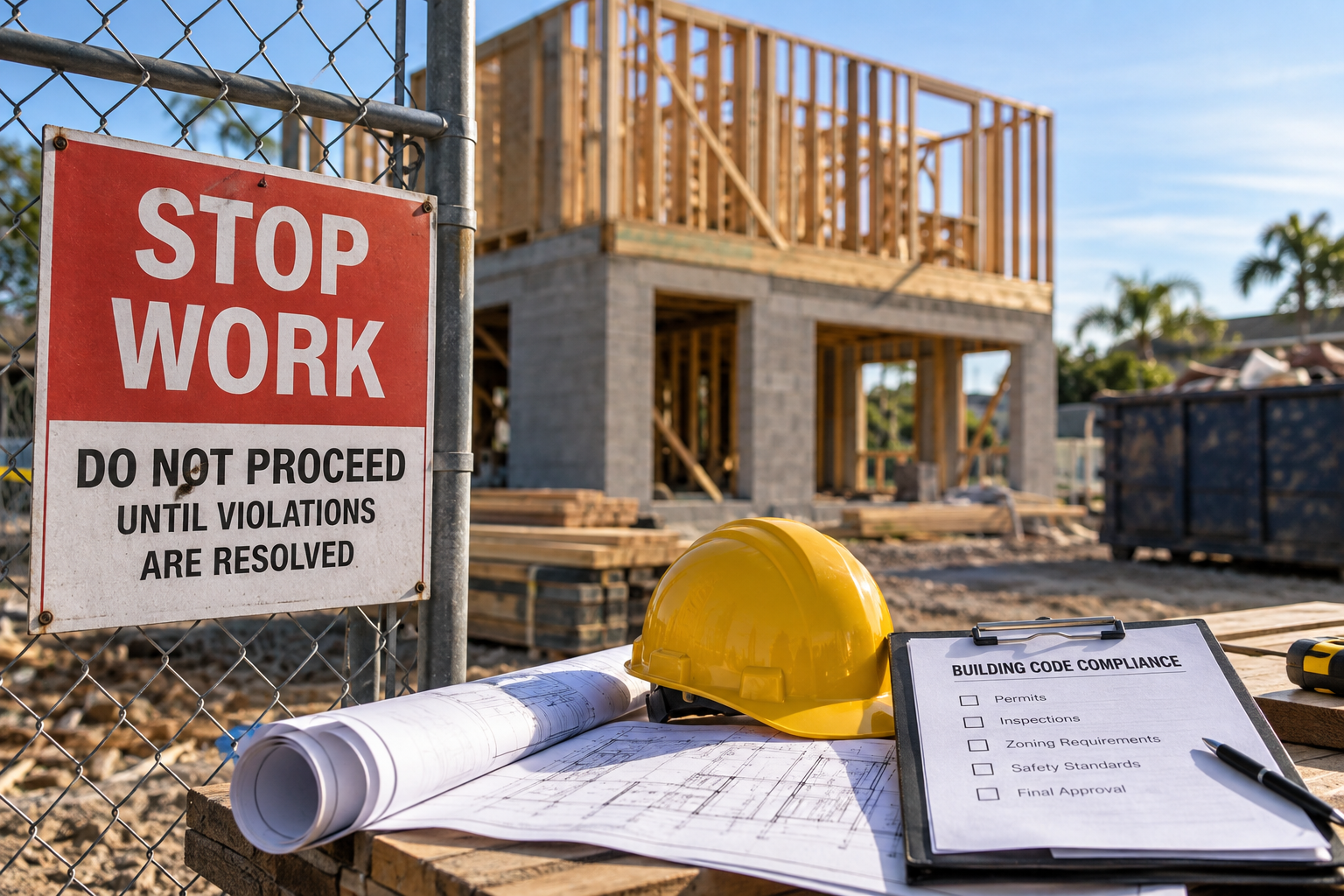
Construction projects can quickly fall behind when a property receives a code violation. Unpermitted work, zoning problems, missed inspections, or unsafe conditions can interrupt construction, increase costs, and create additional compliance requirements.
In Florida, covered construction generally requires the appropriate permits and must comply with the Florida Building Code and applicable local requirements. (Florida Statutes)
Common Causes of Code Violations
Unpermitted construction: Starting renovations, additions, electrical work, plumbing, or structural changes without required permits can result in violations. Owners may need additional documentation, inspections, permits, or corrective work before the project can continue.
Zoning violations: Local governments regulate issues such as property use, setbacks, parking, building placement, and other land use requirements. A project can comply with building standards but still violate local zoning rules.
Poor property maintenance: Deteriorated structures, debris, damaged exterior components, and other neglected conditions may create code enforcement issues depending on local requirements.
Unsafe conditions: Structural deterioration, electrical hazards, or other dangerous conditions can result in enforcement action and, in serious cases, Unsafe Structure Violations.
Missed inspections: Required inspections help verify that construction meets approved plans and applicable codes. Missing an inspection can delay approvals and may require additional work or documentation.
How Violations Cause Construction Delays
A violation can disrupt an entire construction schedule. Work may need to stop while the owner identifies the problem, obtains permits, prepares documentation, completes repairs, or schedules inspections.
For example, an owner who begins a renovation without confirming permit requirements may later discover that an inspection is necessary before the work can proceed. The resulting corrective work and administrative steps can add unexpected time and expense.
Depending on the situation, owners may need Stop Work Order Removal, permit assistance, Certificate Of Occupancy Assistance, or Special Magistrate Representation.
Building Recertification Requirements
Some inspections are legal requirements. Florida law establishes milestone inspection requirements for certain condominium and cooperative buildings, while local jurisdictions may have additional requirements. (Florida Statutes)
Miami Dade County states that failure to obtain required building recertification can result in a $510 initial penalty, with continued noncompliance potentially resulting in penalties reaching $10,000 per violation. (Miami Dade County)
Property owners can learn more through Violation Clinic’s Building Recertification Services.
Best Practices for Preventing Violations
Property owners can reduce delays by:
- Obtaining required permits before construction begins.
- Scheduling regular inspections and completing required inspections at each stage.
- Maintaining property aesthetics and safety according to applicable local requirements.
- Checking structural and system safety, including electrical, plumbing, mechanical, and structural components.
- Staying informed about Florida and local regulations, including the Florida Building Code and local zoning requirements. (Florida Building Commission)
- Closing permits properly after required inspections and approvals are completed.
For more compliance guidance, visit Violation Clinic or review How to Navigate City and County Code Rules.
When a Violation Already Exists
Do not ignore a violation notice. Review the cited issue, determine which permits, inspections, repairs, or documents are required, and address the problem promptly.
Violation Clinic provides resources and services for property owners dealing with building code and compliance matters, including violation remediation, Stop Work Order Removal, and building recertification.
Conclusion
Construction delays caused by violations are often preventable. Proper permitting, regular inspections, property maintenance, safety checks, and awareness of local regulations can help keep projects moving.
When a violation does occur, addressing it quickly and understanding the required path toward compliance can help prevent a manageable issue from becoming a costly construction delay.
Related Resources
- Building Recertification Services
- Violation Clinic Services
- Navigating Florida’s Evolving Building Codes
At ViolationClinic.com, we specialize in helping property owners navigate the recertification process smoothly. Whether you need assistance with inspections, violations, or compliance issues, our team is here to help. Don’t wait until it’s too late, take action today to protect your investment and ensure the safety of your building.
For more information or assistance, contact us at ViolationClinic.com!