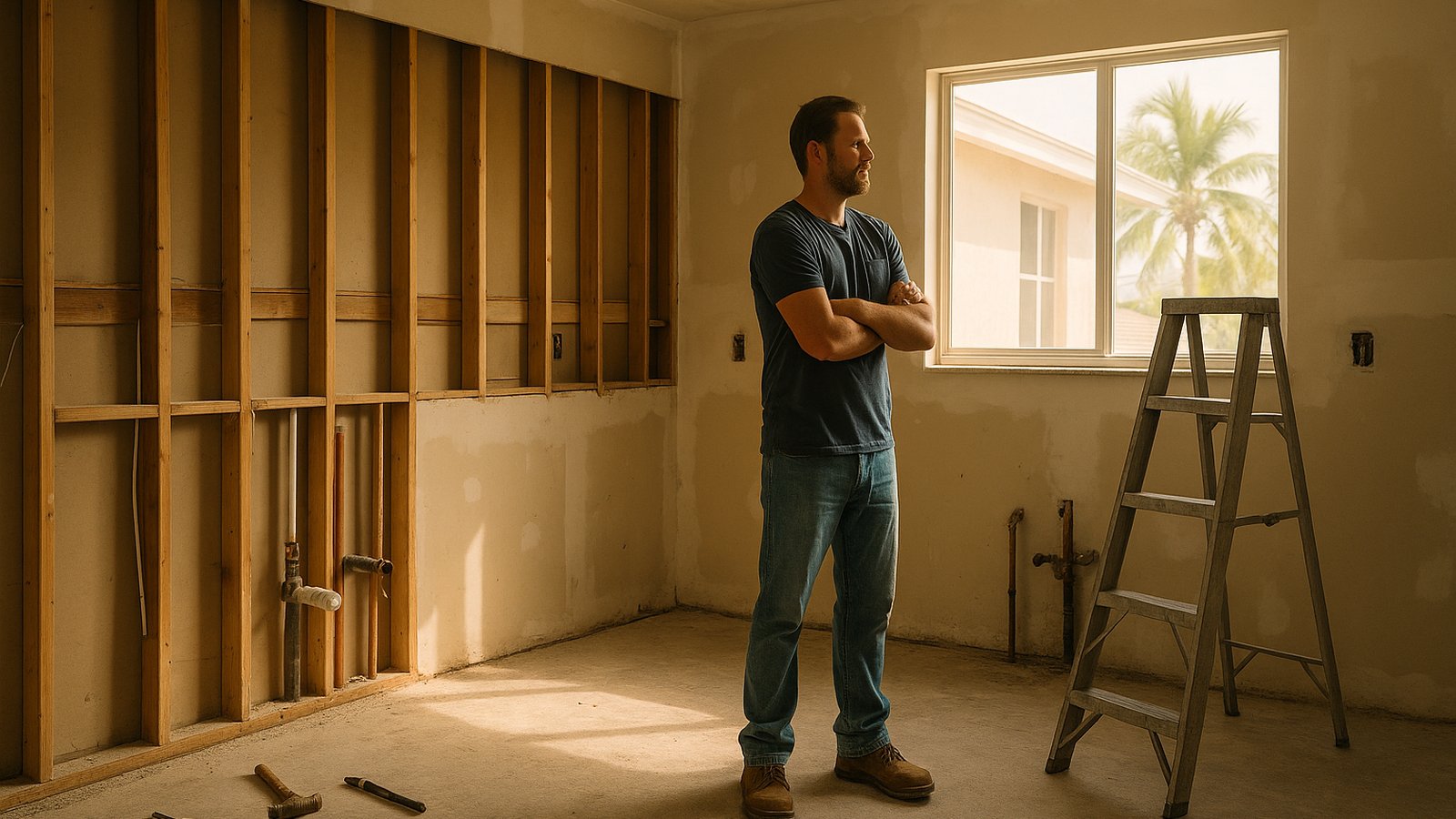
When a contractor abandoned the job and the open permit is still in that contractor’s name, the property owner is the one left holding the problem. The work is half done, inspections have stopped, the permit clock keeps running, and the building department still lists a contractor who no longer answers the phone. In Miami-Dade and Broward it often follows a dispute over money, a contractor’s business failing, or a project that simply stalled. This guide explains what is actually open on your property, how a permit changes hands, and how to stop a stalled renovation from turning into an expired permit or a code case.
Violation Clinic is a private building-compliance consulting firm. We are not a government agency, and nothing here is legal advice. Requirements vary by municipality, so confirm the details with the building department that issued your permit.
Why a contractor abandoned job with an open permit becomes the owner’s problem
A building permit is tied to the property, not just to the contractor who pulled it. When the contractor disappears, three things keep moving without them:
- The permit status. Most Florida permits lapse if work or inspections stop for a set period. Once that happens, you are no longer dealing with an active permit but with an expired one, which is usually harder to fix. Our guide on what to do after a building permit expires in Florida covers that next stage.
- The work on site. Partially completed work may have been covered before an inspection, built without a required inspection, or left in an unsafe condition. Each of those has to be addressed before anyone can close the permit.
- Your property record. An open or expired permit shows up in lien and permit searches. Buyers, lenders and title companies will ask about it, which is why owners often discover the issue only when they try to sell or refinance.
Florida law treats abandonment as a disciplinary issue for the contractor. Under section 489.129, Florida Statutes, a project may be presumed abandoned after 90 days if the contractor terminates it without just cause or without proper notice to the owner, including the reason for termination, or fails to perform work without just cause for 90 consecutive days. That matters for any complaint you file against the contractor’s license, but it does not close your permit. The permit still needs a responsible party and a path to final inspection.
First, find out exactly what is open
Before you hire anyone new, build an accurate picture of the permit record. Owners frequently assume there is one permit when there are several: a master building permit plus electrical, plumbing, mechanical or roofing sub-permits, each with its own inspection history.
Information to collect
- Every permit and process number connected to the address, including sub-permits.
- The permit holder and the qualifier’s license number for each permit.
- The inspection history: which inspections passed, which failed, and which were never requested.
- The date of the last approved inspection, which usually drives whether the permit is still active.
- Any notices, stop work orders or code enforcement cases tied to the property.
- Your contract, payment records, approved plans and any written communication with the contractor.
Payment records matter more than owners expect. For residential work, section 489.126, Florida Statutes requires a contractor who receives an initial payment of more than 10 percent of the contract price to apply for the necessary permits within 30 days and to start work within 90 days after the permits are issued, unless there is just cause or the owner agreed otherwise in writing. Those dates can support a complaint, but they are separate from the question of how to finish the permitted work.
Your options for taking over the permit
Once you know what is open, there are generally three routes. Which one applies depends on your municipality, the type of property and how far the work progressed.
1. A change of contractor
Most South Florida building departments let a new licensed contractor take over an active permit through a change of contractor process. In the City of Miami, for example, the change is requested through the iBuild portal and requires a signed and notarized change of contractor form, as described on the City of Miami’s page on adding or updating a contractor. Miami-Dade County uses a notice period for subcontractors on the permit, and its change of contractor waiver form allows affected subcontractors to waive that waiting period. Other cities in Broward and Miami-Dade have their own forms and notice rules.
The new contractor is accepting responsibility for work they did not build. Expect them to inspect what is already in place, and in some cases to require that walls or ceilings be opened so an inspector can see work that was covered without approval.
2. An owner-builder permit
Some owners consider finishing the work themselves under an owner-builder permit. Florida allows this for certain residential work on a property the owner occupies, but it carries real responsibility. Miami-Dade requires an owner-builder disclosure statement and an in-person or virtual validation, and the owner becomes legally responsible for the work. If the original contractor’s work has defects, those become yours to correct. This route is rarely the right fit for a stalled renovation with partially concealed work.
3. Cancelling and re-permitting
Where the permit has already expired, or where the scope has changed, the department may require the old permit to be addressed and a new permit to be issued for the remaining work. If unpermitted changes were made along the way, that portion may need to be legalized as well. Our overview of expired permit resolution explains how that process is usually handled.
Practical steps for owners
- Document the site now. Take dated photos and video of every area of work before anyone else touches it. This protects you in any dispute and helps the next contractor price the job.
- Send written notice to the original contractor. Ask them to confirm in writing whether they will complete the work or release the permit. Keep proof of delivery. Speak to a construction attorney before terminating a contract.
- Pull the full permit record. Confirm every permit, sub-permit and inspection result tied to the address.
- Check the permit’s expiration status. If it is close to lapsing, the order of the next steps changes. An extension or renewal request may be needed before the change of contractor.
- Interview replacement contractors who handle takeovers. Ask how they will verify concealed work and how they will address failed or missing inspections.
- Process the change of contractor or new permit. Follow the specific forms and notice rules of the building department that issued the permit.
- Schedule the missing inspections and close the permit. A permit is only resolved when the final inspection is approved and the record shows it closed.
- Keep the file. Save the final inspection approval and closed permit record for future buyers, lenders and insurers.
When a stalled job turns into a violation
An abandoned project does not always stay a private dispute. A half-demolished interior, exposed wiring, an open roof or a missing pool barrier can draw the attention of a code officer or building inspector. If work was done beyond what the permit covered, the department may treat it as work without a permit. That can lead to a notice of violation, a stop work order or fines.
If you are already facing that, the response looks different from a simple contractor change. You may need to correct the condition, obtain approvals for the unpermitted portion and, in some cases, appear before a hearing officer. Our page on building code violations in Miami explains how those cases usually unfold, and the process for a red tag is covered in our stop work order removal checklist.
Frequently asked questions
Can I hire a new contractor while the old contractor’s name is still on the permit?
Usually yes, but the new contractor generally cannot inspect or finish permitted work until the department records the change of contractor. Starting work before that change is recorded can create new problems.
Will the permit close on its own if nobody finishes the work?
Generally, no. Permits that are not finished typically expire rather than close, and an expired permit stays on the property record. Some jurisdictions have procedures for closing older permits, but they usually still require review, so plan on resolving it.
Does filing a complaint against the contractor fix the permit?
No. A complaint to the state licensing board addresses the contractor’s conduct. It does not change who is responsible for the permit or complete the inspections. Owners usually need to pursue both tracks at the same time.
What if I am selling the property?
Disclose the open permit to your agent and closing attorney early. Buyers and title companies usually want it resolved or addressed in the contract. Starting the takeover process before listing gives you more control over the timeline.
Talk to Violation Clinic privately
If your contractor walked away and left an open permit behind, we can review the permit record, identify what is needed to close it and coordinate with your replacement contractor. Contact Violation Clinic privately with the property address, any notices you have received and copies of the permit records or contract, and we will tell you what we see and what the realistic next steps are.