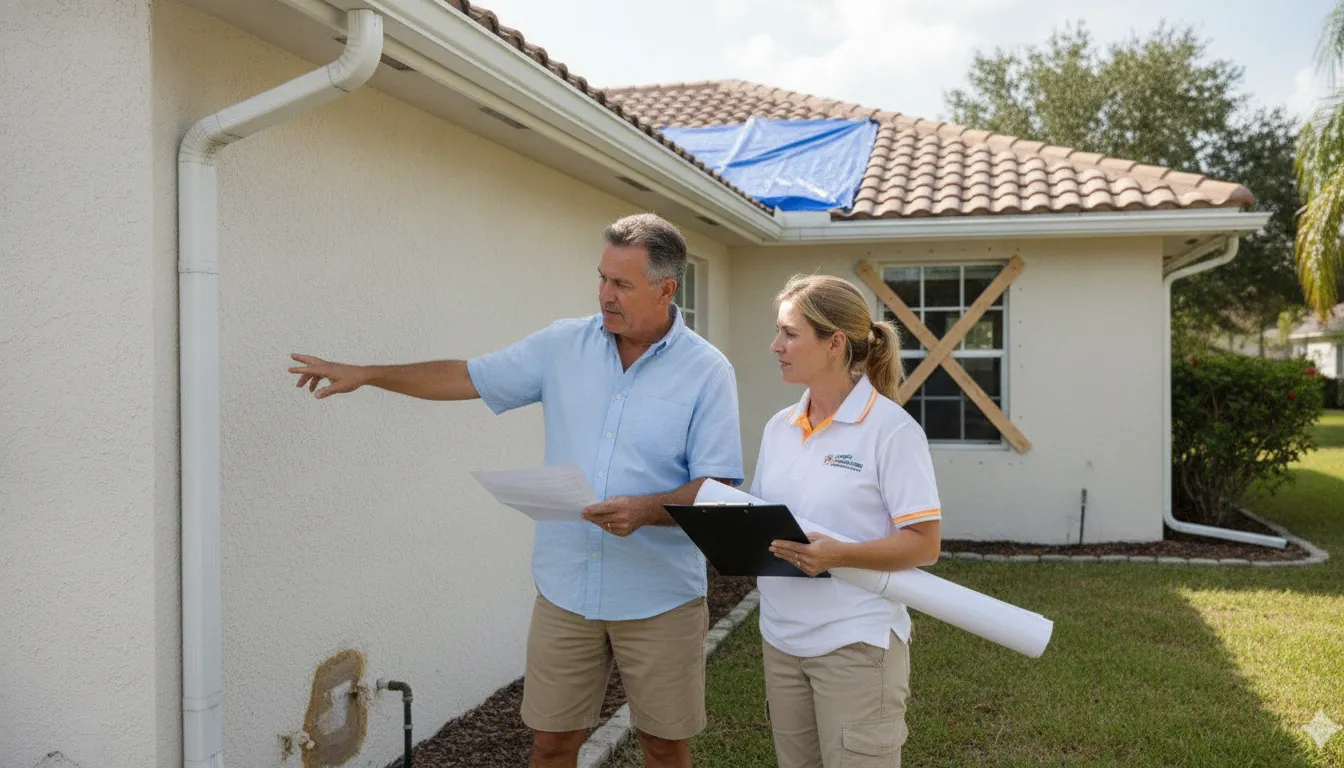
An emergency building violation can create two problems at once: an immediate safety concern and a compliance case with deadlines, inspections, or hearings. Start by protecting people, keeping them away from any unsafe area, and contacting emergency services if there is an immediate threat to life, fire, structural stability, or utilities. Do not treat temporary hazard control as proof that the violation is cleared.
Emergency building violation repair starts with immediate safety, notice review, permitted correction, required inspection, and written jurisdictional closure.
The right response depends on whether the notice involves an unsafe structure, unpermitted work, a stop-work order, fire safety, or an administrative issue. Begin with the facts in front of you, then follow a documented path from safety and notice review to permitted correction and inspection.
Need help with an urgent Florida building violation? Contact Violation Clinic.
Emergency Building Violation Repair: What to Do First
Start with safety, not paperwork. An emergency building violation may involve an active threat to people, while another violation may be administrative, such as missing documentation or unresolved permitting. Miami-Dade describes an unsafe structure as one that is structurally unsound, dilapidated, or otherwise unsafe for use or occupancy. Its unsafe-structure program is intended to protect occupants and the community, and possible causes include fire, deterioration, natural disasters, poor maintenance, and unpermitted work.
If there is an immediate threat to life, fire, structural collapse, or another active emergency, move people away from the affected area and call 911. Do not enter a visibly unstable space to retrieve belongings, inspect damage, or attempt a repair. Signs that deserve urgent caution can include major cracks, unusual sagging, rotting or termite-damaged wood, and ceilings, walls, or roofs that are collapsing or caving in. Miami guidance also identifies blocked or hazardous entrances and exits, fire-protection concerns, cave-in risks, and debris that creates a fire hazard as unsafe-building conditions.
Do not treat emergency building violation repair as a do-it-yourself project when the condition may involve structural stability, fire protection, gas, or electrical systems. Avoid removing damaged materials, opening walls, reconnecting utilities, bracing structural elements, or entering restricted areas unless qualified professionals and the responsible authority direct that work. Miami notes that Florida Power and Light may disconnect power to prevent electrocutions or electrical fires. If power has been disconnected or the property has been restricted, leave the system and area undisturbed.
If an inspector or building official has issued a stop-work order, stop the affected work immediately. Do not continue because the repair seems minor or because a contractor believes it can be corrected quickly. A safety response protects people first; it does not by itself clear the violation. The city or county may evaluate the property and determine whether repair is possible. For conditions involving structural danger or unsafe occupancy, unsafe-structure representation can help keep the response focused on evaluation, documentation, and the applicable municipal process.
How Emergency Building Violation Repair Works in Florida
Start by treating the notice as a case document, not a general warning. Identify the agency or municipality that issued it, the property address, the case or violation number, the condition cited, and the action the agency says is required. Miami-Dade explains that unsafe structures may be flagged by county inspectors, municipal building officials, or through public complaints, and that owners are formally notified of the violation and required corrective action. Miami-Dade’s unsafe-structure guidance is specific to that jurisdiction, so do not assume another Florida city follows the same process.
Separate the correction deadline from the hearing date
Look for every date and label it carefully. A notice may identify a response deadline, a repair or documentation deadline, an inspection date, or a hearing date. These are not interchangeable. A hearing date can require a different response than a routine correction notice. For example, the City of Miami says recipients of an unsafe-structure notice must respond within the specified timeline to avoid a hearing. It also instructs recipients who receive a final notice requiring a hearing not to proceed through the ordinary response steps. Read the notice language rather than relying on a remembered timeline or advice from another municipality.
Build a complete response file
Before contacting the agency, assemble the notice and all attachments, dated photographs of the cited condition, prior permits or inspection records, plans or contractor information, and copies of emails or call notes. Mark the exact paragraph that describes the required correction. If the notice is unclear, ask the issuing office to explain the condition and the accepted next step. Miami’s guidance states that an explanation or photographs of the issue may be available for a fee, and provides an unsafe-structure contact route for questions. Use the contact information in your own notice or the applicable agency’s current website.
Do not assume that calling or submitting a document automatically stops enforcement. Keep proof of every submission, request written confirmation when possible, and track the next required action. If the notice involves multiple departments, unpermitted work, a safety concern, or an approaching hearing, a professional building code violation remediation review can help organize the correction path. Do not treat one city’s procedure as a statewide rule.
Secure the Property Without Mistaking Temporary Steps for Clearance
If a property presents an immediate hazard, limit access and follow the instructions of the issuing authority or qualified professionals. Temporary measures can reduce exposure while the condition is evaluated, but they do not resolve the underlying violation. Treat them as a safety and documentation step, not as proof that the property is approved for use.
Requirements vary by municipality and by the condition cited. For example, the City of Miami’s unsafe-structure guidance addresses securing windows and doors with minimum half-inch plywood using approved methods. It also notes that Florida Power and Light may disconnect power to help prevent electrocution or electrical fires. Those instructions are Miami-specific. Do not assume that the same materials, utility process, or securing method applies elsewhere in Florida. Do not attempt structural, electrical, gas, or other hazardous work unless the appropriate qualified professional has assessed it.
Once the area is safe to approach, create a dated record of the property’s condition. Take clear photos or video from safe locations, including the cited area and any temporary protection.
Keep copies of:
- the notice, posted warnings, and correspondence from the municipality;
- inspection reports, engineer or architect reports, and other evaluations;
- permit applications, approved plans, revisions, and plan-review comments;
- contractor proposals, invoices, and records of work performed; and
- emails, portal submissions, appointment confirmations, and inspection results.
Use filenames or a simple log that records the date, location, and what each image or document shows. This helps separate the original condition from later temporary work and gives the building department a clearer correction history.
A temporary cover, barricade, utility shutoff, or other protective action does not cancel a notice, lift a stop work order, authorize occupancy, or close a case. Miami guidance says the city evaluates whether repair is possible and may provide a repair and permitting timeline. The next step is still to confirm the agency’s required correction path, obtain any necessary plans or permits, complete the approved work, and secure written confirmation of closure. Keep every submission and response until the violation is formally cleared.
Do Emergency Repairs Need a Permit in Florida?
Sometimes emergency repair work can begin before a permit is issued, but that is not a blanket exemption. The work must fit the applicable emergency provision, and the local building official may impose conditions on what can begin and how far it may proceed.
For example, guidance published by North Bay Village states that equipment replacement and repairs may be performed without a permit when an emergency exists. But the permit application must be submitted to the building official on the next working day. The same guidance says regulated construction and system work generally requires an application and permit before work starts, and pre-permit work requires building-official approval. See the North Bay Village emergency permit guidance.
That distinction matters in an emergency building violation repair. A property owner may need to control an immediate hazard, but emergency action does not automatically legalize earlier unpermitted construction. It also does not cancel a stop work order or authorize work outside the approved scope. Work completed before approval may remain at the applicant’s risk and may not proceed beyond the first required inspection under the cited local guidance.
Why the local rule matters
Florida jurisdictions do not treat every repair the same way. Hillsborough County, for instance, describes a limited exemption for certain non-structural work on an eligible single-family residence. It still requires an exemption application and supporting scope or value documentation, and it excludes electrical, plumbing, structural, mechanical, and gas work. Hillsborough also says work that does not meet its listed exemptions requires a permit. Review its work exempt from permits guidance rather than assuming another county’s rule applies.
| Situation | What the official guidance suggests | Owner’s next step |
|---|---|---|
| Immediate emergency repair | A narrow local process may allow limited work before the permit, with a prompt application. | Confirm the rule with the building official before work begins. |
| Ordinary regulated repair | An application and required permit or approval generally come first. | Confirm the scope, plans, permits, and inspections. |
| Potential exemption | Eligibility varies by jurisdiction, work type, and supporting documentation. | Use the applicable local exemption guidance, not another county’s rule. |
Doral’s guidance shows another reason to verify the details. Some listed plumbing repairs, such as clearing stoppages or repairing certain leaks, may be exempt, while replacement of concealed defective pipes requires a permit. Doral also states that an emergency permit application must be submitted within the next working business day. Its permit exemption guide notes that a local building or floodplain development permit may still be required even where technical code provisions are exempt.
Before starting work, identify the issuing jurisdiction, the cited condition, and whether a stop work order or other enforcement notice is active. Ask the building department or a qualified professional what emergency action is allowed, whether approval is required first, and what documentation must follow. Preserve photos, invoices, reports, and permit records. Temporary hazard control is only one step. The violation is cleared only after the required correction, inspection, and written municipal closure.
How the Correction, Inspection, and Closure Process Works
Once the immediate hazard is controlled, the goal is not simply to make the property look repaired. The correction must address the cited condition, satisfy the applicable jurisdiction, and produce a record that supports written closure. The exact path varies by municipality, building type, and the work involved, but the sequence usually follows these steps:
- Obtain a qualified evaluation. Start by confirming what caused the violation and whether the affected area can be repaired, must be replaced, or requires a broader code review. Structural, electrical, plumbing, fire-safety, or other technical conditions may require the appropriate licensed professional. In Miami, for example, the city evaluates the property’s condition and determines whether repair is possible. Do not assume that temporary securing or cosmetic work resolves the underlying issue. If the property has been red-tagged, review what to do after a red tag before work proceeds.
- Define the correction scope and approval path. The evaluation should identify the plans, engineering, permits, inspections, and other approvals required. Florida law recognizes plan review and inspection services through qualified private providers, but the applicable codes include the Florida Building Code and local technical amendments. That means an approach accepted in one city may not satisfy another. For a broader overview, see building code violation remediation.
- Submit complete documents before the next inspection. Depending on the notice, the file may include signed plans, permit applications, engineer or architect reports, photographs, contractor information, and proof of completed work. Keep copies of every submission and track review comments, fees, corrections, and agency instructions. If the issue involves halted construction, the process may also require steps related to stop work order removal. Do not continue work beyond what the authority allows while an order remains active.
- Coordinate the inspection and correct any remaining items. An inspection is a verification step, not a guarantee that the case will close. The inspector may identify additional work, concealed conditions, missing documents, or separate trade approvals. Coordinate access, make only authorized corrections, and respond to comments with revised documents or follow-up inspections when required. Florida’s inspection framework covers plan review and inspections for permitted construction phases, so the required sequence depends on the approved scope.
- Obtain written confirmation of closure. After required corrections and inspections are accepted, request documentation showing the violation, permit, or order has been cleared. Save the closure letter, final inspection record, approved plans, permit status, and related correspondence. A verbal statement or completed repair alone may not be enough for a sale, refinance, insurance file, or future owner. If the matter involves a dangerous structure or hearing, specialized unsafe-structure representation may be appropriate.
This documentation trail helps distinguish emergency building violation repair from an informal patch. It also gives the owner a defensible record of what was evaluated, approved, inspected, and closed without promising a particular timeline or outcome.
When Professional Emergency Violation Help Makes Sense
Professional help is appropriate when the next step is unclear, the property may be unsafe, or several agencies and technical requirements are involved. A simple paperwork issue may be manageable with careful notice review. An emergency building violation repair situation becomes more complicated when an owner must protect people. Document conditions, coordinate qualified evaluations, and respond to a municipality at the same time.
Signs the matter needs experienced coordination
- Safety is uncertain. Cracks, sagging, fire concerns, utility problems, or other conditions may require a qualified evaluation. Do not enter or use an area that may be unsafe.
- More than one department is involved. Building, fire, code enforcement, zoning, or other municipal requirements may need to be addressed in the correct order.
- Plans, permits, or inspections are required. Unpermitted work and concealed conditions often require documentation, plan preparation, permit coordination, and inspections rather than a quick surface repair.
- A hearing or deadline is approaching. Missing a response instruction can make an already urgent matter harder to manage. Professional assistance can help organize the notice, supporting records, and municipal communication.
- A transaction is under pressure. An open violation can affect a sale, refinance, insurance issue, or closing. The priority is a documented compliance path, not an unsupported promise of immediate clearance.
That work can include reviewing the violation, tracking documents and submissions, coordinating with architects, engineers, inspectors, and agencies, and confirming what remains before the municipality can recognize compliance. The scope depends on the condition and jurisdiction.
For a structured response, review building code violation remediation. If the issue involves a potentially dangerous structure, unsafe-structure representation may be the more relevant service. When the facts, records, or next agency step are unclear, use the contact page to discuss the situation before taking action that could create additional compliance problems.
Ready to organize the next step? Contact Violation Clinic about your Florida violation.
Frequently Asked Questions
What should I do first if a building violation creates an immediate safety risk?
Keep people away from the affected area, stop using it if necessary, and contact 911 when there is an immediate threat to life, fire, structural stability, or utilities. Do not attempt hazardous structural, electrical, or fire-safety work without qualified help. Temporary securing protects people, but it does not by itself clear the violation.
Can emergency building violation repair begin before a permit is issued?
Sometimes, but only within a narrow emergency process and subject to local requirements. One Florida municipal guidance document states that emergency equipment replacement or repairs may proceed before a permit, with the application submitted the next working day. Ordinary construction, alteration, or repair generally requires approval first, so confirm the rule with the building official before work begins: official emergency permit guidance.
How do I know whether the notice requires a hearing?
Read the issuing agency, cited condition, response deadline, hearing language, and submission instructions. Do not assume one city’s process applies throughout Florida. For example, Miami’s guidance says a final notice requiring a hearing should not be handled through its ordinary response steps: review the applicable city guidance.
When should I hire a professional to help clear the violation?
Get professional help when safety is uncertain, several departments are involved, plans or permits are required. Unpermitted work is exposed, a deadline or hearing is approaching, or you need municipal coordination. A qualified team can organize the evaluation, documentation, plan review, inspection coordination, and follow-up needed to pursue written closure.
Contact us about your next step
Emergency building violations can involve safety concerns, notices, permits, inspections, and several points of coordination. A clear review of the situation can help you organize the records and actions your jurisdiction requires without confusing temporary safety measures with final clearance.