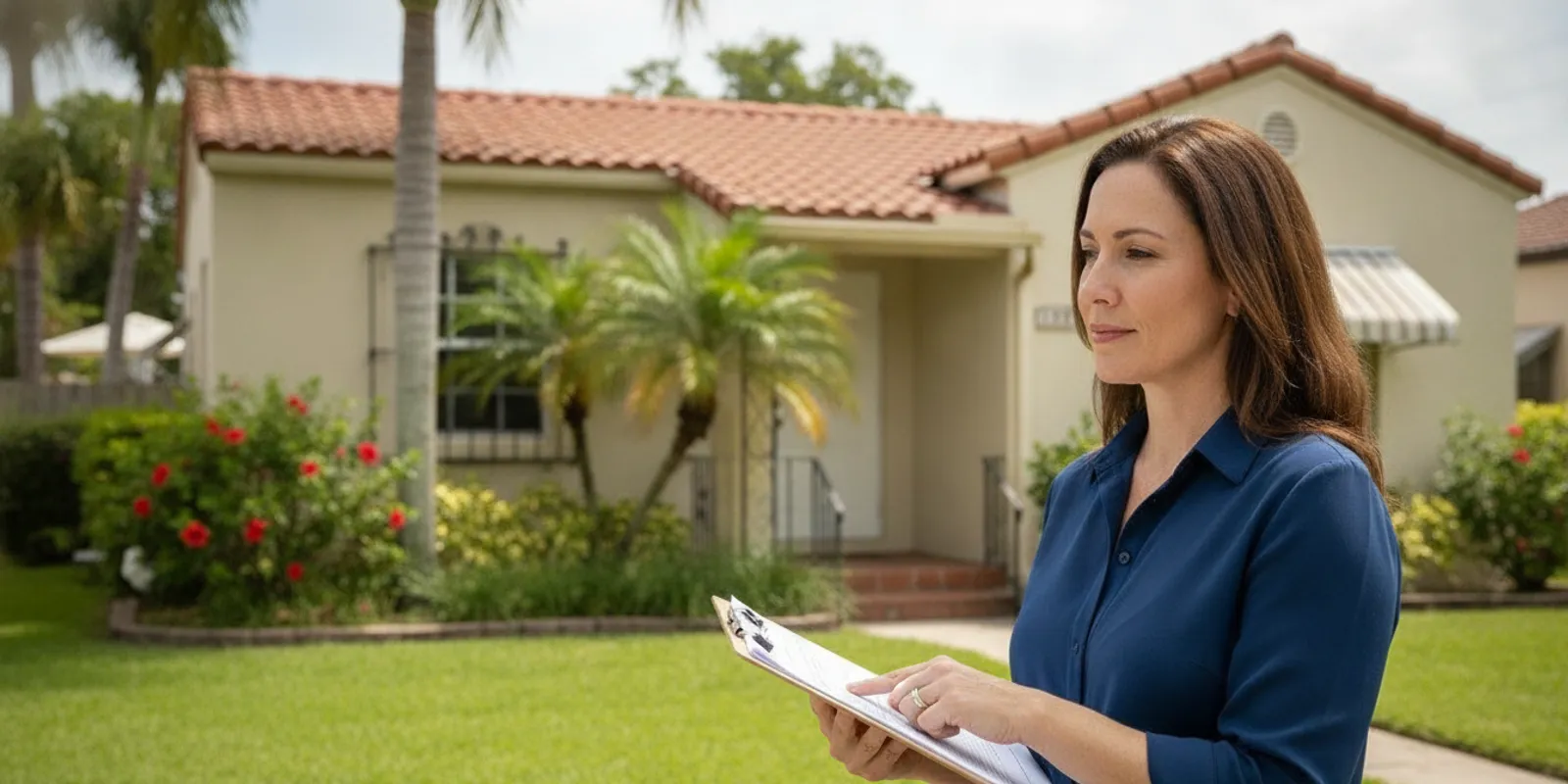
If you received a notice about a property in Hollywood, Florida, the first priority is to understand exactly what the city says must be corrected and how it expects you to show compliance. Hollywood FL code violation repair is not one standard job: the response depends on the cited condition, the notice deadline, the property, and whether permits or inspections are involved.
Ask Violation Clinic to review your Hollywood notice and discuss next steps
What does Hollywood FL code violation repair involve?
Code violation repair means correcting a condition identified by code enforcement or another city department and completing the required steps to have the matter reviewed or closed. The physical correction may be only part of the work. A case can also require photographs, contractor records, a permit, inspection approval, removal of an unsafe condition, or written confirmation from the city.
The specific notice controls. It may identify a code section, describe a condition, state a correction deadline, provide a case number, or give instructions for contacting the assigned office. A notice about debris or property maintenance will not follow the same path as one involving structural work, electrical conditions, an unpermitted alteration, or an unsafe structure. Do not assume that fixing what is visible automatically closes the case.
Hollywood’s Code Compliance page provides the city’s office contact information. Use the contact details and directions on the notice or the current city page to confirm which department is handling the case. If you need a broader overview of common issues and possible resolution paths, see Violation Clinic’s building code common issues guide.
What should you do first after receiving a notice?
Take a few minutes to organize the case before arranging repairs. Acting quickly matters, but a rushed correction that does not address the cited requirement can lead to more expense or another round of review.
- Save the complete notice. Keep every page, envelope, attachment, photograph, and any later letter or email. Record the date you received it. If a tenant, contractor, or prior owner received an earlier notice, ask for a copy.
- Identify the case and deadline. Note the case number, property address, cited violation, response date, and the person or department listed for questions. Do not rely on a verbal summary if the written notice gives different or more detailed instructions.
- Separate the required outcome from the suggested fix. Read what condition must be corrected and whether the notice says a permit, inspection, or other approval is required. A proposed repair method is not necessarily the only acceptable method, but any alternative should be confirmed with the responsible city office before work proceeds.
- Photograph the current condition. Take clear, dated images from several angles. Include enough surrounding detail to identify where the condition is located. Keep the original files and do not edit away relevant details.
- Ask focused questions in writing. If the correction standard, deadline, or closeout evidence is unclear, contact the assigned office and refer to the case number. Ask what must be corrected, whether authorization is required before work, how to request an inspection if applicable, and what evidence is needed to close the case.
Make a simple case folder, either digital or paper. Include the notice, city correspondence, photographs, contractor proposals, permits, inspection records, invoices, and proof of completed work. A clean record makes it easier to answer follow-up questions and to hand the case to a new contractor or representative without losing important details.
How can you map the repair to the notice?
Turn the notice into a short scope of work before starting. Write down the exact condition that needs correction, the location, any code or permit reference, the stated deadline, and the evidence expected when the work is complete. If the notice lists several items, number them separately. That lets you track each correction rather than treating the case as one vague project.
Next, identify who is qualified to assess the work. A straightforward cleanup task may not need a design professional. Work affecting structure, life safety, electrical systems, accessibility, or another regulated area may call for a licensed contractor or qualified design professional. The notice and city instructions are the starting point; do not infer that a particular trade or professional is unnecessary simply because the visible condition looks small.
If the violation concerns construction or an alteration completed without required approval, clarify whether the city expects an after-the-fact permit or other documentation. The goal is to resolve the existing condition lawfully, not to treat the case as a routine new project. Violation Clinic explains the general distinction in its guide to after-the-fact permits in Florida.
Before work begins, compare the planned repair with the actual notice. Ask the contractor to describe how each cited item will be addressed and what records they will provide. If a permit or inspection is required, confirm the sequence with the responsible department. Work that is covered, altered, or removed before a required inspection can complicate the record and may require additional steps.
Which repair path fits the type of violation?
The table below is a planning aid, not a substitute for the specific notice or direction from the city. A single case can involve more than one category. Confirm the responsible office and requirements before relying on a general example.
| Issue described in notice | First practical step | Records or follow-up to confirm |
|---|---|---|
| Property maintenance or visible exterior condition | Compare the cited location and condition with current site photographs; correct the specific item. | Ask whether dated photographs or a city recheck are needed to document correction. |
| Work completed without required approval | Gather plans, contracts, photographs, and information about the work; ask whether an after-the-fact permit or technical review applies. | Confirm the required submittals, any inspections, and how final compliance will be recorded. |
| Structural, electrical, fire, or life-safety concern | Address immediate safety concerns and obtain an appropriately qualified assessment before choosing a permanent repair. | Verify whether sealed documents, permits, inspections, or proof of repair are required. |
| Open permit or incomplete prior work | Locate the permit and inspection history; identify missing finals, failed inspections, or unresolved corrections. | Confirm what remains outstanding and whether additional work or documentation is needed for closure. |
| Notice involving a lien, hearing, or accumulating enforcement consequences | Review the notice and case record promptly; note all hearing, response, and payment dates. | Ask the city or an appropriate professional what actions are required to address the case and its recorded consequences. |
Do not treat a table entry as a promise about Hollywood’s procedure. The city’s requirements can depend on the case, the property, the applicable code, and the department involved. If your notice does not clearly explain the next action, ask for clarification using the case number and keep a written record of the response.
Do repairs require a permit or inspection?
Sometimes, but the answer depends on the work and the applicable requirements. Cosmetic appearance alone does not determine whether work needs approval. A repair may involve regulated construction, replacement of a system, structural changes, or other work for which an authorization or inspection is required. Conversely, some corrective tasks may not require the same permit path. Do not use a general online list as a substitute for checking the actual scope.
Before authorizing work, describe the correction to the responsible city office and ask whether a permit or inspection is required for that scope. If a contractor says no approval is needed, ask what that conclusion is based on and keep the answer with your records. If a permit is required, make sure the permit scope matches the correction and that required inspections are scheduled and passed before you request case closure.
For an existing permit that never reached final approval, the issue may be an incomplete permit rather than a new violation repair. Collect the permit number, prior inspection results, plans, and correction notices, then determine exactly what remains open. The guide to closing open permits in Miami describes common record-gathering steps; for a Hollywood property, verify the process with the relevant local office.
How do you document completion and request closure?
Build the closeout package around the notice rather than sending a loose collection of documents. Match each cited item to the correction and its proof. Depending on the case, relevant evidence may include dated photographs, permit records, inspection results, contractor documentation, or other material the city asks for. Keep copies of everything you submit.
- Check every line of the notice. Mark each item as corrected, under review, or still outstanding. Do not mark an item complete just because work has started.
- Collect proof as the work progresses. Save invoices, permit documents, inspection records, product or repair information when relevant, and before-and-after photographs. Ask the contractor to identify the location and scope in their records.
- Complete any required inspection or review. Follow the city’s instructions for requesting it. Record the date and result, and address any new correction items before treating the matter as complete.
- Submit the requested closeout information. Include the case number and property address. Use the method specified by the city, and retain a dated copy or confirmation.
- Confirm the case status. Ask the responsible office whether any item remains open and how closure will be confirmed. Keep written confirmation with the property records.
Documenting completion is especially important when ownership may change, a refinance is underway, or a property is being prepared for sale. An invoice proves that a contractor was paid; it does not by itself prove that the city accepted the correction or closed the enforcement case. If a code lien or recorded issue is also involved, distinguish the physical repair from the separate steps needed to resolve the lien. Violation Clinic has a separate resource on lien search and resolution.
What if the deadline is close or the notice is unclear?
Do not wait until the deadline has passed to ask questions. Contact the department listed on the notice as soon as you identify a problem with the scope, access, contractor schedule, or required documentation. Explain the case number, what has been done, what remains, and the specific guidance you need. Ask whether the city can provide written clarification or explain what process applies if the work cannot be completed by the stated date.
A conversation does not automatically change a deadline, stop enforcement, or close the case. Unless the city confirms otherwise, continue to treat the written notice as active. Keep a log of contacts, including the date, the office or person reached, and any instructions received. If you send photographs or documents, retain a copy and proof of delivery.
If the notice references a hearing, a fine, or a lien, read every date and instruction carefully. These consequences can involve distinct procedures from making the repair itself. Do not assume that paying an amount fixes the underlying condition, or that completing work automatically resolves a separate recorded lien. For broader Florida guidance on violation response, review Violation Clinic’s steps for fixing code violations.
How much does Hollywood FL code violation repair cost?
There is no responsible single price for Hollywood FL code violation repair without knowing the cited condition and required closeout steps. Cost can depend on the scope of physical work, whether a licensed trade or design professional is needed, whether a permit or plans are required, access and site conditions, and any additional corrections found during review. City fees, if applicable, are separate from contractor or consulting charges and should be confirmed with the city.
Get a written scope that connects each proposed task to the notice. Ask whether the quote includes diagnostic work, documents, permit-related coordination, inspections, and correction of follow-up items, or whether those are separate. Compare proposals by what they cover, not just by the bottom-line number. A low quote that excludes required documentation or return visits may not represent the total effort needed to resolve the case.
Do not rely on a contractor’s estimate as confirmation that the city will accept the method. The responsible department determines its requirements. If the notice is unclear or the project combines technical work with municipal documentation, clarify the approval path before committing to a repair plan.
When can professional violation help be useful?
Professional help may be useful when the notice cites several code sections, the property has a complicated permit history, a technical assessment is needed, or the city has requested documents that are difficult to interpret. It can also help when a real-estate transaction, tenant access, or multiple contractors makes it difficult to coordinate corrections and follow-up.
Ask any consultant or representative to explain the specific scope they will handle: reviewing the notice, organizing records, coordinating technical professionals, communicating with the city, tracking permits or inspections, or assembling closeout documentation. Clarify what remains your responsibility, what fees may be separate, and what the proposed next step is. No representative should promise a particular city decision or guaranteed deadline.
Violation Clinic provides building code violation remediation and related compliance consulting in Florida. Its services overview describes the general areas of assistance. The right level of help depends on the notice and property; a focused review may be enough to identify the next step, while complex work can require coordinated technical and municipal follow-through.
Contact Violation Clinic to discuss the notice and your repair path
Frequently asked questions
Can I close a Hollywood code violation by sending photographs?
Possibly, if the city accepts photographs as proof for that case. Some cases may require an inspection, permit record, technical document, or another review. Check the written notice and ask the assigned office what it will accept before relying on photos alone.
Should I start repairs before speaking with Code Compliance?
For an immediate safety concern, take reasonable steps to protect people and property, then promptly contact the appropriate city office and qualified professionals. For other conditions, first confirm what the notice requires and whether authorization or inspection is involved. Starting the wrong work can add cost or make it harder to document the original condition.
Does fixing the condition automatically remove a fine or lien?
Not necessarily. Correcting the physical condition, getting the case closed, addressing any fine, and resolving a recorded lien can be separate matters. Check the case record and obtain guidance on each outstanding item; keep written proof of the resolution.
What if I disagree with the violation?
Read the notice for any response or hearing instructions and deadlines. Gather records and photographs relevant to the cited condition, then contact the listed office to ask how to raise the issue. Do not ignore the notice while you investigate, and seek legal advice if you need guidance about legal rights or a hearing.
How long does repair and closure take?
Timing varies with the condition, availability of qualified professionals, permit or inspection needs, city review, and whether additional corrections are identified. Ask the city and any contractor for the steps that apply to your case, then track each milestone. No general timeline can guarantee when a particular case will close.
Contact Violation Clinic to discuss the next step for your Hollywood FL code violation repair case.