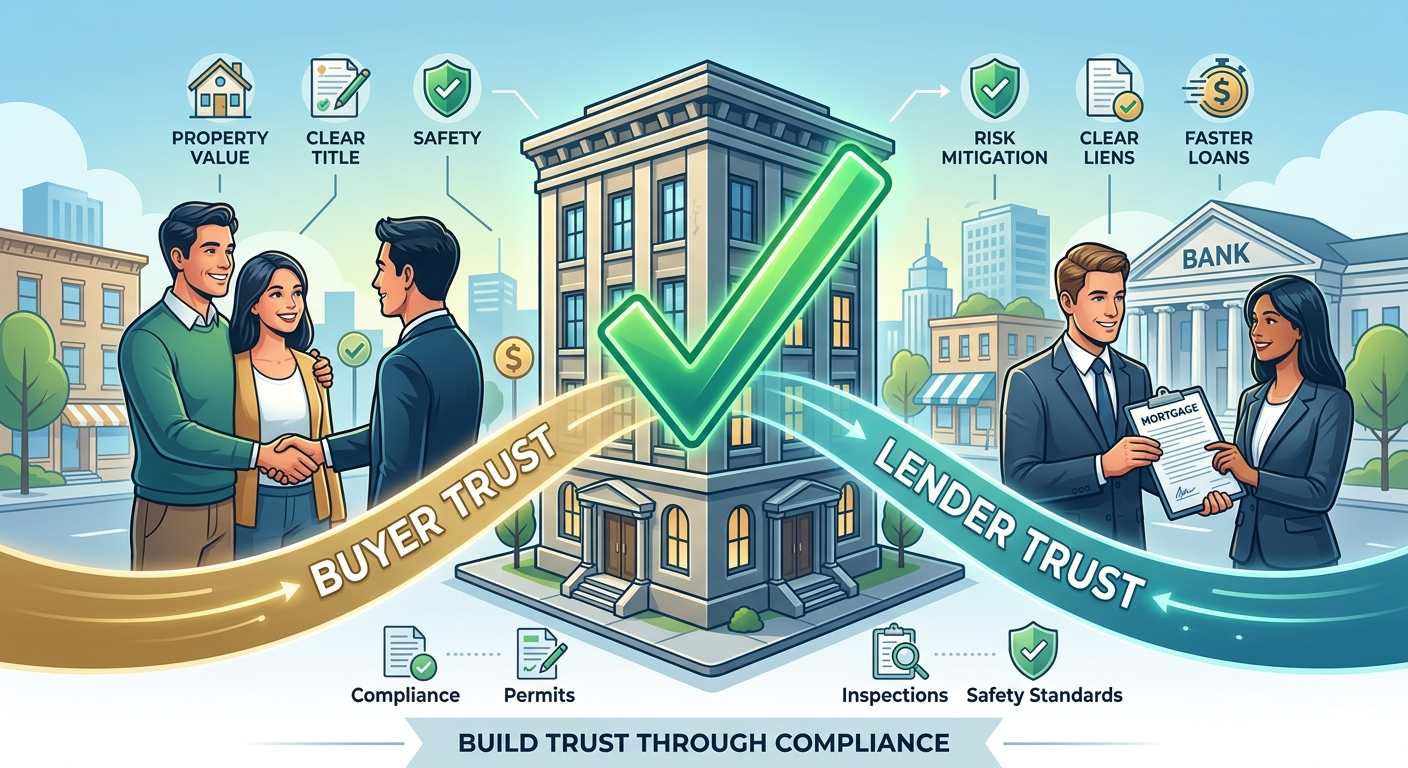
In the high-stakes world of Florida real estate, a property’s value is determined by more than just its square footage, granite countertops, or proximity to the coast. Today’s market is defined by transparency and risk mitigation. For property owners, “compliance” isn’t just a bureaucratic hurdle—it is a powerful financial asset.
Whether you are looking to sell a commercial asset in Miami or refinance a multi-family residential complex in Fort Lauderdale, your history of adherence to local building codes is under the microscope. This guide explores how maintaining a “clean” property profile through proactive compliance builds indispensable trust with buyers and lenders, and how you can avoid the pitfalls that lead to costly enforcement actions.
The Compliance Gap: Why Trust is Won or Lost
When a lender evaluates a loan application or a buyer enters a due diligence period, they aren’t just looking at the physical structure; they are looking at the legal integrity of the building.
A property riddled with open code violations or expired permits represents a “clouded” asset. To a lender, this is a red flag for potential liens that could take priority over their mortgage. To a buyer, it’s a hidden debt and a future headache. Conversely, a property with a documented history of regular inspections and permitted upgrades signals professional management and lower long-term risk.
Common Reasons for Code Violations and Fines
Understanding why violations occur is the first step in building a strategy for compliance. In Florida, the combination of a harsh tropical climate and rigorous safety standards means the authorities are particularly vigilant.
1. Unpermitted Construction
This is perhaps the most common deal-killer in real estate transactions. Whether it’s a converted garage, a new deck, or a major electrical overhaul, performing work without the proper municipal permits is a violation of the Florida Building Code. When these are discovered during a pre-sale inspection or a bank appraisal, they can halt a closing indefinitely.
2. Zoning and Land Use Violations
Using a property in a way that isn’t authorized for its specific zone—such as running a commercial business out of a residentially zoned area or exceeding density limits—can result in daily fines. Lenders are particularly sensitive to zoning violations because they can affect the property’s legal use and, by extension, its income-producing potential.
3. Neglected Property Maintenance and Aesthetics
Florida’s “Minimum Housing Standards” and local municipal ordinances require owners to maintain the exterior of their properties. Overgrown weeds, peeling paint, cracked windows, or debris-filled yards aren’t just eyesores; they are triggers for code enforcement citations that can escalate into significant financial penalties.
4. Unsafe Structural Conditions
In the wake of recent legislative changes in Florida, structural integrity is non-negotiable. Deteriorating balconies, spalling concrete, or compromised roofing systems pose life-safety risks. If a city inspector deems a building “Unsafe,” they may issue a vacate order, which instantly destroys the property’s market value and puts the owner in default of most lending agreements.
5. Missed Mandatory Inspections
Many property owners fail to realize that certain inspections are recurring legal mandates. In South Florida, the Building Recertification process is a critical milestone. Failing to submit these reports on time leads to immediate enforcement action.
Actionable Steps to Prevent Fines and Build Equity
Proactive management is significantly cheaper than reactive remediation. Here is how savvy owners maintain compliance:
Obtain and Close All Necessary Permits
Never assume a contractor has “taken care of it.” Always verify that permits are not only pulled but also closed with a final inspection. Open permits from ten years ago are a common discovery during title searches that can derail a sale.
Schedule Regular Internal Inspections
Don’t wait for the city to knock on your door. Conduct annual “compliance audits” of your systems (HVAC, plumbing, electrical) and the building envelope. Addressing a small leak today prevents a “structural failure” citation three years from now.
Stay Informed on Local Florida Regulations
Building codes are not static. Florida frequently updates its requirements to account for hurricane resiliency and energy efficiency. Partnering with experts like Violation Clinic ensures you are ahead of the curve when local ordinances change.
Prioritize Aesthetic Maintenance
Maintain a “curb appeal” checklist. Ensure that signage, landscaping, and exterior lighting meet local standards. This not only avoids fines but also keeps property appraisals high.
The Legal Mandate: Building Recertification in Florida
In Florida, compliance isn’t always optional—it is often a strict legal requirement. Under the updated Florida Statute 553.899 (and specific county ordinances like Miami-Dade’s Chapter 8 and Broward’s Policy #05-05), buildings of a certain age and height must undergo rigorous safety inspections.
The Financial Stakes: If you receive a notice for a Milestone Inspection or Building Recertification and fail to comply, the consequences are severe:
- Initial Fines: Often starting around $510.
- Escalating Penalties: For continued non-compliance, fines can skyrocket to $10,000 or more, depending on the municipality.
- Legal Action: The city may record a lien against the property or even pursue a “Notice of Commencement of Foreclosure” in extreme cases.
Lenders will rarely refinance a building that is delinquent on its recertification. To protect your investment, utilize professional Building Recertification and Services to ensure your structural and electrical systems meet the current life-safety standards.
Case Studies: Compliance in Action
Case Study A: The Unpermitted Addition
A homeowner in Fort Lauderdale attempted to sell a 4-bedroom home, only to find the title search revealed the 4th bedroom was an unpermitted enclosure. The buyer’s lender refused to fund the loan until the room was “legalized.” The owner faced $5,000 in double-permit fees and structural modifications.
- Lesson: Checking for open permits before listing could have allowed the owner to resolve the issue quietly and at a lower cost, maintaining the buyer’s trust.
Case Study B: The Proactive Commercial Owner
A shopping center owner in Miami-Dade received their 40-year recertification notice. Instead of waiting, they hired a code compliance consultant to perform a pre-inspection. They identified minor electrical issues and fixed them before the official city-mandated engineer arrived.
- Result: The building passed on the first attempt. When the owner went to refinance six months later, the bank cited the up-to-date recertification as a key reason for offering a lower interest rate.
Why Lenders Demand Compliance
Lenders are essentially silent partners in your property. They want to ensure their collateral is protected. A property with “Clean Hands” (no active violations) is easier to value and easier to sell in the event of a foreclosure.
When you provide a lender with a “Clean Lien Search” and proof of regular inspections, you are proving that you are a low-risk borrower. This often leads to:
- Faster loan approvals.
- Lower interest rates.
- Higher Loan-to-Value (LTV) ratios.
Related Posts
- Common Building Code Violations and How to Resolve Them Quickly
- What is Building Recertification?
- Can You Fight a Zoning Violation? Yes — Here’s How
External Resources
- Florida Department of Business & Professional Regulation (DBPR)
- International Code Council (ICC) – Florida Building Codes
- Miami-Dade County Building Code Compliance Office
Summary: Compliance as a Competitive Advantage
In the Florida real estate market, property compliance is the foundation of trust. By understanding the common triggers for violations—such as unpermitted work, neglected maintenance, and missed recertifications—owners can take the driver’s seat in protecting their assets.
At Violation Clinic, we specialize in helping property owners navigate the violation remediation process smoothly. Whether you need assistance with inspections, violations, or compliance issues, our team is here to help. Don’t wait until it’s too late, take action today to protect your investment and ensure the safety of your property.
For more information or assistance, contact us at (786) 885-2613 or ViolationClinic.com!