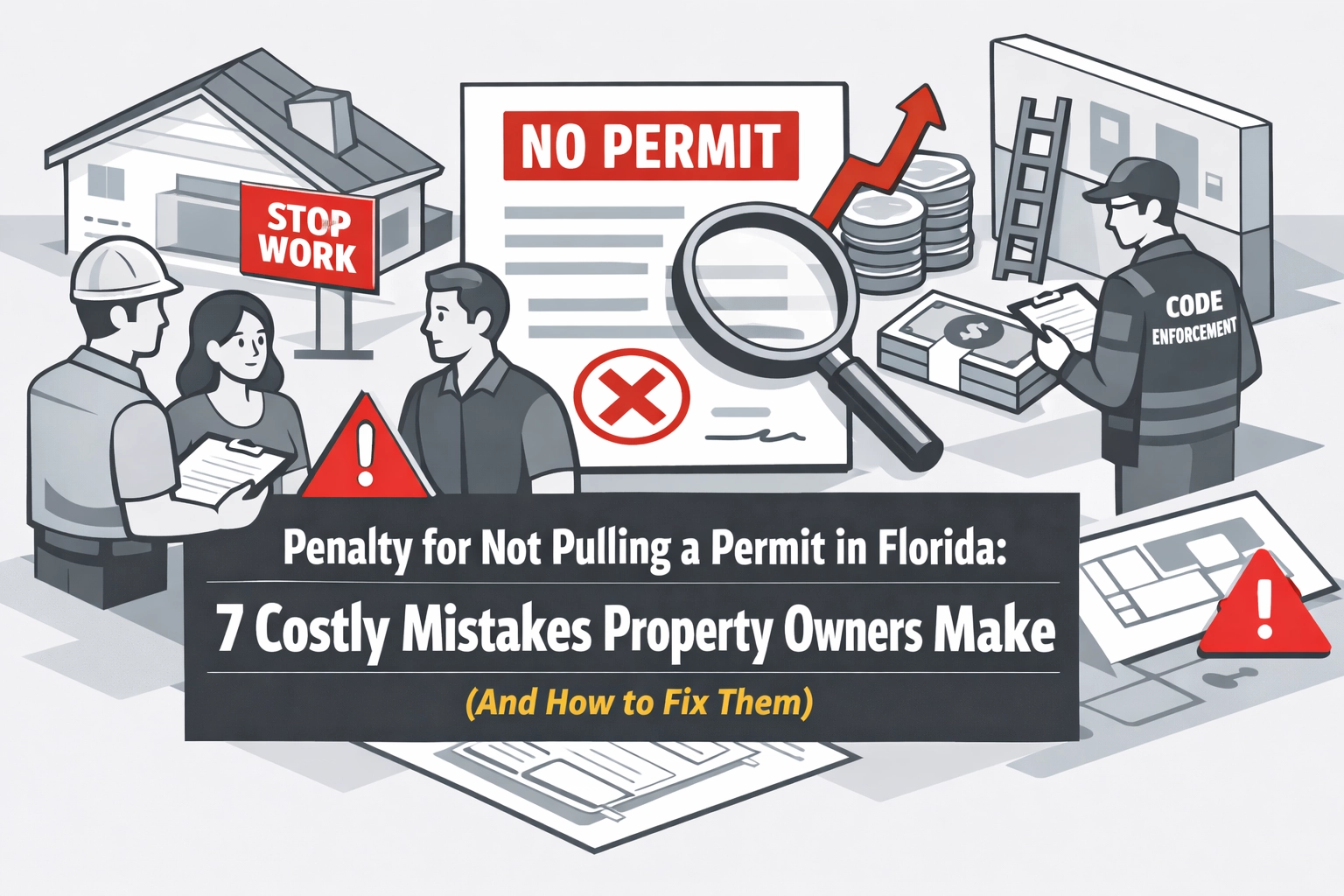
If you're a Florida property owner, contractor, or real estate investor, understanding the penalty for not pulling a permit in Florida isn't just about following rules: it's about protecting your wallet and your investment. The financial and legal consequences of unpermitted work can spiral from a few hundred dollars into tens of thousands in penalties, project delays, and property value losses that haunt you for years.
Florida's building code enforcement system doesn't mess around. Daily fines, stop-work orders, property liens, and even criminal charges await those who ignore or mishandle permit requirements. Yet thousands of property owners make the same costly mistakes every year, often because they didn't know what they didn't know.
Here are the seven most expensive mistakes Florida property owners make regarding permits: and exactly how to fix them before they destroy your budget.
Mistake #1: Thinking "Small Projects Don't Need Permits"
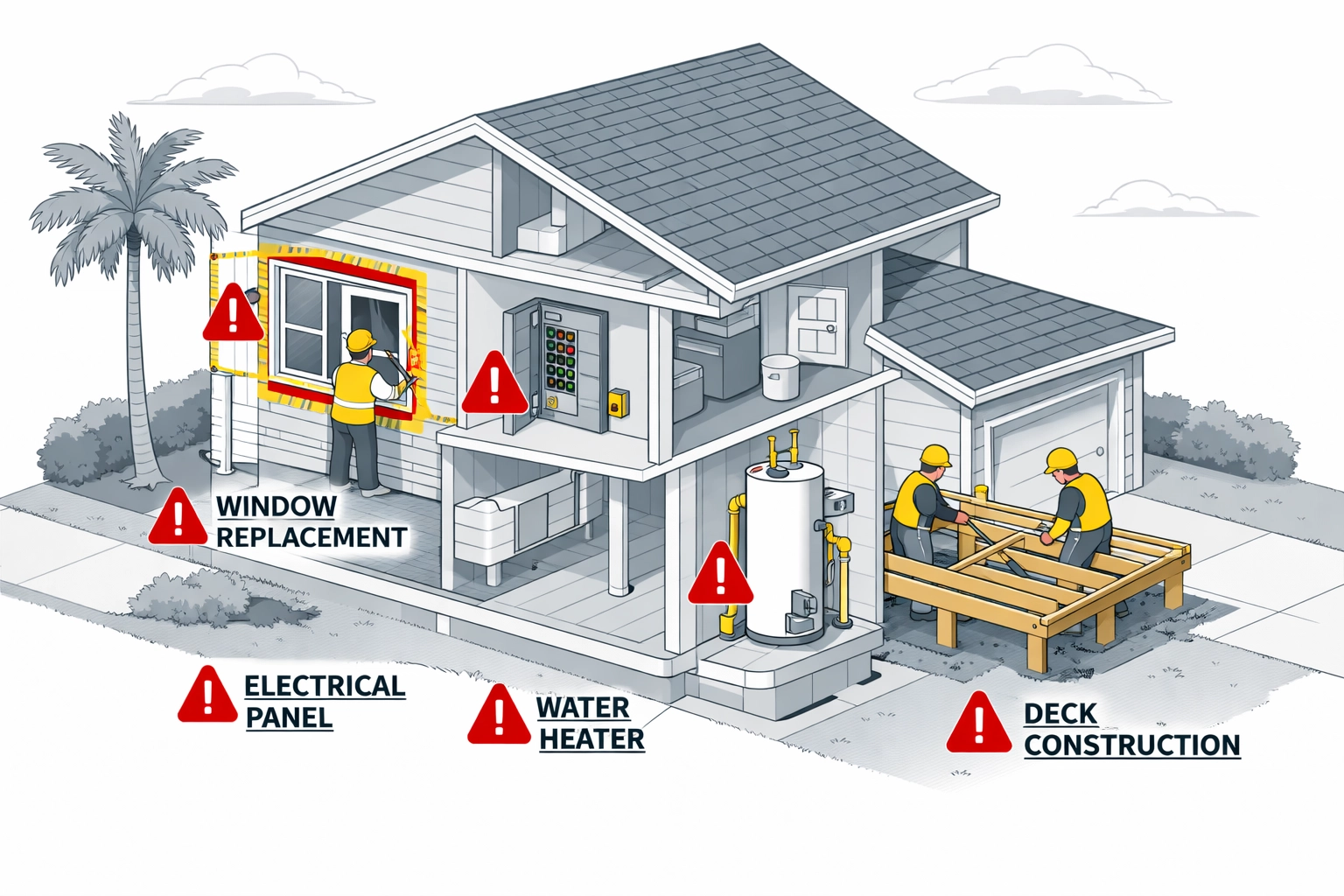
The most common misconception? Assuming minor home improvements fly under the radar. In reality, Florida building code 2025 requirements mandate permits for most structural, electrical, plumbing, and mechanical work: even projects that seem insignificant.
What triggers permit requirements:
- Window or door replacements affecting structural openings
- Electrical panel upgrades or circuit additions
- Water heater installations
- HVAC system replacements
- Fence installations over six feet
- Deck or patio construction
- Roof repairs exceeding 100 square feet
DIY enthusiasts and misinformed contractors account for 62% of residential violations, often for work like window replacements that absolutely require code approval.
The fix: Before starting any home improvement project, contact your local building department. A 10-minute phone call can save you from $3,500 to $15,000+ in penalties. When in doubt, pull the permit: the initial fee is always cheaper than retroactive permitting at double or triple the cost.
Mistake #2: Ignoring a Stop Work Order Florida
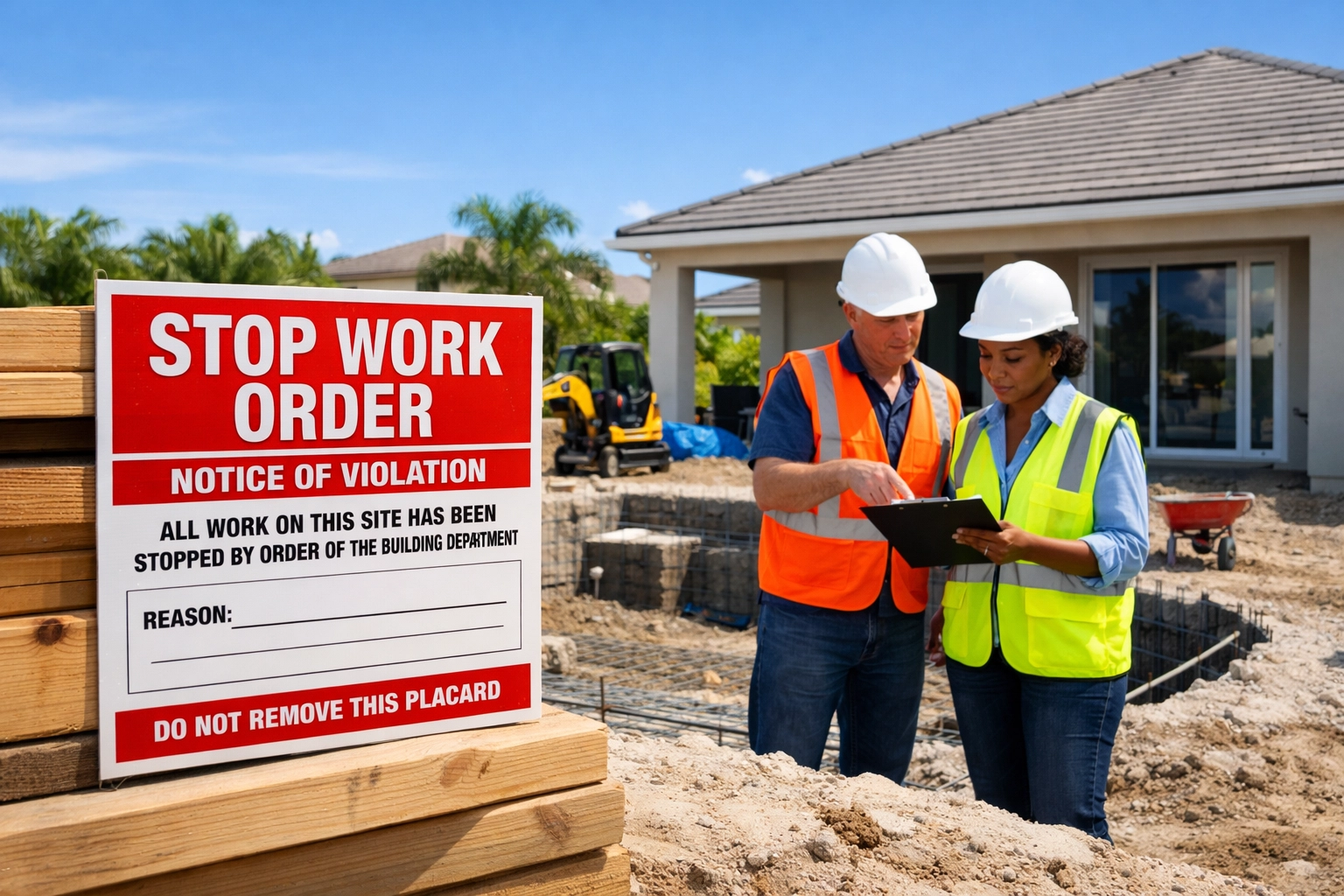
Receiving a stop work order Florida notice and continuing construction anyway ranks among the most financially devastating mistakes property owners make. These official red-and-white placards aren't suggestions: they're legally binding orders that freeze all work immediately.
What happens if you ignore a stop work order:
- Daily penalties escalating from $250 to $5,000 per day
- Immediate lien placement on your property
- Potential misdemeanor charges under Florida Statute 553.84
- Voided homeowner's insurance coverage
- Mandatory removal of all non-compliant work
One Palm Beach homeowner learned this the hard way. Their unapproved pool installation triggered a stop-work order, resulting in $78,000 in delays through lost labor costs, contractor fees, and missed deadlines: all because they continued pouring concrete after receiving the notice.
The fix: When you receive a stop work order, immediately cease all construction activity. Contact your building department within 24 hours to understand the specific violations. Hire a licensed professional to prepare corrective plans and submit them for approval. Only resume work after receiving written authorization from the building official.
Mistake #3: Letting Building Permits Expire Without Extension
An expired building permit Florida situation creates a legal gray area that can cost you twice. When permits expire: typically after six months to one year of inactivity: you're left with partially completed work that's no longer authorized.
The compounding costs:
- Must apply for permit renewal or new permit
- Potential re-inspection of all completed work
- Updates required to meet current code standards
- Daily violation penalties if work continued after expiration
- Compliance fees added to renewal costs
The fix: Track your permit expiration dates meticulously. Florida law allows permit extensions before expiration: usually for six-month increments. Submit extension requests at least two weeks before expiration. If your permit has already lapsed, immediately contact your building department to discuss renewal options before resuming any work. Documentation of why work stopped (material shortages, contractor issues, financing delays) can help reduce penalties.
Mistake #4: Failing to Understand What Is a Compliance Fee
Property owners often discover they owe thousands in mysterious charges labeled "compliance fees" without understanding what is a compliance fee or why it's separate from standard fines. These fees represent the administrative costs of bringing unpermitted work into compliance.
Compliance fee structure in Florida:
- Double or triple the original permit fee (standard across most jurisdictions)
- Administrative processing fees ($500-$1,500)
- Re-inspection fees for each required visit
- Plan review fees for retroactive submissions
- Lien recording and release fees (15% of total penalties)
For example, unpermitted roof work that would have required a $300 permit now costs $600-$900 in permit fees alone, plus compliance fees, re-inspection charges, and any daily penalties that accumulated.
The fix: Budget for compliance fees at 2-4 times the original permit cost when seeking retroactive approval. Miami-Dade County compliance officers report that property owners can reduce penalties by up to 40% through voluntary disclosure and rapid correction. Present yourself proactively to your building department with a plan for bringing work into compliance rather than waiting for enforcement action.
Mistake #5: Not Knowing How to Find Violations on a Property
Whether you're buying, selling, or refinancing Florida real estate, failing to understand how to find violations on a property before closing can saddle you with someone else's permit problems: and their financial penalties.
Where violations hide:
- Building department records (public access)
- Code enforcement databases by parcel number
- Property appraiser's office permit history
- Title searches revealing code violation liens
- Home inspection reports noting unpermitted additions
Unresolved violations result in permanent record notation that drops resale value by 12-18%. Buyers discover these issues during due diligence, then demand price reductions or walk away entirely.
The fix: Run a comprehensive violation search before any real estate transaction. Request a Property Violation Report from your local code enforcement office. For properties built or renovated in the last 10 years, verify that permits were pulled and received final inspections. Violation Clinic helps Florida property owners conduct thorough violation searches and resolve compliance issues before they derail transactions. Addressing violations proactively protects your investment and prevents last-minute closing delays.
Mistake #6: Treating a Red Tagged Building as a Negotiation
Receiving an unsafe structure notice or seeing your property red tagged building status means immediate action is required: not weeks of consideration. Red tags indicate serious safety hazards that pose imminent danger to occupants.
What triggers red tag designation:
- Structural instability or collapse risk
- Electrical hazards creating fire danger
- Plumbing failures causing contamination
- Storm-damaged roofs with exposure to elements
- Unpermitted work affecting building integrity
Properties with red tags must be vacated immediately. Occupancy before remediation can result in criminal trespass charges, even for property owners.
The fix: Hire a Florida-licensed engineer or contractor within 48 hours of red tag posting. They must assess the structure, prepare corrective plans, and submit them to the building department for emergency review. Many jurisdictions offer expedited permitting for safety hazards. Document all communications with officials and contractors. Once corrections are complete and pass inspection, request immediate tag removal in writing. Time is money: vacant properties cost you mortgage payments, lost rental income, and continuing daily penalties.

Mistake #7: Wondering What Happens If You Ignore Code Enforcement
The final and most catastrophic mistake: assuming what happens if you ignore code enforcement notices won't really be that bad. Florida's enforcement escalation process is designed to be increasingly painful until you comply.
The enforcement escalation timeline:
- Initial violation notice (10-30 days to respond)
- Stop work order if construction continues
- Daily fines beginning at $250, escalating to $1,000+
- Property lien placement for unpaid penalties
- Special magistrate hearing with mandatory appearance
- Misdemeanor charges for willful violations (Florida Statute 553.84)
- Foreclosure proceedings for substantial unpaid liens
Repeat offenders face penalties up to $5,000 per day under Florida Statute 553.79(2)(b). These fines accumulate continuously until violations are resolved.
The fix: Respond to every code enforcement communication within the specified timeframe. Ignoring notices doesn't make them disappear: it makes them exponentially more expensive. If you receive a violation notice, immediately contact the issuing inspector to discuss corrective options. Most building departments work with property owners who demonstrate good faith efforts toward compliance. Professional guidance from compliance specialists can prevent further escalation and maximize opportunities for penalty reduction through established mitigation programs.
Taking Action Before Penalties Spiral
Understanding the penalty for not pulling a permit in Florida empowers you to make informed decisions about your property improvements. The pattern is clear: proactive compliance costs hundreds, while reactive remediation costs thousands.
Every day you wait to address permit violations, the financial consequences multiply. But with proper guidance and swift action, most violations can be resolved efficiently and affordably.
Violation Clinic specializes in helping Florida property owners, contractors, and real estate professionals navigate building code compliance, remediation strategies, and permit resolution throughout the state. Our team understands Florida's complex regulatory landscape and works directly with local building departments to clear violations, obtain retroactive permits, and protect your property value.
Don't let permit violations destroy your investment. Contact Violation Clinic today at violationclinic.com to schedule a compliance assessment and get your property back on track.
Code enforcement and compliance requirements may vary by jurisdiction. Always verify with local authorities or consult a licensed Florida compliance specialist.