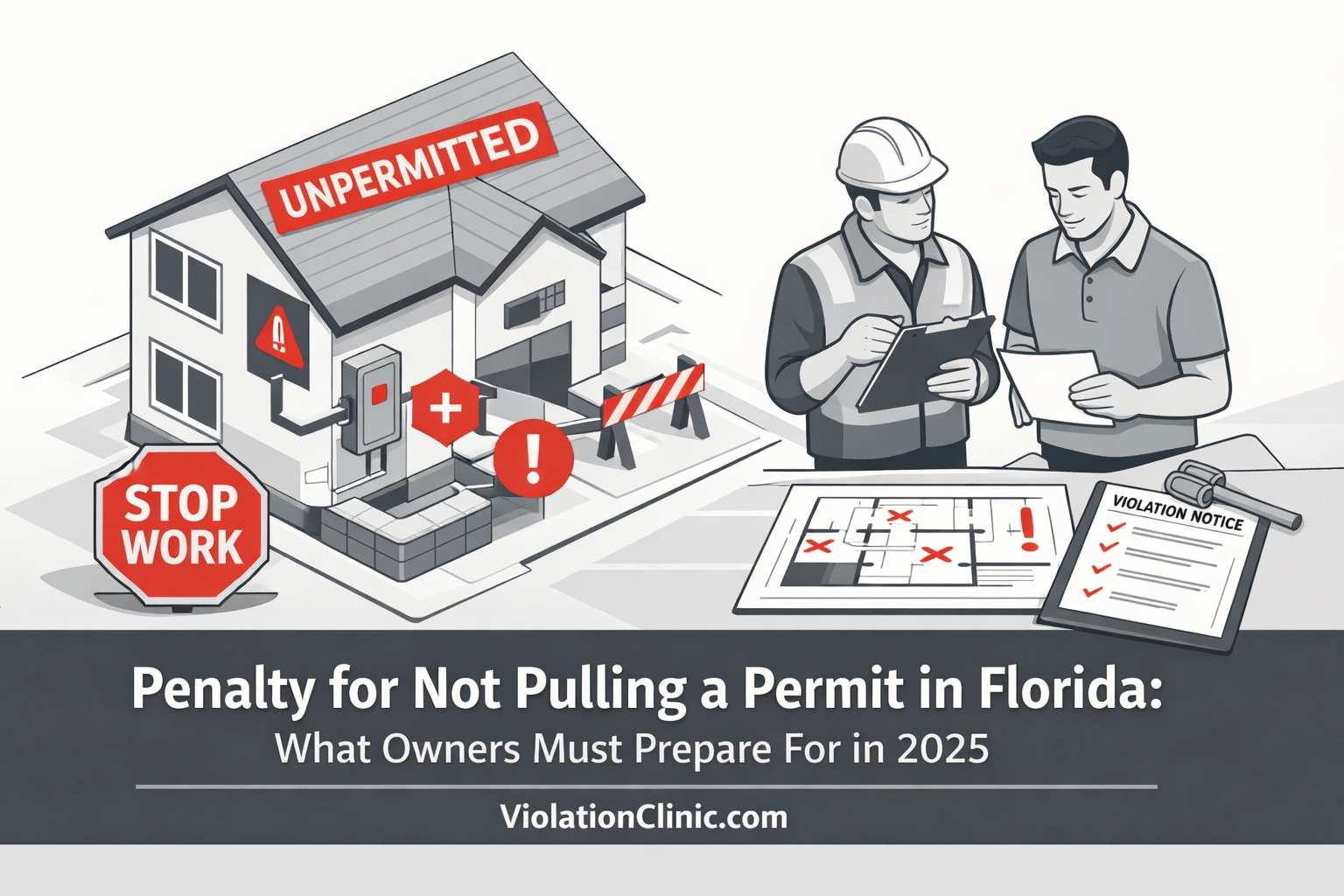
Whether you're a homeowner who added a deck without checking permit requirements, a contractor who skipped the paperwork to save time, or a buyer who just discovered unpermitted work on a property, the penalty for not pulling a permit in Florida is about to become very real. And expensive.
Florida doesn't mess around when it comes to building code compliance. The state has some of the strictest enforcement mechanisms in the country, and in 2025, those rules are being applied more aggressively than ever. If you think you can fly under the radar, think again: code enforcement officers have more tools, more data, and more motivation to catch violations before they become safety hazards.
This isn't just about getting slapped with a fine. We're talking about daily penalties that accumulate into five-figure liabilities, property liens that follow you to closing, voided homeowner's insurance, and in extreme cases, forced demolition of your unpermitted work.
Let's break down exactly what you're facing, how enforcement actually works, and what you can do if you're already in hot water.
What Does Florida Law Say About Unpermitted Work?
Under Florida law, any construction, alteration, repair, or demolition work that affects the structural integrity or safety systems of a building requires a permit from your local building department before work begins. That includes:
- Room additions and structural modifications
- Electrical, plumbing, and HVAC installations or upgrades
- Roof replacements or major repairs
- New construction of sheds, decks, or accessory structures over 100 square feet
- Window and door replacements affecting structural openings
- Fence installations in certain jurisdictions
Here's the critical part: ignorance isn't a defense. Saying "I didn't know I needed a permit" won't stop the fines from piling up. Florida Statutes Section 162.09 grants code enforcement boards broad authority to impose escalating penalties for building code violations, and those penalties start the day a violation is discovered.
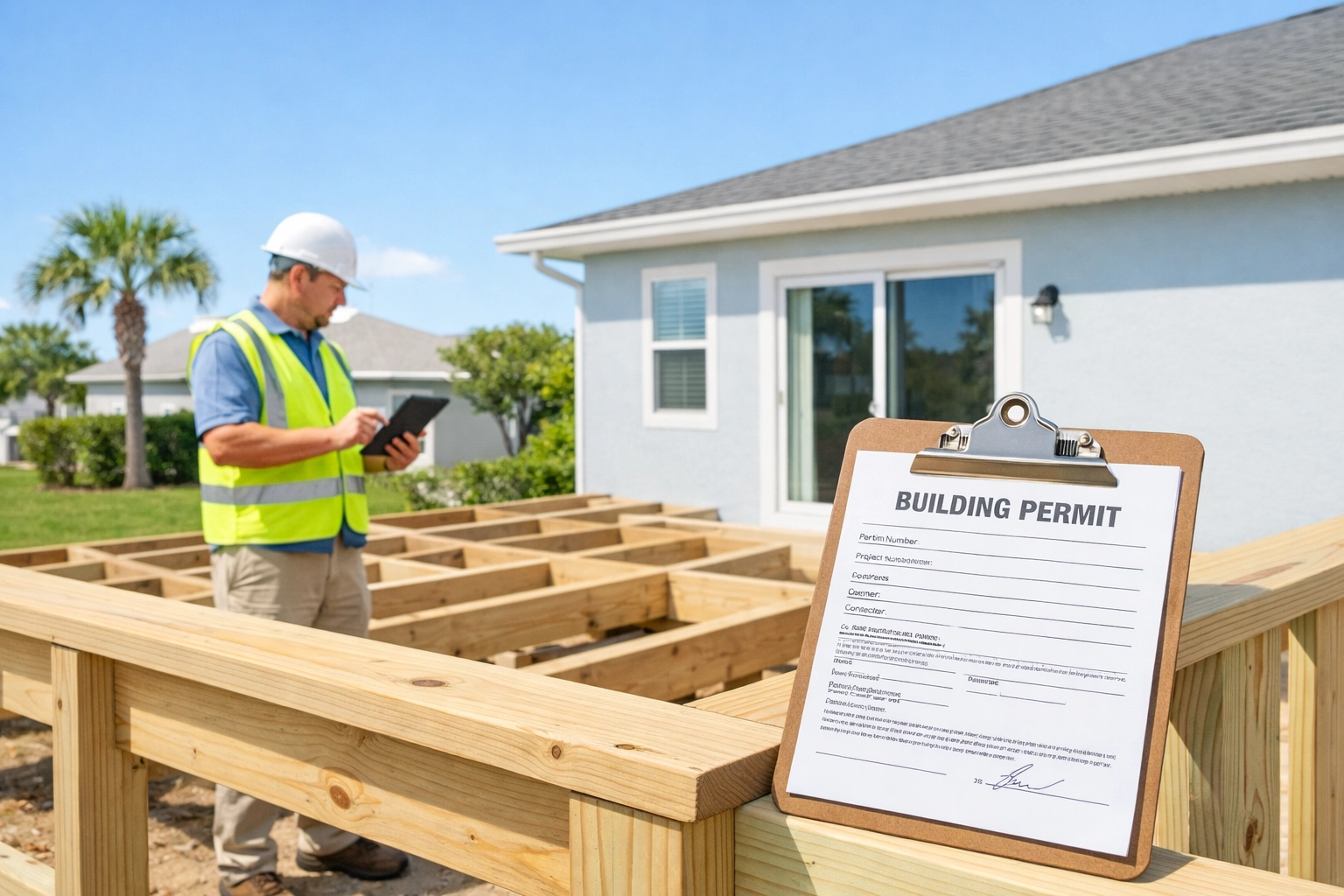
The Real Cost: Breaking Down the Penalties in 2025
Let's talk numbers. When you're caught working without a permit in Florida, you're not just paying for the permit you should have pulled, you're paying daily fines that compound until you fix the problem.
Daily Fines Under Florida Statute 162.09
Code enforcement boards impose these penalties based on violation severity and jurisdiction:
- First-time violations: Up to $250 per day
- Repeat violations (within jurisdiction): Up to $500 per day
- Irreparable violations (severe safety risks): Up to $5,000 per violation
- Enhanced enforcement jurisdictions (municipalities with 50,000+ residents): Up to $15,000 per violation
Let's run a real-world scenario: You added a 300-square-foot sunroom without a permit. Code enforcement discovers it during a routine neighborhood inspection. You're issued a notice of violation and given 30 days to apply for an after-the-fact permit, hire an engineer to certify the work meets code, and complete all required inspections.
If you ignore that notice, fines start accruing at $250 per day. After 60 days of non-compliance, you're looking at $15,000 in penalties, on top of the cost to actually get compliant. In enhanced jurisdictions like Miami-Dade or Broward County, that same violation could hit $15,000 immediately.
Professional License Penalties
For licensed contractors and design professionals, the stakes are even higher. Florida law imposes a $10,000 fine per dwelling unit for builders who willfully construct homes or townhomes without proper permit compliance. A single unpermitted duplex could cost a contractor $20,000 in penalties plus potential license suspension or revocation.
This isn't just a financial hit, it's a career-ending risk.
Beyond Fines: What Else Can Go Wrong
The daily penalties are bad enough. But the cascading consequences of unpermitted work can haunt property owners for years:
Property Liens That Follow You
Unpaid code enforcement fines don't just disappear. They're recorded as property liens that attach to the deed. These liens accrue interest until the violation is corrected and all penalties are paid in full. When you try to sell or refinance, title companies will flag these liens during a title search, and most lenders won't close until they're satisfied.
In severe cases, local governments can pursue lien foreclosure to recover outstanding penalties. Yes, you can lose your property over unpermitted work.
Voided Homeowner's Insurance
Read your homeowner's insurance policy carefully. Most carriers include clauses that exclude coverage for losses resulting from unpermitted work or building code violations. That means if your unpermitted electrical work causes a fire, your insurer may deny the claim entirely: leaving you personally liable for damages.
For condo and HOA board members, this liability extends to association insurance. If unpermitted common-area work leads to injury or property damage, board members can face personal liability for failing to ensure code compliance.
Forced Demolition and Unsafe Structure Notices
If your unpermitted work creates a safety hazard, local building officials can issue an unsafe structure notice requiring immediate remediation. In the most extreme cases, that includes forced demolition of the unpermitted addition: at your expense.
A red-tagged building may also be posted as uninhabitable, meaning you can't legally occupy the property until all violations are cleared and final inspections pass.

How Code Enforcement Actually Finds Violations
Think you can keep your unpermitted project a secret? Here's how code enforcement officers discover violations in Florida:
Neighbor complaints: The most common trigger. Disputes over property lines, noise, or aesthetics often lead to anonymous reports.
Permit database cross-checks: Many jurisdictions now use GIS mapping and satellite imagery to compare building footprints against permit records. New construction that doesn't match county files gets flagged for inspection.
Real estate transactions: Title searches and inspection reports during home sales frequently uncover unpermitted work, triggering enforcement action before closing.
Insurance claims and utility upgrades: When you file a claim or request electrical service upgrades, utilities and insurers may flag discrepancies between existing work and permit records.
Routine code sweeps: Some municipalities conduct periodic neighborhood surveys to identify visible violations like fences, sheds, and additions.
The takeaway? It's not a question of if you'll get caught: it's when.
Steps to Take If You're Caught Without a Permit
Discovering you have unpermitted work: or receiving a notice of violation: doesn't have to mean financial disaster. Here's how to navigate the remediation process:
1. Don't Ignore the Notice
The worst thing you can do is hope the problem goes away. Code enforcement fines start accruing immediately after the compliance deadline passes. Respond to all notices in writing and request a hearing if you need more time to resolve the issue.
2. Apply for an After-the-Fact Permit
Most Florida jurisdictions allow property owners to apply for a permit after work is completed, though you'll pay double the standard permit fees as a penalty. You'll need:
- Detailed plans showing the unpermitted work
- An engineer's or architect's certification that the work meets current Florida Building Code standards
- Approval from all relevant departments (building, zoning, fire, etc.)
3. Schedule Inspections
Even if the work was completed years ago, you'll need to pass all required inspections: structural, electrical, plumbing, HVAC, and final. In some cases, building officials may require you to open walls or ceilings to verify hidden work meets code.
If the work doesn't meet current standards, you'll need to bring it into compliance: which can mean costly retrofits and corrections.
4. Pay All Compliance Fees and Fines
Once you've passed inspections and received a certificate of completion, you'll need to satisfy all outstanding compliance fees and code enforcement fines. Only then will the lien be released from your property.
5. Work with a Compliance Specialist
Navigating Florida's permitting and code enforcement system isn't simple: especially when you're already facing penalties. A building code compliance expert can coordinate engineers, expedite permit applications, negotiate with code enforcement boards, and ensure you meet all deadlines without further violations.

Don't Wait Until It's Too Late
The penalty for not pulling a permit in Florida isn't just a one-time fine: it's a compounding liability that can derail property sales, void insurance coverage, and result in forced demolition of unpermitted work. Whether you're a homeowner dealing with a past mistake, a contractor navigating after-the-fact permits, or a buyer facing violations on a prospective purchase, the key is taking action before fines escalate and liens attach.
Florida's building code exists for a reason: to protect lives, property, and the structural integrity of our communities: especially in a state vulnerable to hurricanes and flooding. Compliance isn't optional, and the cost of cutting corners is only getting steeper.
If you're facing code violations, unpermitted work, or an expired building permit in Florida, professional remediation services can help you resolve violations quickly and minimize financial penalties. Violation Clinic works with property owners and contractors across Florida to navigate permit corrections, code enforcement hearings, and compliance deadlines.
Code enforcement and compliance requirements may vary by jurisdiction. Always verify with local authorities or consult a licensed Florida compliance specialist.