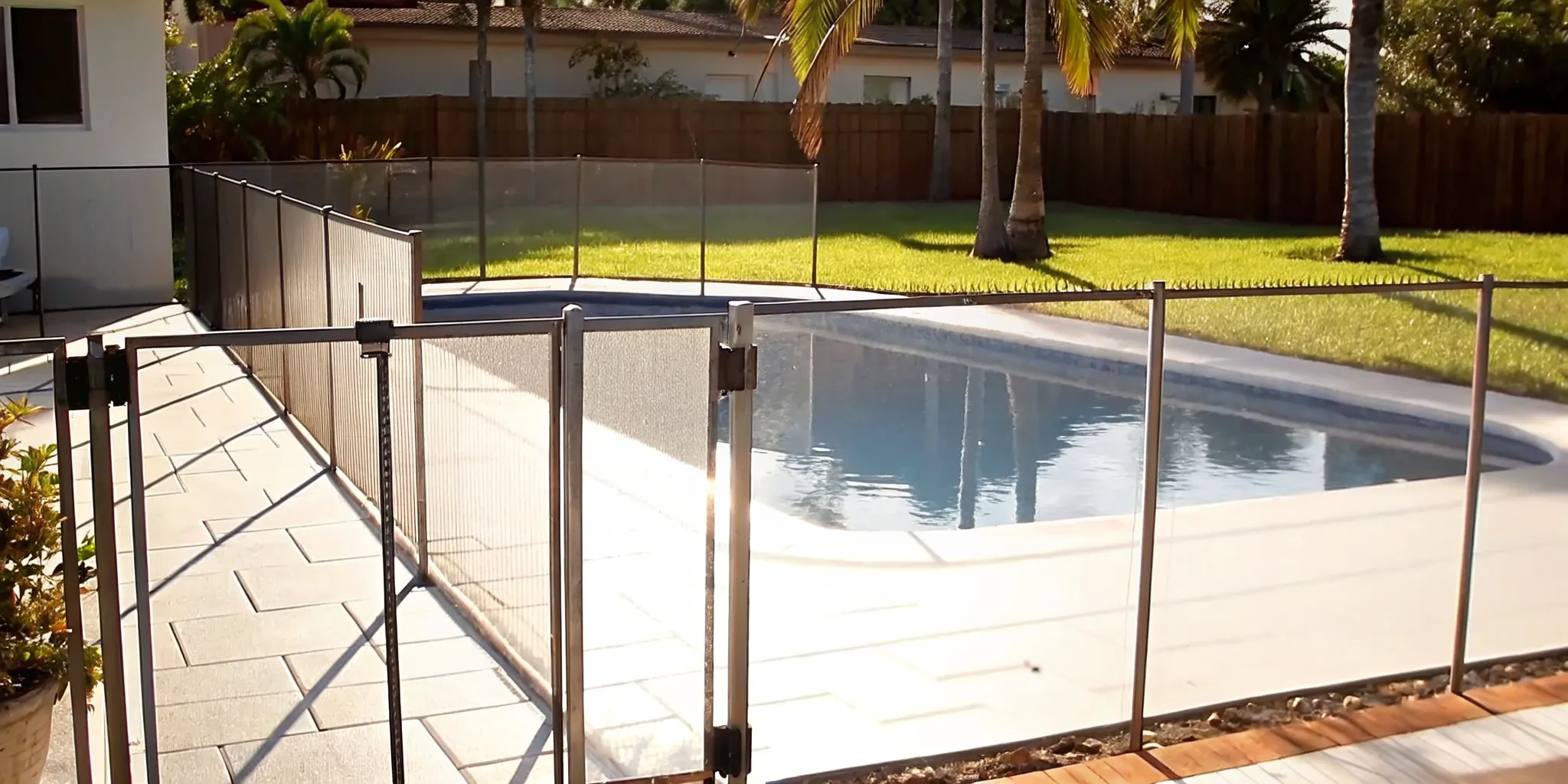
A pool fence can look complete and still fail Florida’s safety requirements. A gate that does not close and latch on its own, a gap beneath the barrier. Or a fence positioned too close to the water can turn an otherwise finished property into a code enforcement problem.
Under Florida Statute 515.29, a pool fence code violation florida case may involve a barrier below four feet, openings or climbable features, improper placement, or an unsecured access point. The statute also addresses aboveground pool ladders and other safeguards. Read the Florida Pool Safety Act requirements before correcting cited work.
If you have already received a notice, red tag, or other code enforcement action, the next step is not simply installing a new fence. You need to identify the cited condition, determine what corrective work and approvals apply, and document compliance for reinspection. The following requirements explain what Florida law actually measures and why common fence features can create violations.
Pool Fence Code Violation Florida: What the Florida Pool Safety Act Requires
Florida Statute 515.29 sets the baseline for residential pool barriers. The law is designed to prevent a young child from reaching the water without encountering a compliant barrier. And it measures compliance by specific construction details, not by whether a fence simply looks substantial. The full statutory requirements are available through the Florida Senate.
Height, openings, and placement
A residential pool barrier must be at least 4 feet high when measured from the outside. Openings cannot allow a 4-inch sphere to pass through, and the clearance between the bottom of the barrier and the surface below generally cannot exceed 2 inches. The barrier also must not contain gaps, indentations, protrusions, or structural components that give a child a way to crawl under, squeeze through, or climb over it.
The pool barrier should surround the pool perimeter and be separate from the fence, wall, or enclosure around the rest of the yard. A yard fence can serve as the pool barrier only if it is positioned as part of the pool perimeter and meets the same statutory requirements. The barrier must also be placed sufficiently away from the water’s edge so that someone who gets through it cannot immediately fall into the pool.
Gates and climb-resistant construction
Pool gates must be self-closing and self-latching. They must open outward, away from the pool area, and the latch must remain secure when the gate is not being actively held. The barrier itself must be designed and built to resist climbing. That means reviewing features such as horizontal rails, decorative elements, nearby objects, and other components that could give a child a foothold or handhold.
Aboveground pools and safety covers
For an aboveground pool, the pool structure may serve as the barrier, or a compliant barrier may be mounted on top of it. Any ladder or steps used to access the pool must be capable of being secured, locked, or removed so children cannot use them to gain access.
Florida law also recognizes an approved safety pool cover as one of the statutory safety-feature options. The cover must meet the act’s requirements for safe operation and structural performance. A cover that is merely marketed as a pool cover is not automatically an approved safety cover, so documentation and compliance details matter when addressing a pool fence code violation Florida property owners have received.
Common Pool Fence Code Violations in Florida
Most pool barrier violations involve a failure to control access, not an unusual construction defect. Florida’s requirements apply to the barrier’s height, openings, placement, gates, and access points. Local municipalities may also adopt requirements that are stricter than the state baseline, so a barrier that appears acceptable at a glance can still fail a compliance review.
Height, openings, and placement
A residential pool barrier must generally be at least 4 feet high on the outside. Openings cannot allow a young child to crawl under, squeeze through, or climb over the barrier. In practical terms, gaps wider than 4 inches and bottom clearance exceeding 2 inches are common reasons for a failed inspection. The barrier must also be designed without climbable surfaces or projections.
Objects near the fence can create the same problem even when the fence itself is properly built. Patio furniture, planters, storage containers, play equipment, trees, and other fixed or movable features may give a child a way to climb over the barrier. A barrier placed too close to the pool edge can also violate the requirement that it be sufficiently away from the water to prevent someone who gets through from immediately falling into the pool. These requirements are reflected in Florida’s residential pool barrier statute.
Gates, doors, and windows
A pool gate that does not close and latch by itself is a frequent defect. Self-closing and self-latching hardware must work consistently, not only when the gate is pushed from one particular angle. Rust, sagging hinges, damaged latches, and poor maintenance can prevent the mechanism from securing the opening.
Doors and windows that open directly to a pool area may also require functioning alarms. Missing, disconnected, or broken alarms can create a separate access-control violation. Test these devices rather than assuming they work because they are installed.
Aboveground pools and yard fences
For an aboveground pool, the pool structure or a barrier mounted on it may serve as the required barrier. But the access ladder or steps must be capable of being secured, locked, or removed. Leaving an unsecured ladder in place can defeat an otherwise compliant setup.
A property’s perimeter or yard fence is not automatically a pool barrier. It must be positioned and built to meet the barrier specifications, including height, openings, climb resistance, gate operation, and placement. If the fence was installed as unpermitted work or has deteriorated over time, the resulting condition may lead to a code enforcement notice and require after-the-fact remediation.
How Pool Fence Code Violations Are Identified
A pool fence issue can come to a municipality’s attention in more than one way. A neighbor may report a gate that stays open, a missing section of barrier, or construction activity that appears unpermitted. Code enforcement staff may also identify problems during a proactive inspection sweep, a follow-up visit, or an investigation connected to another property issue.
Once an inspector observes a potential violation, the municipality typically documents the condition and issues a notice of violation. The notice should identify the requirement that is not being met, the corrective action expected, and a deadline for compliance. In practice, deadlines are often in the range of 15 to 30 days. But the exact period depends on the municipality, the seriousness of the condition, and whether permits or corrective construction are required.
What happens during the inspection process?
A municipal building department or code enforcement official may inspect the barrier, gates, access points, and surrounding conditions. The review is not limited to whether a fence is visible. The official may assess whether the barrier is maintained, whether a child could climb through or over it, and whether corrective work was completed under the required approval. Clearing a pool safety violation commonly requires a formal final inspection by city code enforcement or building officials. Resolving a building red tag can involve additional steps when the issue is tied to unpermitted work or an active stop-work order.
When does a red tag or stop-work order apply?
More serious non-compliance, particularly work that is continuing without required approval or conditions that create an immediate safety concern, may result in a red tag. A red tag typically signifies a stop-work order. Work must stop until the owner addresses the cited issue, obtains required permits or approvals, and receives municipal clearance. The notice and inspection record should control what must happen next, rather than assumptions about the tag’s meaning. Florida’s residential pool barrier statute establishes the statewide framework, while local procedures determine how a case is investigated and closed.
Ignoring a notice can allow the matter to escalate. Depending on local enforcement rules, continued non-compliance may lead to fines, recorded liens, or additional administrative action. The practical objective is to identify the cited defect, complete the correct remediation, and arrange the required reinspection before the deadline whenever possible.
How to Resolve a Pool Fence Code Violation
Once a Florida property receives a pool fence citation, the goal is not simply to install a new section of fencing. The owner must correct the cited condition, satisfy applicable state and local requirements, and obtain formal confirmation that the violation is closed. Use this process to keep the remediation organized:
- Read the violation notice carefully. Identify the property address, case number, compliance deadline, and every condition listed by the inspector. A notice may concern barrier height, gaps, a climbable design, a gate that does not self-close or self-latch, or another access concern. Do not assume that fixing one visible defect resolves the entire case.
- Confirm the specific requirements that apply. Florida’s Residential Swimming Pool Safety Act provides the state framework, but local jurisdictions may impose stricter requirements. Review the cited code section and determine whether the existing barrier, yard enclosure, gate, or aboveground pool access arrangement qualifies. This is also the point to identify whether the issue involves prior unpermitted work. For broader context, review the Florida code violation resolution process.
- Hire a qualified contractor or compliance consultant. Verify licensing, insurance, relevant experience, and familiarity with pool barriers in the property’s jurisdiction. A fencing contractor may be needed for physical repairs, while a consultant can interpret the notice, coordinate the corrective plan, and manage communications. Violation Clinic helps property owners navigate these municipal procedures, with particular experience serving Miami-Dade, Fort Lauderdale, Broward County, and other Florida communities.
- Determine whether corrective permits are required. Replacing, relocating, or installing a barrier may require a permit, especially when the work changes an existing enclosure or involves construction performed without prior approval. Do not begin work based only on a contractor’s assumption. If the pool fence is part of unpermitted work, a professional can help you legalize unpermitted work through the appropriate after-the-fact process.
- Complete the repairs or installation. Correct every item in the notice, not only the most obvious defect. The finished barrier should be secure, climb-resistant, and configured so that access points operate as required. Keep invoices, permits, contractor records, photographs, and inspection-related correspondence in one file.
- Request a reinspection. A pool safety violation generally requires a formal final inspection by the relevant municipal officials. Schedule it after the permitted work is complete and any required approvals are ready. Violation Clinic can coordinate the procedural steps and help ensure the property is presented for inspection at the right stage.
- Confirm closure and retain documentation. Ask for written confirmation that the case, notice, or related permit is closed. Keep the approval, inspection result, photographs, and payment records for future repairs, refinancing, insurance questions, or a sale. If the violation generated penalties, address resolving code enforcement fines separately from the physical correction.
Professional permit consulting can reduce avoidable delays because the remediation plan accounts for local procedures, documentation, and inspection timing from the beginning. Violation Clinic provides after-the-fact compliance support for owners dealing with pool fence citations and related code enforcement matters across Florida.
Local Ordinances vs. State Pool Fence Requirements
Florida’s statewide minimum is a starting point, not a guarantee that a pool enclosure satisfies every local requirement. Florida Statute 515.29 requires a residential pool barrier to be at least 4 feet high and to meet specific design and access standards. Local governments may adopt requirements that are more stringent than that state baseline. A barrier that appears compliant under state law can still result in a pool fence code violation florida property owners must correct.
Miami-Dade requirements may go beyond the state floor
Miami-Dade County may require barriers that are 5 feet or 6 feet high, depending on the property and applicable local rules. Additional protections, including door alarm requirements, may also apply. Do not assume that a four-foot enclosure automatically clears a Miami-Dade review. The applicable municipality, pool configuration, permits, and property type all matter.
Broward properties still need a covenant review
Broward County generally follows the state minimum for pool barriers, but a homeowners association or community association may impose stricter conditions. An HOA covenant can regulate fence height, materials, gates, alarms, and placement even when the proposed barrier satisfies the public code. Florida HOA regulation under Chapter 720 is therefore relevant when reviewing private community restrictions, not just municipal requirements.
A yard fence is not automatically a pool barrier
One of the most common misunderstandings is treating an existing perimeter fence as the required pool enclosure. Under the state law. The pool barrier must be around the pool and separate from the yard fence unless that fence is located on the pool’s perimeter and independently meets every applicable barrier requirement. A yard fence with the wrong height, openings, climbable features, or gate hardware does not count simply because it surrounds the property. See the statute’s barrier language at Florida Statute 515.29.
Aboveground pools have a related distinction. The pool structure or a barrier mounted on it may qualify, but it must satisfy the barrier requirements. And access ladders or steps must be capable of being secured, locked, or removed to prevent access.
Before correcting a cited enclosure, check the state law, local amendments, and HOA documents together. If a pending sale is affected, review the path for selling property with code violations before making assumptions about what will satisfy the buyer, lender, or association.
Preventing Pool Fence Code Violations
Pool barrier compliance is not a one-time installation task. A fence that met Florida requirements when it was installed can become non-compliant as hardware wears, posts shift, landscaping grows, or a gate stops closing correctly. Consistent maintenance and periodic inspections help preserve both safety and compliance.
Inspect the barrier on a regular schedule
Walk the entire perimeter during a self-inspection. Check that the barrier remains at the required height, look for openings or gaps near the bottom, and identify bent sections, loose fasteners, corrosion, or rust. Pay particular attention to areas exposed to irrigation, salt air, and standing water. The barrier should remain difficult for a child to crawl under, squeeze through, or climb over. Remove furniture, planters, storage bins, bicycles, toys, and other objects that could provide a foothold. Trim trees and shrubs so branches do not create a climbing route or interfere with the fence.
Test the gate every month
Open the gate fully and release it. It should close completely without assistance and the latch should engage securely. Repeat the test from different angles and check that the gate does not drag, sag, or remain partly open. Florida law requires pool gates to be self-closing and self-latching, so a failed hinge. Latch, or alignment issue should be repaired promptly rather than left for a future inspection.
Barrier maintenance is ongoing, not a single compliance event. A written monthly checklist, dated photographs, and records of repairs can make it easier to identify recurring problems and demonstrate responsible upkeep.
Keep compliance records and arrange professional inspections
Retain permit records, approval documents, inspection reports, repair invoices, and photographs with your property files. Unresolved code issues can delay a sale or refinance, so organized documentation may help address questions during a future real estate transaction. If the barrier has been altered, the property is changing ownership, or you are unsure whether local requirements apply, schedule a professional inspection. A qualified review can identify problems before they become a formal violation. When corrective work is needed, a final municipal inspection may be required to confirm that the barrier complies.
Frequently Asked Questions
Is it illegal to not have a fence around a pool in Florida?
Florida law requires a compliant safety barrier or another permitted safety measure for residential pools. A missing barrier, an undersized barrier, or a barrier with openings or climbable features can result in a code enforcement citation. The requirement is designed to prevent young children from reaching the water without protection (Florida Statute 515.29: Florida Pool Safety Act).
What is the minimum fence height for a pool in Florida?
The outside of the residential pool barrier must be at least 4 feet high. Height alone is not enough: the barrier must also be climb-resistant. Free of openings that allow a child to pass through, and positioned sufficiently away from the water’s edge (Florida Statute 515.29: barrier requirements).
Can my yard fence serve as the pool barrier?
It can, but only if the yard fence is located on the pool perimeter and meets all applicable pool-barrier requirements. A typical property boundary fence does not automatically qualify. The barrier must remain secure, climb-resistant. And free of gaps or structural features that make it possible for a young child to crawl under, squeeze through, or climb over.
Are alarms required on doors leading to a pool in Florida?
Doors that provide direct access to the pool area may need an approved safety measure. Such as an alarm or a self-closing and self-latching device, depending on the compliance option used and the applicable local requirements. Review the notice and local rules rather than assuming a door alarm alone resolves every barrier deficiency.
How do I clear a pool fence code violation in Florida?
Start by identifying the exact deficiency in the notice, then correct the barrier or related access condition. Obtain any required after-the-fact approvals, and arrange the final inspection needed to close the case. Violation Clinic helps property owners navigate remediation, permitting, inspection coordination, and municipal closure when the work has already triggered a citation.
Ready to Resolve Your Pool Fence Violation?
A pool fence citation requires a clear remediation plan, especially when corrective work, permits, or reinspection may be involved. Violation Clinic helps property owners understand the compliance issue and identify the next step toward closing the case. Contact Violation Clinic to discuss your pool fence code violation and get started with the resolution process.