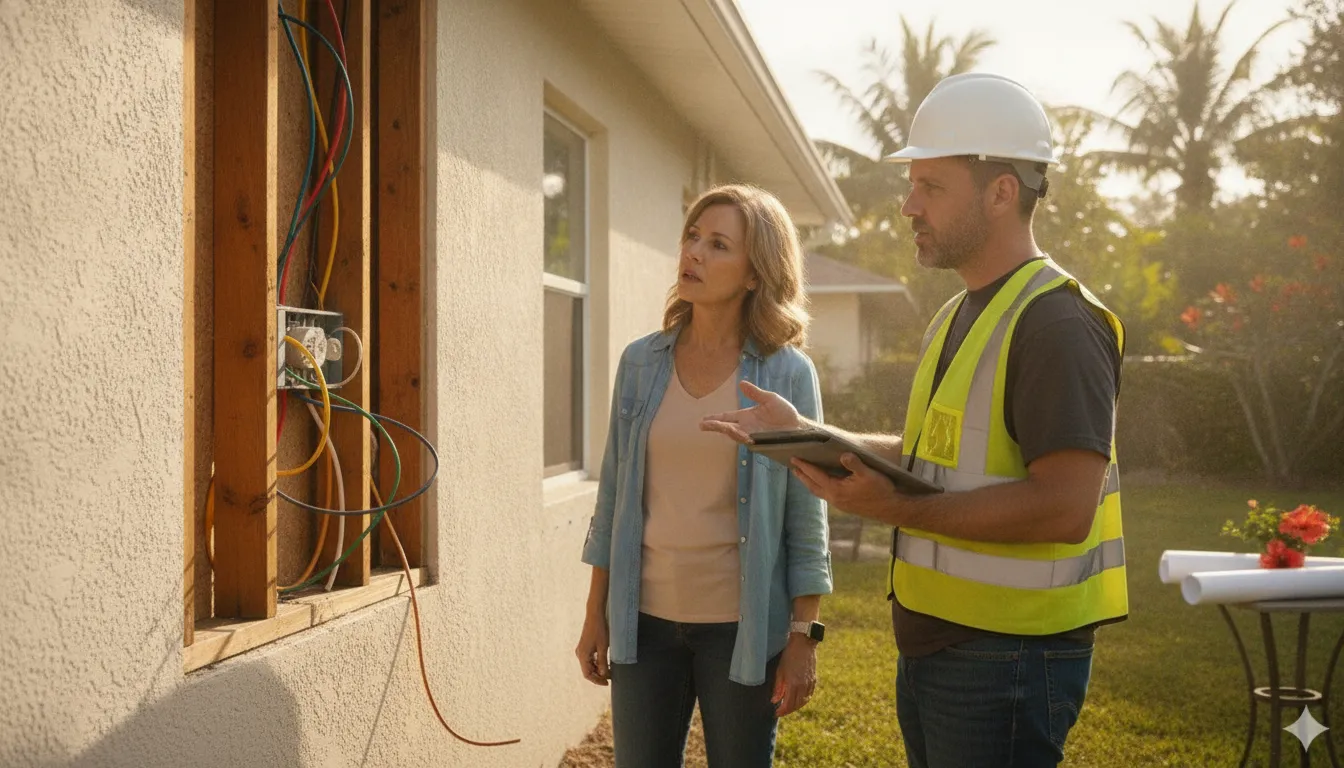
Finding a surprise addition, bathroom, or electrical change after buying a home can turn your closing paperwork into a code-compliance problem. A notice, red tag, or failed inspection does not necessarily mean the property must be abandoned, but ignoring it can increase costs and delay repairs, refinancing, or resale.
If a previous owner did unpermitted work, you may still be responsible for bringing the property into compliance after closing. Miami-Dade County states that the current owner is ultimately responsible, even when someone else performed the work. The usual path is to confirm the permit history, identify what the building department requires, and pursue after-the-fact permits, inspections, or other approved remediation.
That responsibility is separate from whether the seller failed to disclose a known issue. Start by documenting what you found and checking the property’s permit record before opening walls or making changes. Understanding how ownership affects enforcement will help you choose the right next step and protect your options.
Contact Violation Clinic for help with code-violation remediation.
What to Do When the Previous Owner Did Unpermitted Work
If a previous owner did unpermitted work, the current owner may need to work with the local building department to resolve the property’s compliance status after closing. Miami-Dade’s Code Relief program places responsibility on the current owner for qualifying properties, but procedures and legal responsibility can vary by jurisdiction and facts. This does not mean you personally performed the work or that demolition is automatic. The local building department may require permit records, plans, inspections, corrections, or an after-the-fact approval.
Use this resolution path
- Pause additional work and document the condition. Save the closing documents, seller disclosures, inspection reports, photographs, notices, and any permit records. Do not cover, remove, or alter suspected work before the required review is clear, except for immediate action needed to address a safety emergency.
- Check the full permit and inspection history. Search the local building department by street address and, when available, by folio or parcel number. Miami-Dade’s Code Relief guidance identifies Open Master Permit by Address and Open Permits by Folio as search options.
- Compare the records with the property. Look for additions, moved walls, structural changes, electrical or plumbing work, and other conditions that do not match the permit scope or inspection history. An open, expired, void, or missing inspection may require follow-up, and the exact process varies by jurisdiction.
- Confirm the local remediation route. The building department may require an after-the-fact permit, permit reissue, as-built plans, engineering or trade documentation, exposed work, corrections, and inspections. Miami-Dade’s Code Relief process has eligibility requirements, including a construction-start threshold of before March 1, 2002, along with other requirements, so it is not a universal Florida procedure. Florida’s general permit requirement is described in section 553.79.
- Complete corrections and close the records. Once the department confirms the required route, complete the required corrections and inspections, finalize the permits, and separately confirm how any related violation, red tag, or stop-work order is resolved. Keep the final approvals with the property’s permanent records.
Does the seller still matter?
Whether a seller-disclosure or reimbursement claim exists is fact-specific and depends on the purchase documents, disclosures, representations, applicable law, and deadlines. This article is general information, not legal advice. Preserve the purchase contract, disclosures, inspection report, listing materials, messages, and permit records, and ask a real estate attorney whether the facts support a claim. Do not wait for a dispute with the seller before addressing a notice, open permit, or safety concern.
If the work affects structure, electrical systems, plumbing, life safety, concealed conditions, or an active enforcement case, get the file reviewed by a qualified professional before making changes. Violation Clinic can help Florida property owners review permit and inspection records, identify the next compliance step, and coordinate after-the-fact remediation.
Contact Violation Clinic to review your remediation options.
How to Find Out What’s Unpermitted in a Home You Just Bought
Start with the property’s official permit record, not the seller’s assurances or the condition of the finished space. If you suspect the previous owner did unpermitted work, your first objective is to identify permits that are still open. Permits that were never finalized, and work that does not appear in the record at all.
Most Florida building departments provide an online permit search. Search by the complete street address, then repeat the search using the property’s folio or parcel number if that option is available. In Miami-Dade, the county specifically directs owners looking for unfinished permits to use the online search options labeled Open Master Permit (Address) or Open Permits by Folio (Folio Number). Review the county’s permit-search guidance and use the equivalent tool for your municipality.
Review the complete permit history
Do not stop after finding one permit. Pull the property’s full history and compare it with what you can see inside and outside the home. Look for permits associated with additions, structural changes, electrical work, plumbing, air conditioning, roofing, windows, pools, generators, and interior renovations. A permit description may be brief, so compare the issue date and scope with the property’s sales listing, inspection report, renovation invoices, and photographs.
Pay close attention to status terms. An open, expired, void, or pending permit may require action before the work can be considered compliant. A permit marked final or closed is useful evidence, but it does not automatically prove that every part of a project was performed under that permit. A permit for a kitchen remodel, for example, may not cover an unrecorded wall removal, new electrical circuit, or plumbing relocation.
Look for inspection gaps
Inspection history can reveal problems that a basic permit list misses. Finished work with no recorded inspections is a significant red flag. So is a permit with only an initial inspection, failed inspections that were never cleared. Or a final inspection that does not match the apparent scope of the project. Photograph the work, preserve the records, and avoid opening walls or making additional changes until a licensed professional advises you.
Keep a simple comparison: what exists at the property, what the permit describes, and what inspections were recorded. Save screenshots or downloaded permit documents with the date you retrieved them. Online portals can change, and a clear record helps when you speak with the building department, contractor, architect, insurer, lender, or attorney.
If the records do not line up, request clarification from the local building department before assuming the work is legal. Discovering the issue early gives you more time to determine the remediation path and can help prevent an unresolved permit or violation from delaying a refinance or sale. For context on that risk, see our guide to unpermitted work found after closing.
What Happens When an Inspector Finds Unpermitted Work
An inspection does not automatically mean the work must be demolished, but it does create a formal compliance problem. Florida Building Code Section 105 requires permits for nearly all construction, remodeling, alteration, and repair work. Depending on the violation, the property may receive a stop-work order or red tag, incur fines. Or require work to be opened, removed, or redone so inspectors can verify that it meets code.
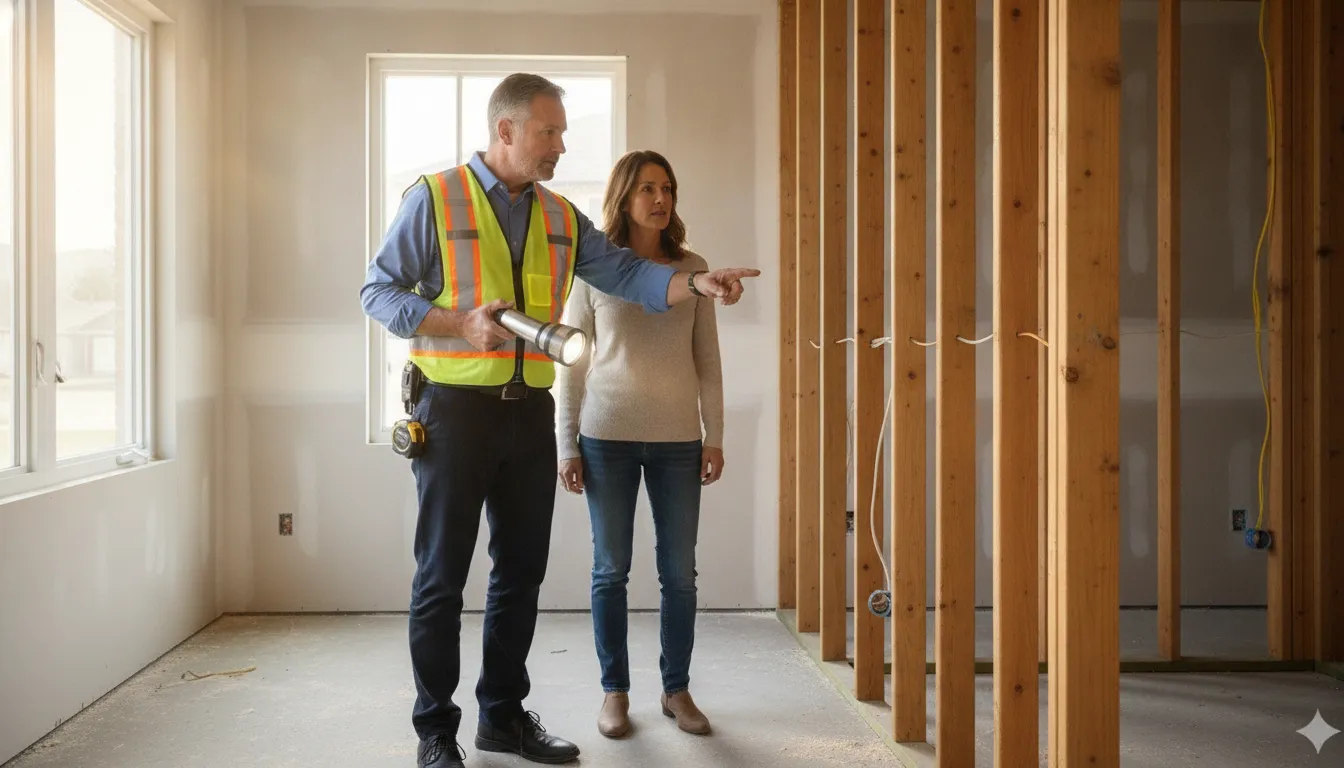
This can be especially stressful when the previous owner did unpermitted work and you discover it only after closing. The enforcement process generally moves in stages, giving the owner an opportunity to respond and correct the problem before penalties escalate.
- The inspector documents the violation. The code official may identify construction that lacks a permit, required inspections, or evidence of compliance. The notice may describe the work at issue and explain what must happen next. If work is actively underway, the jurisdiction may issue a stop-work order. Do not continue construction after that order, because doing so can create additional violations.
- The property owner receives notice and time to correct. Under Florida Statute 162.06, the code enforcement officer notifies the alleged violator and gives a reasonable time to correct the violation. The exact deadline depends on the jurisdiction and the circumstances. Treat the notice as a deadline, not as a suggestion. Start gathering permit records, plans, contractor information, photographs, and inspection history immediately.
- The case may go before an enforcement board. If the violation is not corrected, or if the facts are disputed, the matter can proceed to a hearing before a local enforcement board. The board reviews the evidence and may issue an order requiring compliance. Florida Statute 162.06 outlines this notice and hearing process, including the opportunity for the alleged violator to be heard: read the statute.
- Fines can increase when violations continue or repeat. A board order can set a deadline and authorize daily fines if the violation remains unresolved. Repeat violations can bring more serious penalties under Florida’s code enforcement framework. An unpaid fine may also become a lien against the property, complicating a refinance or sale.
- The work is brought into compliance. The resolution may involve an after-the-fact permit, revised plans, inspections, or removal and reconstruction of work that cannot meet current requirements. In some cases, the local building department may require portions of a wall, ceiling, or other construction to be opened for inspection. The goal is documented compliance, not simply paying a fine and leaving the underlying issue unresolved.
Responding early usually gives you more options. If records are incomplete or the required correction is unclear. Get the file reviewed by a licensed professional who can coordinate with the building department and help determine the fastest lawful path to resolution.
How to Legalize Unpermitted Work as a New Homeowner
If the previous owner did unpermitted work, do not assume the problem disappears because the property changed hands. The practical goal is to document what happened, obtain the appropriate after-the-fact approvals, correct any deficiencies, and close out the permits with final inspections.
In Miami-Dade, Code Relief F003 explains that structures built without proper permits, or with permits missing required inspections, can be brought into compliance with the Building Code. That is a remediation path, not a shortcut around review. The building department still needs enough information to determine whether the work is safe and compliant.
Start with the permit history and the existing conditions
Before applying, collect the closing documents, prior plans, contractor information, inspection records, violation notices, and photographs of the work. Compare those records with the permits on file and the conditions at the property. If walls, ceilings, or finishes conceal structural, electrical, plumbing, or mechanical work. The reviewing agency may require portions of the work to be exposed so an inspector can verify it.
A licensed professional can help identify the scope of work and coordinate the next step with the local building department. This matters when the prior work is incomplete, does not match approved plans, or cannot be evaluated from the surface.
Apply for an after-the-fact permit or permit reissue
The exact process varies by jurisdiction and project type. In general, the current owner or the owner’s qualified representative submits an application describing the completed work. Along with drawings, supporting documents, and any engineering or trade-specific information required by the building department. The plans must show the work accurately, including changes that may not have been visible during the original sale.
Miami-Dade Code Relief F005 addresses a common obstacle: the previous contractor may be unavailable. In that situation, the guidance says to apply for a permit reissue with a new contractor or apply as an Owner-Builder. Selecting Owner-Builder status carries responsibilities, so confirm the requirements before choosing that route. Fees may include application, plan review, permit, inspection, and penalty charges, depending on the agency and circumstances.
Complete corrections and pass every required inspection
Plan approval does not finish the process. Inspectors may identify corrections needed to meet the current code requirements. The owner may need to repair or replace portions of the work before scheduling follow-up inspections. Once all required inspections pass, make sure the permit is finalized and that related violations or red tags are formally addressed. Knowing how to close expired building permits the right way helps you finish this step cleanly.
Miami-Dade’s Board of Rules and Appeals Work Without Permit Guidelines, issued January 2026, provide guidance for work completed without required inspections. The guidelines exclude work that began before March 1, 2002, so older projects may require a different review path.
Because drawings, inspections, fees, corrections, and board representation can become difficult to coordinate, a licensed professional can manage the submission and represent you through the process. That support is especially useful when the previous owner did unpermitted work and the available records are incomplete.
Can I Sue the Previous Owner or Force the Seller to Fix It?
Finding out after closing that the previous owner did unpermitted work can feel like a problem the seller should have disclosed and corrected. In some situations, you may have legal recourse. That does not automatically remove your immediate responsibility to address the property’s code issue.
A seller may be liable if they knowingly concealed a material defect or failed to disclose known unpermitted construction when disclosure was required. Whether a claim exists depends on what the seller knew, what was represented during the sale, and what your contract and disclosure documents say. A real estate attorney can review those details and determine whether the facts support a demand, negotiation, or lawsuit.
Deadlines can limit your options
Legal claims are subject to statutory deadlines, and the applicable deadline can depend on the type of claim. The language of the contract, when you discovered the issue, and other facts. Waiting while you try to resolve the violation on your own can weaken your position or leave you outside a required filing window.
Save the purchase contract, seller disclosure form, inspection report, listing materials, emails, texts, permit records, notices, photographs, and repair estimates. Do not assume that a missing permit proves the seller intentionally hid the work. Permit history can establish what happened to the property, but proving knowledge and misrepresentation usually requires a broader review of the transaction.
Litigation does not replace compliance
Even if an attorney believes you may have a claim, the local building department generally remains focused on the property’s current condition. You may still need to legalize the work, obtain an after-the-fact permit, provide plans, complete inspections, or remove construction that cannot meet code. The municipality is not required to wait for your dispute with the seller to be resolved.
That is why the practical strategy is often two-track: ask an attorney to assess disclosure and recovery options while a licensed professional evaluates the work and begins the compliance process. This can protect your legal position without allowing fines, a red tag, a stop-work order, a sale, or an insurance issue to linger unnecessarily.
Before contacting the seller or making a settlement demand, get advice on how your statements could affect a potential claim. Before altering the work, document its condition and coordinate with the professionals handling your remediation. A prompt review gives you a clearer choice between pursuing the seller, negotiating a contribution. And focusing on legalization, which is usually the step that resolves the property problem.
DIY vs. Hiring a Licensed Professional
When a previous owner did unpermitted work, the temptation is to handle the paperwork yourself and keep costs down. That may be reasonable for a simple records question, but it becomes risky when the work affects structure, electrical systems, plumbing, life safety, or an active code-enforcement case. Florida law generally requires a permit before construction, alteration, modification, repair, or demolition, so the goal is not merely to locate an old permit. The goal is to document the work, correct deficiencies, and bring the property into compliance.
Miami-Dade’s Code Relief process is designed to bring structures built without proper permits, or without required inspections, into compliance with the Building Code. The county’s guidance also explains that if the original contractor is unavailable, an owner may need a permit reissue with a new contractor or proceed as an Owner-Builder. Those choices can affect inspections, responsibility, and the evidence required. The Miami-Dade Board of Rules and Appeals Work Without Permit guidelines add another layer of local procedure, particularly for older work and projects that lack inspection records.
| Issue | Handling it yourself | Working with a licensed professional |
|---|---|---|
| Time | You research records, forms, contractors, inspections, and agency requirements while managing the property issue yourself. | A professional organizes the file, identifies the next municipal step, and coordinates the technical work needed for remediation. |
| Risk | Incomplete descriptions, missed violations, or an incorrect Owner-Builder decision can lead to more work and delay. | Licensed expertise helps identify structural and safety concerns before they become more expensive compliance problems. |
| Fines and delays | Slow responses can prolong an open case, complicate a sale, or leave enforcement issues unresolved. | Prompt, organized remediation helps reduce avoidable delays, although no professional can guarantee that fines will be waived. |
| Board representation | You communicate with the building department or enforcement board without an experienced representative. | The owner receives help preparing documentation and presenting the remediation path to the appropriate municipality or board. |
| Local knowledge | You must interpret Miami-Dade procedures, Florida requirements, and the applicable Work Without Permit guidance. | A remediation specialist familiar with South Florida processes can apply local knowledge to the case instead of relying on generic advice. |
DIY may be appropriate for checking permit history or gathering closing documents. Choose licensed representation when the case involves structural changes, hidden work, red tags, stop-work orders, an enforcement hearing, or a transaction deadline. Violation Clinic is an after-the-fact remediation lifeline, not a pre-construction permit expeditor. Founder Jeri Goodkin Dausey is a former city building inspector, giving the team practical insight into how municipalities review these cases. Start by learning how to remediate building violations, especially if you have unpermitted work found after closing. If you inherited unpermitted work and need to move a property forward, get the file reviewed before the issue affects a refinance, sale, or enforcement deadline.
Contact Violation Clinic to review your remediation options.
Frequently Asked Questions
Can I be forced to fix the previous owner’s unpermitted work?
Yes. After closing, the current owner is generally responsible for bringing the property into compliance, even when the work was completed by a prior owner. Miami-Dade describes this responsibility in its Code Relief guidance. A municipality may require correction before it closes a violation or red tag.
What is the penalty for unpermitted work found after closing?
The amount depends on the local jurisdiction, the work involved, and how long the violation remains open. Possible consequences include daily or repeat-violation fines, stop-work orders, increased permit fees, required removal or rework, and a lien or other enforcement action. Florida’s code-enforcement procedure is outlined in Florida Statute 162.06.
Can I sue the previous owner for undisclosed unpermitted work?
Possibly, especially if the seller knew about the work and failed to disclose a material issue. The answer depends on your contract, disclosure documents, available evidence, and applicable deadlines. Have a real estate attorney review the closing file promptly rather than assuming a claim is available.
Do appraisers care about unpermitted work?
They can. Unpermitted additions or renovations may affect the property’s appraised value, financing, insurance, and resale because the improvement may not qualify as recognized permitted space. Resolving the permit and inspection history can make the property’s records easier for lenders and future buyers to evaluate.
How do I legalize unpermitted work as a new homeowner?
Start by checking the local building department’s permit records, then identify the required after-the-fact permit, plans, inspections, and fees. Depending on the jurisdiction and circumstances, a new contractor or owner-builder may be able to reissue the permit. Do not conceal the work or begin additional construction before confirming the remediation path.
Get the Property Back Into Compliance
Finding unpermitted work after closing can leave a new owner sorting through permits, missing inspections, and municipal deadlines on their own. The longer a violation, red tag, or open permit sits unresolved. The more involved the process can become, especially when it interferes with a refinance, insurance decision, or sale.
Violation Clinic is an after-the-fact remediation firm serving Florida property owners. The team represents owners before municipalities and building boards, helps obtain after-the-fact permits and required inspections. And works to bring properties into code compliance so owners can move forward with confidence. Founder Jeri Goodkin Dausey is a former city building inspector, which means the firm understands how local building departments review these cases from the inside.
You do not have to resolve an inherited compliance problem alone.