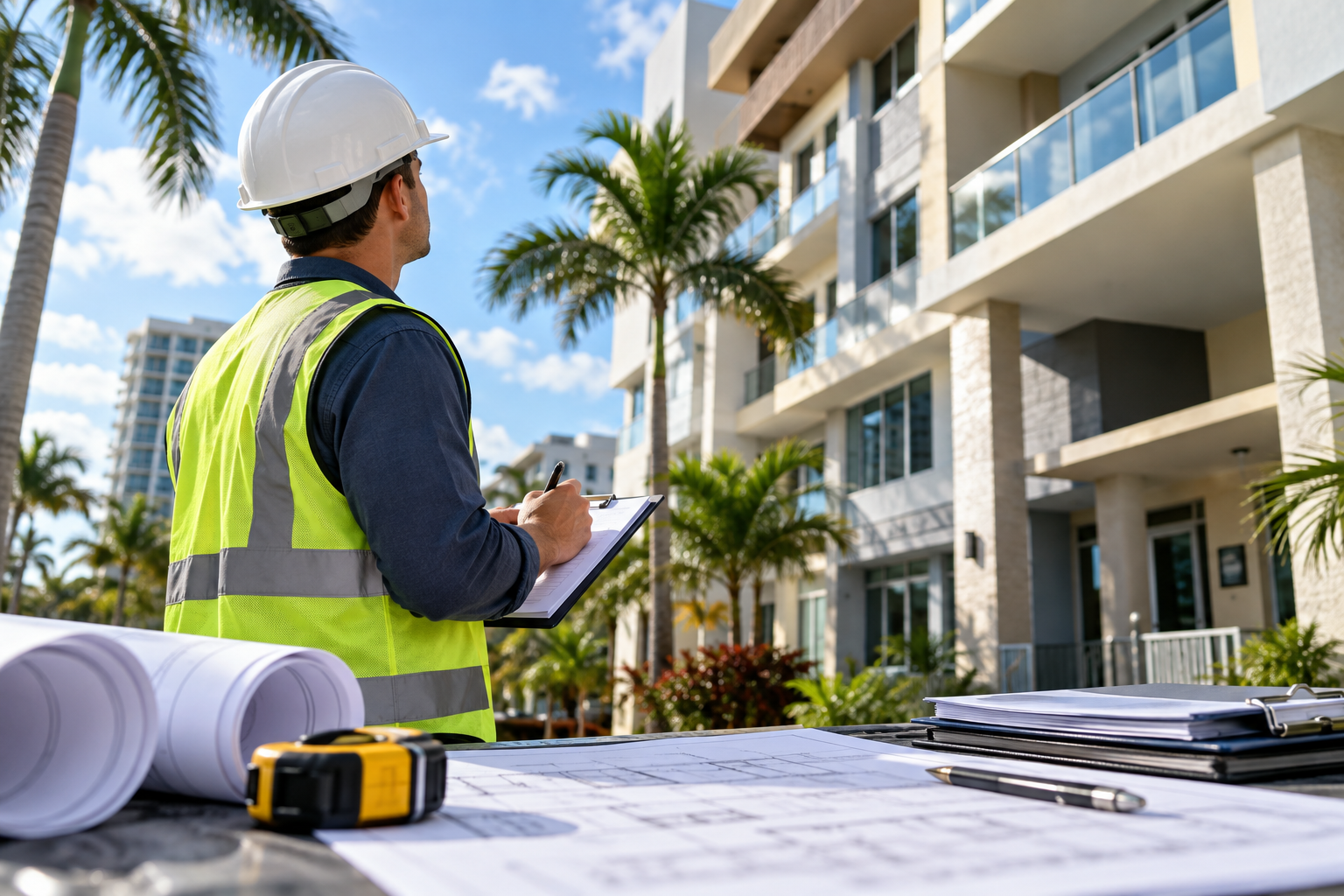
Building compliance is not something property owners should think about only after receiving a violation notice. In Florida, keeping a property compliant requires attention to permits, inspections, maintenance, zoning requirements, structural safety, and local regulations.
The Florida Building Code establishes statewide standards for the design, construction, alteration, repair, and demolition of buildings, while cities and counties may also enforce applicable local requirements and amendments.
Why Do Property Owners Receive Code Violations?
Several issues commonly lead to code enforcement action:
- Unpermitted construction: Remodeling, structural alterations, electrical, plumbing, or mechanical work may require permits. Work completed without the required approval can create compliance problems and may require additional inspections or corrective work.
- Zoning violations: A property can comply with building requirements but still violate local zoning rules involving permitted uses, setbacks, parking, occupancy, signage, or other land use requirements.
- Neglected property maintenance: Deteriorated exterior elements, accumulated debris, damaged structures, unsafe walkways, and other maintenance issues can attract code enforcement attention.
- Unsafe conditions: Structural deterioration or hazardous building conditions can create serious safety concerns and may result in Unsafe Structure Violations or other enforcement action.
- Missed inspections: Required inspections and legally mandated inspection programs should be treated as deadlines, not optional maintenance tasks.
Property owners dealing with an existing notice can also review Violation Clinic’s guide on [how to check for outstanding violations on your property]. How to Check for Outstanding Violations
Practical Ways to Prevent Building Fines
1. Obtain the Right Permits Before Work Begins
Before starting construction or renovation, confirm with the appropriate local building department whether a permit is required. Do not assume that a project is exempt simply because it appears minor.
Keep copies of permits, approved plans, inspection records, contractor information, and final approvals. If work was completed without permits, professional guidance may be necessary to determine the appropriate process for legalization and Stop Work Order Removal.
2. Schedule Regular Inspections
Routine inspections can identify deteriorating roofs, electrical problems, plumbing issues, structural concerns, water intrusion, and other problems before they become enforcement matters.
Some inspections are also legal requirements. For example, Florida law establishes mandatory milestone inspections for certain condominium and cooperative buildings that are three habitable stories or more in height.
Local programs can impose additional requirements. Miami Dade County, for example, requires applicable buildings to undergo recertification at specified intervals and requires reports prepared by qualified Florida registered professionals.
3. Maintain Property Appearance and Safety
Regularly address damaged exterior surfaces, deteriorated railings, unsafe walkways, drainage concerns, overgrown landscaping, debris, and other visible maintenance problems.
Good maintenance is more than cosmetic. It can help identify conditions that may eventually become safety or structural concerns.
4. Monitor Structural and Building Systems
Owners should pay attention to signs of water intrusion, cracking, corrosion, electrical deficiencies, roof deterioration, damaged structural components, and other conditions that could affect occupant safety.
When specialized evaluation is required, use appropriately qualified professionals and follow the requirements of the applicable jurisdiction.
5. Stay Current With Local Requirements
Florida’s building requirements can change, and local governments may have applicable amendments and enforcement procedures. The Florida Building Commission provides current code resources and information about local amendments.
Building Recertification Can Be a Legal Requirement
Building recertification is particularly important in South Florida. Miami Dade County requires applicable buildings to complete recertification at 30 years for inland buildings and 25 years for coastal buildings, followed by ten year intervals. The county generally provides 90 days after its notice for the required report.
Failure to obtain required recertification can result in a $510 initial penalty, with additional accumulated penalties potentially reaching $10,000 per violation. The county also states that unresolved cases may be referred for lien collection.
Property owners can learn more through [Violation Clinic’s Building Recertification Services]. Building Recertification Services
A Practical Example
Illustrative example, not a documented Violation Clinic project: A commercial property owner discovers that a previous renovation was completed without the required permits. Instead of continuing work, the owner stops the project, reviews the property’s permit history, determines what approvals are required, obtains the appropriate professional assistance, and works with the local authority to complete the required inspections and approvals.
The lesson is simple: addressing a compliance issue early can prevent it from becoming a larger enforcement problem.
For situations involving occupancy documentation, owners may also need Certificate Of Occupancy Assistance, while more complicated enforcement proceedings may require Special Magistrate Representation.
The Bottom Line
Managing building compliance is an ongoing responsibility. Obtaining permits before construction, scheduling regular inspections, maintaining safe property conditions, monitoring structural and building systems, and staying informed about local Florida requirements can significantly reduce compliance risks.
If a violation has already been issued, do not ignore it. Review the notice carefully, identify the applicable deadline, and determine what documentation, permits, inspections, or corrective work are required. Violation Clinic provides resources for property owners dealing with building violations, compliance issues, and recertification requirements.
Related Posts and Resources
- [Common Compliance Oversights That Lead to Violations] Common Compliance Oversights That Lead to Violations
- [Steps to Legalize Unpermitted Construction Work] Steps to Legalize Unpermitted Construction Work
- [How Property Owners Can Prevent Code Fines] How Property Owners Can Prevent Code Fines
- [How to Check for Outstanding Violations on Your Property] How to Check for Outstanding Violations on Your Property
At ViolationClinic.com, we specialize in helping property owners navigate the recertification process smoothly. Whether you need assistance with inspections, violations, or compliance issues, our team is here to help. Don’t wait until it’s too late, take action today to protect your investment and ensure the safety of your building.
For more information or assistance, contact us at ViolationClinic.com!