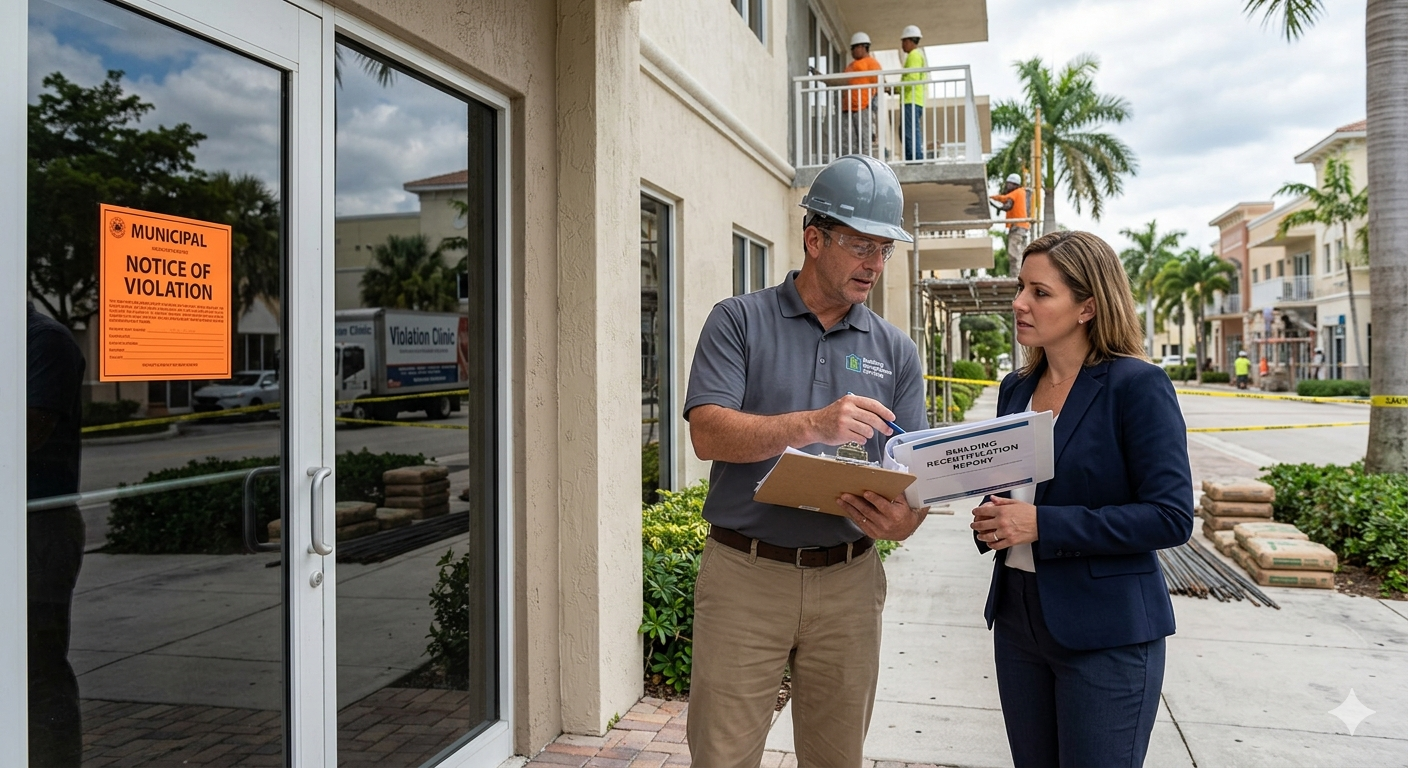
In the world of real estate, whether you are a homeowner, a commercial property manager, or an investor, “compliance” is often viewed as a bureaucratic hurdle. However, building codes and zoning regulations are not just suggestions; they are the fundamental framework that ensures structural integrity, occupant safety, and community standards.
For Florida property owners, the stakes are particularly high. From the humid coastal environments that accelerate structural decay to the stringent regulations following tragedies like the Surfside collapse, staying compliant is no longer optional—it is a financial necessity. Failing to address code compliance issues does more than just trigger a letter from the city; it actively erodes your property’s market value and increases its liability risk.
In this guide, we will explore how compliance issues influence property risk and value, common reasons for violations, and the proactive steps you can take to protect your investment.
The Hidden Connection Between Compliance and Property Value
Property value is determined by more than just square footage and aesthetic finishes. Appraisers, lenders, and savvy buyers look closely at the “legal health” of a building. Compliance issues impact value in three primary ways:
- Marketability and Financing: Most lenders will not issue a mortgage on a property with active code violations or open permits. A property “encumbered” by compliance issues is often relegated to “cash-only” buyers, significantly shrinking the pool of potential purchasers and forcing a lower sale price.
- Liability and Insurance Costs: Insurance companies are increasingly performing their own risk assessments. Unpermitted work or neglected maintenance (like an aging roof or outdated electrical systems) can lead to denied coverage or astronomical premiums.
- The “Lien” Factor: In Florida, daily fines for non-compliance can quickly turn into a cloud on the title. If a violation is ignored, the municipality can place a lien on the property, which accrues interest and must be settled before any transfer of ownership.
Common Reasons for Code Violations and Fines
Understanding why violations occur is the first step toward prevention. While some owners intentionally bypass rules to save money, many violations are the result of oversight or lack of knowledge regarding local zoning violations and building standards.
1. Unpermitted Construction
This is perhaps the most common compliance issue. Whether it’s an enclosure of a garage, a new deck, or a major plumbing overhaul, performing work without a permit is a major red flag. Florida Building Code (FBC) requires permits for most work that affects the structural, electrical, or mechanical systems of a building.
2. Zoning Violations
Zoning laws dictate how a property can be used. Common issues include operating a business in a residential zone, illegal short-term rentals, or exceeding “floor area ratios” (building too much on a small lot).
3. Neglected Property Maintenance
Local ordinances often include “Minimum Housing Standards.” This covers everything from overgrown weeds and peeling paint to broken windows and crumbling fences. These “aesthetic” violations are often the first thing a code enforcement officer notices.
4. Unsafe Conditions
Life-safety violations are the most serious. This includes faulty wiring, lack of smoke detectors, or structural cracks. According to Florida Statutes Chapter 553, buildings must be maintained in a safe condition, and failure to do so can lead to an “Unsafe Structure” designation, which may result in an order to vacate.
5. Missed Inspections and Recertifications
Many owners forget that compliance is an ongoing process. Failing to schedule required inspections during a renovation—or failing to perform mandatory milestone inspections—can lead to the immediate stoppage of work and heavy fines.
The Cost of Non-Compliance: Florida’s Escalating Fines
In Florida, the “wait and see” approach to code violations is a recipe for financial disaster. Local governments have the authority to impose significant penalties to ensure public safety.
For example, Building Recertification (formerly the 40-year recertification, now moved to 25 or 30 years depending on proximity to the coast under SB 4-D) is a legal requirement. Failure to submit the required engineering reports can result in:
- Initial Fines: Starting as low as $510.
- Escalating Fines: If the owner remains non-compliant, fines can jump to $10,000 or more, plus the cost of the city’s legal fees.
If your building is approaching its anniversary, you should immediately consult Violation Clinic’s Building Recertification and Services to avoid these predatory penalties.
Actionable Steps to Prevent Fines and Protect Value
Prevention is significantly cheaper than remediation. By following these best practices, you can ensure your property remains a low-risk, high-value asset.
Obtain Necessary Permits
Before starting any project, check with your local building department. While it may seem like an extra cost upfront, a permit is your “insurance policy” that the work was done to code. It also provides a paper trail that adds value during a future sale.
Schedule Regular Professional Inspections
Don’t wait for the city to find a problem. Hire a private inspector or consultant to perform a “gap analysis” of your property. Look for:
- Roofing integrity and drainage.
- Electrical panel safety.
- Foundation and structural wall stability.
Maintain Property Aesthetics
Simple maintenance prevents code enforcement “drive-by” tickets. Keep landscaping trimmed, ensure exterior lighting is functional, and address any graffiti or exterior wear immediately.
Stay Informed on Local Regulations
Florida building codes are updated every three years. Changes in energy efficiency requirements or hurricane mitigation standards can affect your compliance status. Utilizing code compliance tips from industry experts can help you stay ahead of the curve.
Case Study: The Cost of an Unpermitted Kitchen Remodel
The Situation: A homeowner in Miami-Dade County decided to renovate their kitchen and remove a load-bearing wall to create an “open concept” look. To save $2,000, they hired an unlicensed contractor who did not pull permits.
The Discovery: Two years later, the homeowner tried to sell the house. The buyer’s inspector noticed signs of structural sagging in the ceiling. A search of public records showed no permits were ever issued for the work.
The Fallout:
- The sale fell through.
- The City issued a “Stop Work” and “Violation Notice.”
- The owner had to hire a structural engineer to retroactively approve the work ($3,500).
- The city required the drywall to be ripped out so they could inspect the internal framing ($5,000 in labor).
- The owner paid $2,500 in administrative fines and double permit fees.
The Resolution: By trying to save $2,000, the owner ended up spending over $11,000 and lost a high-value sale. Had they sought professional guidance from the start, the property’s value would have been preserved.
Best Practices for Commercial Owners
For commercial entities, compliance is tied to “Certificates of Occupancy” (CO). If a violation is serious enough to revoke a CO, your tenants cannot legally operate, leading to loss of rent and potential breach-of-contract lawsuits.
- Fire Safety: Ensure all fire extinguishers, sprinklers, and alarms are inspected annually as per NFPA standards.
- ADA Compliance: Ensuring your property is accessible is not just a building code issue; it’s a federal legal requirement that protects you from costly litigation.
Related Posts
- The Business Case for Staying Property Code Compliant
- How Compliance Affects Property Transfers and Closings
- How Compliance Delays Can Disrupt Property Transactions
Summary: Proactive Compliance is an Investment
Compliance issues are not just paperwork errors; they are direct indicators of a property’s risk profile. Unpermitted work, zoning conflicts, and missed recertifications act as “invisible leaks,” draining the equity from your home or commercial building.
At ViolationClinic.com, we specialize in helping property owners navigate the recertification process smoothly. Whether you need assistance with inspections, violations, or compliance issues, our team is here to help. Don’t wait until it’s too late, take action today to protect your investment and ensure the safety of your building.
For more information or assistance, contact us at ViolationClinic.com!