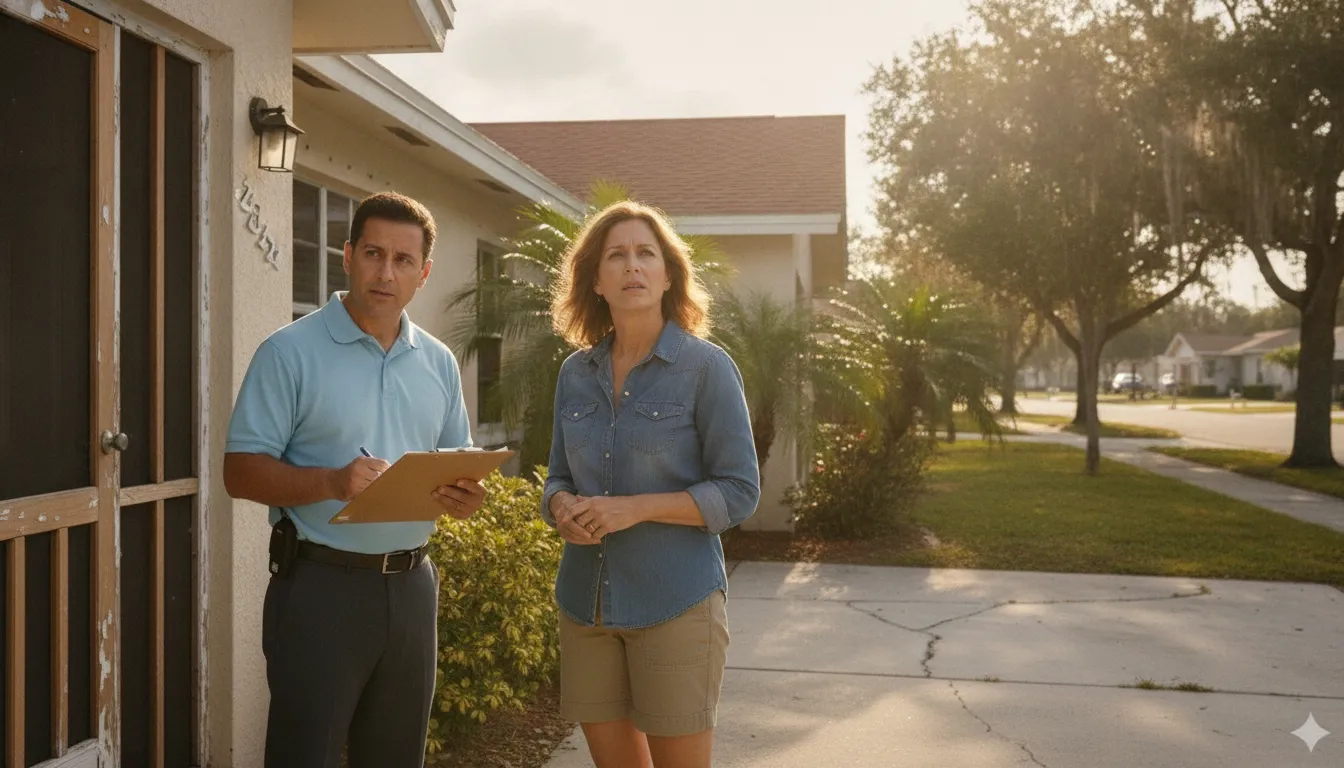
A red tag on a Florida house is not a routine warning. It usually signals that work must stop because officials identified construction that may be unpermitted, unsafe, unauthorized, or otherwise out of compliance. Continuing anyway can increase fines and complicate the path to resolution.
In practical terms, what does a red tag on a house mean? It means a Stop Work Order is in effect. You may need to halt construction, address the underlying violation, and obtain official approval before work or occupancy can continue.
Do not remove the tag or restart work based on an assumption that the problem is minor. First, identify what triggered the order and whether the property can legally be occupied. From there, the correct response depends on the violation, the evidence available, and the approvals needed to close it. The next section explains what the tag legally communicates and why ignoring it can make the situation more expensive.
Get a free review of your red tag situation with licensed Florida remediation experts who can explain your options and the fastest path to removal.
What Does a Red Tag on a House Mean?
What does a red tag on a house mean? In simple terms, it is an official directive identifying a property or part of it as unsafe, non-compliant, or affected by unauthorized work. It generally stops construction and can prohibit occupancy until the cited violations are corrected and the local authority releases the order. A red tag is not permission to keep working and should not be treated as a routine warning.
The notice is usually posted as a placard at the property, often alongside written details about the condition that triggered it. Read the entire notice before moving belongings, hiring contractors, or entering the affected area. The wording and deadlines matter, and requirements vary by municipality.
What the red, yellow, and green colors usually indicate
Many safety inspection systems use colors to communicate the level of danger quickly. A red-tagged structure is generally considered too dangerous to inhabit. A yellow tag indicates a lower level of damage or risk, where use may be limited rather than completely prohibited. A green tag generally communicates that the structure has passed the applicable safety evaluation or is cleared for normal use. These colors are not universal legal categories, so the written notice and local building department instructions control.
| Tag color | What it usually means | Occupancy | Next step |
|---|---|---|---|
| Red | Severely damaged or unsafe; too dangerous to inhabit | Prohibited until corrected and released | Fix the violation, pass inspections, request official release |
| Yellow | Moderate damage or risk to the structure | Limited or restricted use | Complete required repairs and re-inspection |
| Green | Passed the applicable safety evaluation | Normal use permitted | Keep the clearance record for insurance and sales |
For Florida homeowners, the practical meaning of a red tag is immediate: stop unauthorized work. Do not occupy the property if the notice prohibits occupancy, and identify every violation listed. The underlying problem may involve unsafe conditions, unpermitted construction, or both. An unsafe building can include a structure or portion of one that is open, vacant. Or unguarded and structurally compromised in a way that presents a danger to public safety, as described by the New York City Department of Buildings.
A red tag does not necessarily mean the house is condemned forever. It means the property needs a documented path to compliance, which may include qualified assessments, corrective work, permits, inspections, and formal release. Because the exact process depends on the municipality, preserve the placard and violation notice, then get professional help before taking action that could create another violation.
Who Puts a Red Tag on a House, and Why?
A red tag comes from a government authority, not a private contractor or neighbor. In most cases, the issuing agency is the local municipal building department or code enforcement office. Depending on the hazard, a fire marshal or health department may also have authority to post the property. These agencies use a red tag to communicate that a condition presents a serious safety, occupancy, or compliance concern. Municipal code-enforcement guidance identifies these authorities as common sources of red tags.
The notice typically follows an inspection, a reported complaint, an emergency response, or the discovery of work that was performed without required approvals. The underlying issue may involve structural instability, dangerous electrical or fire conditions, gas or health hazards, or construction that does not comply with the approved requirements. The tag is not simply an informal warning. It is an official notice that can stop work and, in serious cases, restrict access or occupancy.
What legal weight does a red tag carry?
The exact authority and procedure vary by municipality, so the posted notice and the local agency’s records control. In general, a red tag is one step in a formal enforcement process. An owner may receive a notice describing the alleged violation, followed by a survey or inspection. If the property is determined to be unsafe and the matter is not corrected, the case may proceed to an administrative hearing or court. For example, New York City’s unsafe-building process describes notice, inspection, and a possible court order authorizing corrective work at the owner’s expense: see the city’s official process.
That legal weight explains why you should not remove the placard, ignore the notice, continue restricted work, or assume the tag will disappear after a quick repair. Read every violation listed, secure the property if instructed, and confirm the next step with the issuing department. A red tag does not necessarily mean the house is lost forever. It means a real authority has identified a condition that must be addressed through the required remediation, permitting, inspection, and release process.
Can You Live in a Red-Tagged House?
Generally, no. A red tag is a legal notice that prohibits occupancy because the property has been identified as unsafe. Until the cited violations are corrected, required inspections are passed, and the local authority officially releases the order. You should not live in, rent out, or allow others to occupy the home. Municipal red-tag enforcement can include clearing occupants from a building and securing the doors.
Do not treat the tag as a warning that can be ignored while you make plans. Depending on the condition and the local enforcement process. Officials may shut off gas or electrical service to the structure, condemn it, or take legal action to force compliance. The purpose is to prevent people from being exposed to an immediate life-safety risk, not simply to create an administrative inconvenience.
What happens if you enter anyway?
If authorities have physically closed, padlocked, or placarded the property, do not cut locks, remove notices, reopen the building, or move back in without written authorization. In one documented municipal enforcement action, people who cut the locks or re-entered could be taken into police custody for refusing to leave. Local rules vary, but violating an ordinance behind a red tag can also carry criminal consequences in some jurisdictions. Follow the instructions on the notice and ask the issuing authority how access may be arranged for a qualified professional.
Is a red tag permanent?
No. A red tag is serious, but it does not necessarily mean the house will be condemned forever. The restriction can usually be addressed by identifying every cited violation. Completing the required repairs or legalization work, obtaining necessary permits, and passing the inspections required by the municipality. The exact process and timing vary by location, so avoid making assumptions based on another property’s experience.
Keep the property secured, preserve every notice and inspection record, and start resolving the underlying violations promptly. A licensed code-compliance professional can help clarify what must be corrected and coordinate the path toward an official release.
Common Reasons a House Gets a Red Tag
A red tag usually signals a condition that creates an immediate safety concern, violates local requirements, or prevents officials from confirming that work was completed legally. The exact standard varies by municipality, but the most common triggers fall into a few recognizable categories. Many are fixable once the condition is investigated, corrected, documented, and approved through the local process.
- Severe structural damage: Significant damage to the foundation, framing, roof, load-bearing walls, stairs, or other structural components can make a home unsafe. An unsafe building may be open, vacant, unguarded, or structurally compromised in a way that endangers the public, according to the New York City Department of Buildings.
- Hazardous electrical wiring: Exposed or damaged wiring, electrical shorts, overloaded circuits, unsafe panels, and improper connections can create shock and fire risks. These hazards may involve outlets, appliances, water heaters, furnaces, or the main electrical panel. The Virginia Beach code enforcement guidance identifies electrical shorts and overloaded circuits as common red-tag conditions.
- Fire safety violations: Blocked exits, unsafe stairways, missing or defective fire-protection features, and other conditions that prevent safe evacuation can prompt enforcement. Fire-related deficiencies may be cited alongside structural or electrical problems rather than appearing as one isolated issue.
- Gas or carbon monoxide leaks: Leaks involving water heaters, furnaces, stoves, gas logs, or related equipment can expose occupants to fire, explosion, or poisoning hazards. Gas or electrical service may be shut off if an unsafe equipment condition is not promptly corrected.
- Unpermitted construction: Additions, conversions, structural changes, electrical work, plumbing, or other construction completed without required permits can lead to a red tag, especially when officials cannot verify the work’s safety. The correction usually requires an after-the-fact compliance process, not simply paying a fee. See this guide to correcting unpermitted construction.
A red tag is serious, but it does not automatically mean the house is beyond saving. Do not remove the notice or resume work based on assumptions. Start by reviewing the posted violation, securing the property if necessary, and identifying which repairs, professional reports, permits, and inspections the local authority requires.
How to Remove a Red Tag: A 4-Step Roadmap
A red tag is serious, but it is not necessarily permanent. In Florida, the path to removal is usually a practical sequence: understand the notice, document the condition, correct the violations, and obtain written clearance from the local authority. Requirements and timing vary by municipality, so use the posted notice and local building department instructions as your starting point. Local enforcement guidance confirms that unsafe conditions come with deadlines and specific correction requirements.
- Read the notice and identify the cited violation. Start with the red tag, stop work order, inspection report, or other notice posted at the property. Identify exactly what the inspector cited, whether the order prohibits occupancy or only construction activity, and whether there is a response deadline. Look for references to structural work, electrical systems, fire safety, plumbing, gas, or unpermitted construction. Do not rely on a verbal summary or assume that fixing the most visible problem resolves every item. Make a written checklist of each violation, the issuing department, the case number, and the contact information for follow-up.
- Have a licensed professional assess and document the condition. Depending on the violation, you may need a licensed engineer, architect, contractor, or another qualified professional to inspect the work and determine what must be corrected. The professional may prepare reports, drawings, calculations, photographs, or corrected plans for the municipality. This step is especially important when the tag involves structural safety or work completed without permits. A qualified assessment turns a broad enforcement notice into a defined remediation plan and can reveal concealed issues before they create another failed inspection. Resolution commonly includes coordinating licensed engineers or architects, submitting corrected plans, and working with municipal reviewers.
- Correct the violations, obtain required permits, and pass inspections. Complete the repairs or removal work described in the approved correction plan. If unpermitted construction caused the red tag, the work may need to be legalized through the appropriate after-the-fact permit process. Apply for every required permit before proceeding with work that requires one, then schedule the inspections identified by the building department. Keep copies of permits, approved plans, inspection results, contractor records, and correction photographs. The red tag is not cleared simply because construction appears complete. The cited conditions must be corrected and accepted through the municipality’s process.
- Request the official release from the building department. After all corrections and inspections are complete, contact the department named on the notice and ask for the final release procedure. Submit the required closeout documents and request confirmation that the order or tag has been released. Do not remove the placard, reopen a closed property, or resume occupancy based only on your own inspection. Municipal requirements differ, and a qualified professional can help confirm that the file is complete. Once the local authority officially clears the violation, keep the release documentation with the property’s permanent records.
Following these steps creates a documented path from enforcement to clearance. If the notice is unclear, the deadline is approaching, or multiple professionals and permits are involved, early code-compliance guidance can prevent avoidable delays and repeat inspections.
How a Red Tag Affects Insurance and Property Value
A red tag creates a financial problem as well as a safety and compliance problem. Until the cited conditions are legally remediated, the property may be viewed as unsafe, incomplete, or difficult to insure. A red tag can lead to insurance cancellation and negatively affect property value while the underlying violations remain unresolved according to red-tag guidance.
Contact your insurance carrier promptly and ask what the notice means for your policy. Do not assume that an existing policy will continue unchanged. The carrier may request proof of repairs, permits, inspection results, or an official release of the order before agreeing to maintain or renew coverage. If the property cannot be occupied, secured, or insured normally, buyers and lenders may hesitate to proceed.
Property value can also drop because a buyer is not purchasing only the structure. They are taking on the unresolved violation, the cost of correction, the approval process, and the uncertainty of when the property can be used normally. A red tag can stall a sale, refinancing, or closing until the issue is documented as resolved. If the tag involves unpermitted construction, legalization requires permit and inspection compliance, not simply cosmetic repairs as part of correcting unpermitted construction.
Meanwhile, enforcement costs may continue to grow. Unresolved violations can produce daily accumulating fines commonly ranging from $250 to $5,000 per day, along with liens, enforcement orders, or threatened evacuation in serious cases. Ask for the violation record, identify every required correction, and keep copies of permits, reports, inspection approvals, and written release documentation. The fastest way to protect the property’s insurability and marketability is to address the underlying violation through the municipality. Then obtain official confirmation that the red tag has been cleared.
Why a Licensed Remediation Partner Speeds Up Red Tag Removal
A red tag is not just a repair problem. It is a municipal compliance problem that may involve notices, plans, inspections, fines, and communication with several reviewers. Property owners often lose time by correcting visible damage while missing the underlying violation or submitting work that does not satisfy the local requirements.
Violation Clinic was founded by Jeri Goodkin Dausey, a former Senior Building Inspector with 10 years of municipal experience and a 39-year licensed general contractor. That background provides practical insight into how building departments review violations, what documentation they need, and where an application may stall. The firm also coordinates licensed engineers and architects when reports, corrected plans, or technical evaluations are required.
This matters when the red tag involves unpermitted construction, structural concerns, electrical hazards, or multiple violations. Resolution may require investigating the cited condition, preparing the right plans, securing after-the-fact permits, passing inspections, and requesting an official release. Requirements and timelines vary by municipality, so a checklist that worked in one Florida city may not work in another.
Violation Clinic focuses on after-the-fact remediation rather than pre-construction permitting. Its red tag (stop work order) removal service is designed to move an enforcement matter toward a documented resolution. Owners can also review the firm’s building code violation remediation service when the tag is part of a broader compliance case involving fines, hearings, or liens.
When professional help is the safer choice
Call a qualified remediation professional early if you do not understand the notice, the property has been closed. Work was completed without permits, multiple trades are involved, or the municipality has scheduled an inspection or hearing. Avoid reopening a property or continuing work before the authority releases the order. A licensed partner can identify the actual path to compliance, coordinate the required specialists, and keep the process moving without adding a second violation.
Request help removing a red tag before fines grow or occupancy stays restricted.
Frequently Asked Questions
What should I do immediately after receiving a red tag notice?
Read the notice and identify the cited condition, whether it stops work, occupancy, or both. Secure the property if needed, do not continue unauthorized work, and contact a qualified code compliance professional who can coordinate the next steps.
Can I live in a house that has been red-tagged?
Generally, no. A red tag identifies the structure as unsafe, so occupancy should not resume until the cited violations are corrected and the local authority officially releases the tag. If the property has been closed or padlocked, do not bypass the closure. Municipal enforcement guidance shows that unauthorized re-entry can lead to further legal action.
How can I remove a red tag from my property?
Start by investigating every item on the notice. Correct the unsafe or unpermitted work, obtain any required permits, complete required inspections, and request an official release from the building department. Requirements and timelines vary by municipality, so use the local notice as the controlling checklist.
What are the common reasons a house gets a red tag?
Typical causes include structural danger, hazardous electrical conditions, fire safety violations, gas or carbon monoxide leaks, and unpermitted construction. The exact correction depends on the condition cited by the inspecting authority, not simply on the color of the placard.
Does a red tag affect homeowners insurance or property value?
It can. An unresolved tag may make insurance harder to maintain or renew and can reduce buyer confidence and property value until the underlying conditions are legally remediated. Clearing the violations, completing inspections, and documenting the official release gives insurers and prospective buyers a verifiable resolution record.
Ready to Get a Red Tag Removed?
A red tag can leave you unsure about occupancy, ongoing work, and the path forward. A clear remediation plan can help you address the underlying violation and move the property toward compliance without guessing at what the building department expects.
Violation Clinic combines licensed expertise with real municipal experience to investigate what triggered the tag. Coordinate the right engineers and contractors, and prepare the documentation the reviewing authority needs. The goal is a documented release you can use for insurance, financing, or a pending sale.
Contact Violation Clinic to get started with licensed Florida remediation experts who can review your situation, explain the required steps, and help you move a red-tagged property back toward normal use.