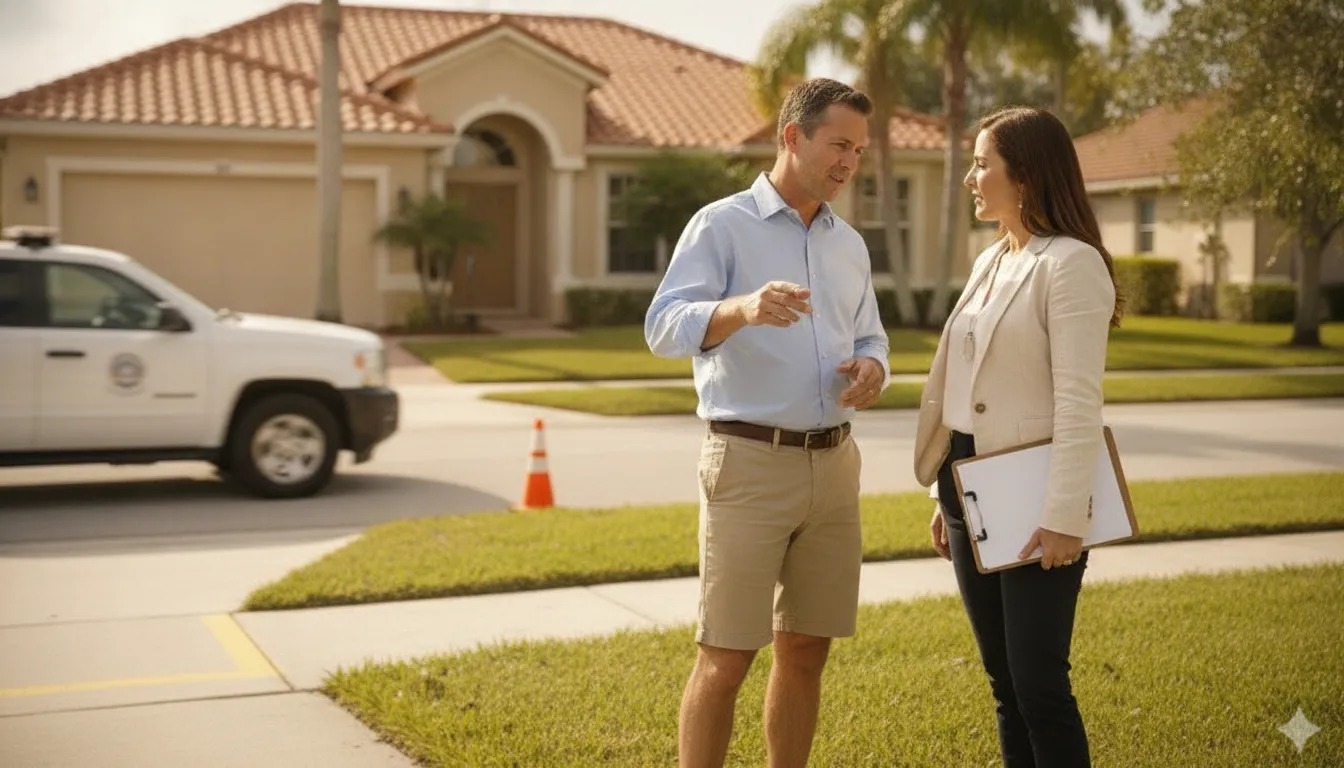
A code enforcement notice tells you that a local government believes a property condition or activity may violate an ordinance, land development rule, or safety requirement. The notice starts a case, not a final resolution. Your response depends on the issuing municipality, the cited condition, and the deadline in the notice.
Contact Violation Clinic for code enforcement violation help.
Code enforcement violation help means clarifying the notice, documenting the property, correcting the condition or pursuing after-the-fact permitting, and coordinating the records needed for municipal review. Acting promptly can help you avoid missed deadlines, prevent a manageable issue from growing, and create a clear path toward case closure.
Start with the notice in front of you. Identify the agency, property address, case number, cited rule, required correction, response date, inspection instructions, and hearing information. Do not assume that a process used in one Florida city or county applies in another.
What Does a Code Enforcement Violation Mean for a Property Owner?
A code enforcement violation means a local government believes a property or its use does not comply with an applicable local requirement. Violation Clinic helps Florida property owners understand the difference between a notice, a correction plan, and formal case closure, while the issuing agency remains responsible for interpreting and enforcing its own rules.
Local enforcement programs may address property maintenance, land development, construction, zoning, fire safety, or other municipal requirements. The purpose is generally to protect public health, safety, quality of life, and property values. Santa Rosa County Code Enforcement is one example of a local program, but its process should not be treated as a statewide template.
Read every part of the notice
Check the issuing department, property address, parcel or case number, alleged condition, cited ordinance, correction demanded, response date, and contact information. Note whether the agency requests repairs, documents, a permit, an inspection, or attendance at a hearing. A single notice can contain several correction items, and completing one item may not close the case.
Preserve the property record
Save the original notice, inspection reports, photographs, videos, permits, plans, surveys, contractor records, certificates, and prior correspondence. Keep copies of every submission and record when it was delivered. If work occurred before you bought the property, preserve relevant closing documents and seller records.
Document the existing condition before making changes unless an immediate safety risk requires action. A dated file helps distinguish what exists, what was corrected, and what still requires municipal approval. It also gives a qualified professional a clearer basis for code enforcement violation help.
How Can You Resolve a Code Enforcement Violation in Florida?
To resolve a code enforcement violation in Florida, identify the responsible agency, respond to every cited condition, complete the required correction or after-the-fact permitting, coordinate inspections, and request written closure. Violation Clinic can organize the remediation process, but the municipality decides whether the property satisfies its requirements.
| Situation. | Likely next step. | Records to review. |
|---|---|---|
| Property maintenance condition. | Correct the cited condition and confirm inspection requirements. | Notice, photographs, inspection record. |
| Unpermitted construction. | Review after-the-fact permitting and technical requirements. | Plans, permits, contractor records. |
| Hearing or accumulated penalties. | Prepare a documented response and confirm the deadline. | Case history, correspondence, payment records. |
- Confirm the jurisdiction. Determine whether the notice came from a city, county, building department, code enforcement division, or another authority. Review the agency name, case number, property address, and assigned officer.
- Separate the allegations. List each cited condition, ordinance, correction, response date, hearing date, and inspection instruction. Ask the agency to clarify anything unclear and keep written records of the response.
- Document the condition. Take dated photographs from multiple angles. Preserve permits, plans, inspection reports, notices, invoices, and correspondence. Organize the file by issue rather than placing every document in one folder.
- Correct or legalize the work. Some conditions can be corrected directly. Unpermitted construction, changes that do not match approved plans, or expired permits may require after-the-fact permits, revised plans, licensed professionals, technical reports, and additional filings. This is remediation of an existing condition, not routine permitting for future construction.
- Coordinate inspections. Submit what the agency requests and schedule each required inspection. Structural, electrical, plumbing, fire, zoning, or life-safety concerns may involve different professionals or departments. Confirm what each approval covers.
- Request written closure. After corrections, permits, inspections, and required fees are complete, ask how the agency records closure. Save the closure letter, final inspection record, permit status, or other written confirmation. A verbal assurance alone may not update the case file.
For cases involving legalization, several departments, or unresolved documentation, building code violation remediation support can help organize the municipal process without replacing the agency’s authority.
When Should You Get Professional Code Enforcement Violation Help?
Professional code enforcement violation help is most useful when the notice involves unpermitted work, technical safety concerns, multiple departments, a hearing, a pending sale, or records you cannot interpret. Violation Clinic coordinates the notice history, documentation, professionals, and municipal communications needed to pursue a practical remediation path.
Unpermitted work or safety concerns
Seek experienced guidance when the notice involves additions, remodeling, structural work, fire safety, electrical work, or a change in use. The correction may require an after-the-fact permit, supporting plans, inspections, and documented corrections. Removing a visible improvement or making a surface repair may not address the underlying compliance issue.
Multiple departments or an upcoming hearing
Coordination matters when building, zoning, fire, environmental, or other municipal offices are involved. Before a hearing, organize the notice history, permits, photographs, inspection records, and correction plan. Professional assistance does not replace municipal authority. It helps you present a complete, organized response.
A sale, refinance, or growing financial exposure
Open violations can delay a transaction, complicate title review, and make it harder to show that the property is compliant. Unresolved matters can also become more difficult to manage as deadlines pass or financial enforcement progresses. Review how open violations affect property value for related transaction concerns.
When the issue includes legalization, interdepartmental coordination, or a hearing, Violation Clinic’s building code violation remediation service can help you understand the available process and documentation.
Can You Challenge a Code Enforcement Citation?
You may be able to challenge a citation when it identifies the wrong property, describes an inaccurate condition, overlooks prior approvals, or names the wrong responsible party. Violation Clinic recommends testing each allegation against dated evidence while continuing to follow the municipality’s stated deadlines and procedures.
Test the facts in the notice
Compare the citation with the property as it existed on the inspection date. Confirm the address, parcel information, cited rule, photographs, description of the condition, and correction instructions. Look for documented questions such as whether the condition was already corrected, whether the work predates your ownership, or whether an approved permit or inspection record exists.
Gather dated photographs, permits, plans, inspection results, contractor invoices, closing documents, and prior communications. Evidence is strongest when it directly addresses the cited condition rather than showing unrelated work on the property.
Separate a dispute from a compliance plan
If the notice is factually wrong, raise that issue through the municipality’s designated process. If the condition exists, correcting or legalizing it may still be necessary even if you dispute part of the citation. Prepare a short chronology, a response to each condition, and a clear request for the action you want the department or hearing officer to take.
Do not assume that a hearing will erase fines or extend a deadline. For disputed facts, structural concerns, or legal rights and litigation questions, consult an appropriately qualified professional, including a Florida attorney when legal advice is needed.
What Happens If a Violation Is Not Corrected?
If a code enforcement violation is not corrected, the municipality may continue the case through additional notices, hearings, fines, or other authorized enforcement. Violation Clinic advises owners to treat the notice as time-sensitive because local procedures control the response window, correction standards, and financial consequences.
Further notices, fines, and hearings
An owner who does not respond may receive additional notices or a hearing date. Fines may accrue or be assessed through an authorized process, depending on the municipality, violation, and case status. Ignoring the notice does not reliably pause a deadline or prevent a hearing.
A hearing can create a formal record of the unresolved condition and may lead to an order requiring correction. If unpermitted work is involved, compliance may require after-the-fact permits, inspections, supporting plans, or coordination among departments. Waiting until penalties accumulate can make the documentation and remediation harder to organize.
Lien and title risk
Unpaid judgments, enforcement costs, or other authorized financial obligations may create lien or title concerns. A recorded claim or unresolved municipal matter can complicate a title search, refinance, transfer, or closing. The exact outcome depends on the local authority and case facts, so do not assume that every code violation automatically becomes a lien.
Buyers, lenders, and title professionals may request proof that the violation or related obligation has been resolved. For related transaction planning, review violations that delay property sales.
Contact Violation Clinic for code enforcement violation help before the case escalates.
How Florida Owners Can Prepare for a Code Enforcement Hearing
Prepare for a code enforcement hearing by organizing the notice, evidence, correction status, and specific request you want the municipality to consider. Violation Clinic helps Florida owners present a clear record, but the hearing format, filing rules, deadlines, and decision-maker vary by jurisdiction.
Build one organized file
Include the violation notice, follow-up correspondence, dated photographs, permit applications or issued permits, inspection records, contractor or professional reports, receipts, and documents showing when work occurred. If the issue involves earlier ownership, gather relevant closing documents and seller communications.
For unpermitted work, identify what was done, what remains, and which documents or professionals may be needed for compliance. Separate completed corrections from pending permits and inspections. Violation Clinic’s building code violation remediation process can help organize cases with multiple requirements.
Ask focused questions
Confirm which violations remain open, what evidence the department needs, whether a permit or inspection is required, how completed work must be submitted, and how final clearance will be communicated. If you cannot attend, ask about continuances or authorized representation and follow the local procedure.
Bring the original notice and labeled copies of key evidence. Write down the decision, next steps, responsible party, submission method, and any new deadline. Keep proof of every filing, payment, inspection request, and communication. This is general preparation information, not legal advice.
Frequently Asked Questions
What does a code enforcement violation mean for a property owner?
It means a local government believes the property or its use does not comply with a local ordinance, land development rule, property maintenance requirement, or safety standard. Read the notice carefully because its cited condition, correction requirements, and response deadline determine your next step.
How can I resolve a code enforcement violation in Florida?
Confirm the issuing municipality, document the property, correct the cited condition or legalize work completed without required permits, complete requested inspections, and ask for written closure. Procedures vary by city and county, so follow the notice rather than relying on a generic statewide timeline.
When should I seek professional code enforcement violation help?
Get help early when the case involves unpermitted work, structural or safety concerns, several departments, a hearing, a pending transaction, or records you cannot interpret. A qualified consultant can help coordinate documentation, architects, engineers, inspectors, and municipal communications.
What happens if a code enforcement violation is not corrected?
The case may move from notices and correction opportunities to hearings, fines, or other authorized enforcement. Unresolved obligations can also complicate title review or a property transaction. Local authority and case facts control the actual consequences.
Are HOA violations handled the same way as city violations?
No. A homeowners association violation generally follows the association’s governing documents and enforcement procedures, while a city or county code violation follows the local government’s rules. Review the source of the notice before deciding how to respond, and get legal advice when your rights or obligations are disputed.
Get started with code enforcement violation help
Do not wait until a deadline, hearing, or pending transaction makes the file harder to manage. Gather the notice and property records, identify the issuing agency, and contact Violation Clinic to discuss the remediation path for your Florida property.
Contact Violation Clinic for code enforcement violation help.