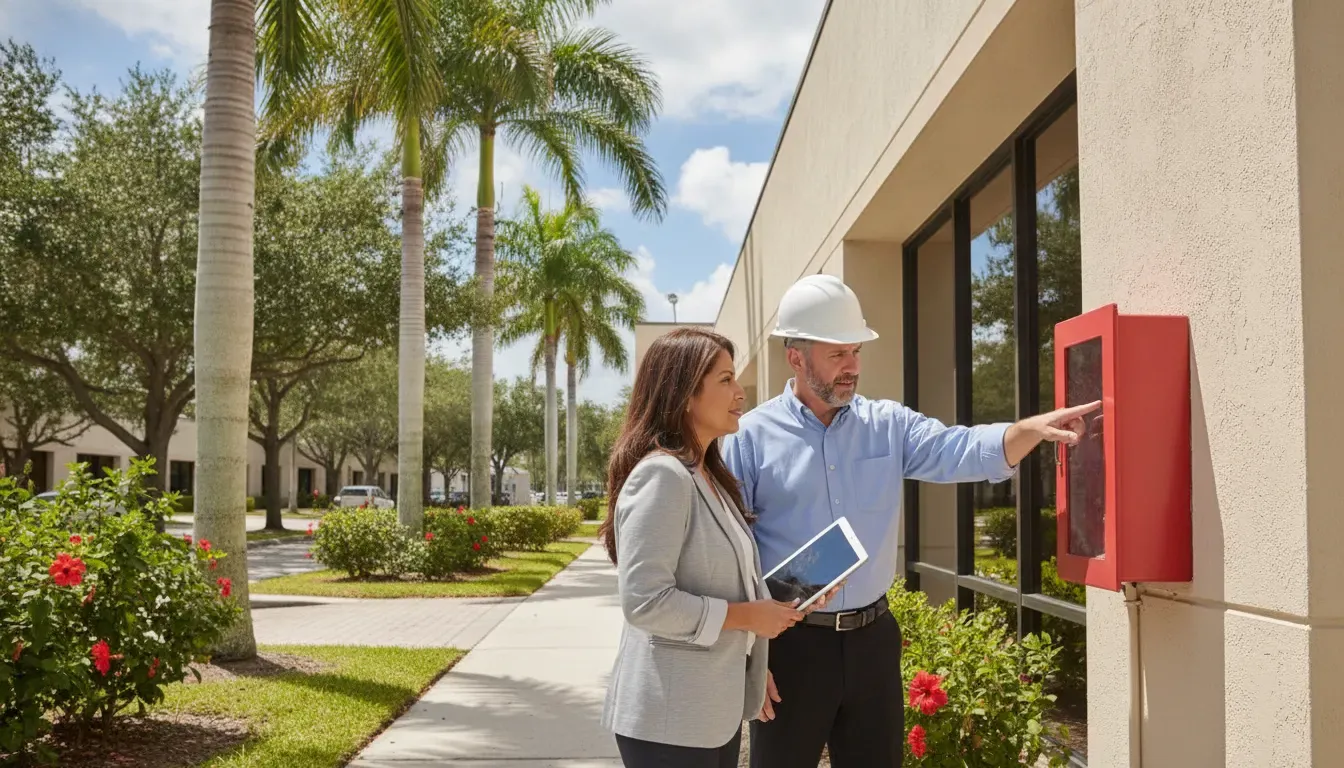
Receiving a fire-department notice can leave a Florida property owner unsure what to fix first, who should perform the work, and what will actually close the case. Fire department compliance is not just about correcting a visible condition. It is a documented process that connects the notice, qualified corrections, a reinspection, and written confirmation that the cited issue has been resolved.
Contact Violation Clinic for help reviewing a Florida fire-department violation notice.
This guide focuses on after-the-fact remediation for owners, property managers, contractors, and real estate stakeholders. It does not replace the notice or local direction from the enforcing authority. Requirements, deadlines, fees, and enforcement steps can vary by city, county, occupancy, and the type of fire-safety deficiency involved.
What does fire department compliance mean in Florida?
In Florida, fire department compliance means bringing a property or operation into line with the fire-safety requirements identified by the responsible authority, then proving that the corrections were completed. The practical path is to understand the notice, coordinate qualified work, assemble evidence, pass reinspection, and obtain the authority’s case-closeout record.
The Florida Fire Prevention Code provides the statewide framework, while local fire departments, fire prevention bureaus, counties, municipalities, and other authorized agencies may inspect and enforce requirements in their jurisdictions. The Florida State Fire Marshal explains that its inspection work covers a broad range of fire-safety standards and occupancy types, while local agencies may have their own forms, portals, schedules, and procedures. Review the Florida Fire Prevention Code and confirm the local process named on the notice.
Florida law also defines the role of a certified firesafety inspector and describes a process for certain firesafety citations. Under Florida Statutes section 633.214, a citation can identify the facts supporting the alleged infraction, the ordinance involved, and the procedure for paying or contesting it. That does not mean every notice follows the same path. Read the document you received instead of assuming a deadline or penalty from another Florida jurisdiction.
What should you do after receiving a fire violation notice?
The first response should create a reliable record of the problem and the authority’s expectations. Preserve the complete notice, identify every cited item and deadline, confirm whether the matter affects occupancy or operations, and obtain professional help when the correction involves a regulated system, plans, engineering, or multiple departments.
- Save every page and attachment. Keep the notice, inspection report, photographs, correction list, invoices, emails, portal messages, and any prior approvals in one case file.
- Record the issuing authority. Note the city, county, fire department, fire prevention bureau, State Fire Marshal office, or other agency named on the document. The correct contact and closeout method depend on who issued it.
- Make a deadline list. Separate correction deadlines, reinspection-request rules, hearing dates, payment instructions, and any operating restriction. Do not treat a verbal estimate as a formal extension.
- Identify the full scope. Read each item line by line. A property may have physical deficiencies, missing inspection records, unapproved alterations, blocked access, or documentation gaps at the same time.
- Protect people first. If the notice describes an immediate life-safety concern, follow the authority’s direction about evacuation, fire watch, restricted use, or temporary closure. Do not disable or alter a fire-protection system as a shortcut.
- Coordinate the right professionals. Some corrections require a licensed fire-protection contractor, electrical professional, engineer, architect, general contractor, or other qualified specialist. The notice and local authority should guide the selection.
A quick response is useful, but an incomplete response can create another failed inspection. The goal is not merely to show that someone visited the property. It is to correct every cited item and create evidence that an inspector can review efficiently.
Which property problems can lead to a fire-department notice?
Fire-department notices can arise from life-safety conditions, deficient maintenance, changes to a building or use, or missing records. The exact finding depends on the property and inspection type. A notice may concern access, egress, alarms, suppression equipment, fire-rated construction, hazardous storage, or a change that no longer matches the approved condition.
| Property situation | Examples of compliance concerns | Useful first response |
|---|---|---|
| Multifamily or condominium property | Shared corridors, exit access, alarm records, fire doors, or common-area equipment | Preserve the report, coordinate with the association or manager, and assign each item to a qualified party |
| Commercial office or retail property | Occupancy changes, blocked access, alarm deficiencies, storage, or missing inspection documentation | Compare the current use and layout with the notice and gather records before scheduling reinspection |
| Restaurant or food-service property | Cooking equipment protection, exhaust conditions, suppression service records, or closure-related corrections | Use a qualified specialist and keep technical kitchen work distinct from the broader case closeout |
| Industrial or warehouse property | High-piled storage, access lanes, hazardous materials, fire lanes, or system documentation | Map the cited area, confirm the current operation, and coordinate a correction plan before moving inventory |
| Residential property with work already completed | Unpermitted alterations, changed rooms or uses, electrical work, or access and egress conditions | Ask for a full compliance assessment instead of assuming a surface repair will close the issue |
These examples are intentionally broad. For a detailed discussion of general citations, see Violation Clinic’s guide to fire code violations in Florida. For a sprinkler or suppression-system case, use the separate fire suppression violation guide. Keeping those technical topics in their own resources helps an owner find the correct next step without treating every notice as the same problem.
How do you coordinate corrections without creating new problems?
Correction coordination starts with a written scope that connects each notice item to an action, responsible professional, supporting document, and verification step. This prevents a property owner from making a partial repair, overlooking a related condition, or scheduling reinspection before the work can be demonstrated.
- Translate the notice into a correction matrix. Use columns for the cited item, location, required action, responsible professional, evidence needed, and current status.
- Confirm whether plans or permits are involved. After-the-fact remediation may require drawings, engineering, trade work, approvals, or inspections. Do not assume a new permit is needed, or not needed, without checking the local direction.
- Coordinate related departments. A fire issue can overlap with Building, Electrical, Mechanical, Planning, Code Enforcement, or other agencies. A correction is not complete if another authority still has an open requirement.
- Use qualified contractors for regulated work. Ask who will perform, test, certify, or document the correction. Keep licenses, reports, photographs, invoices, and sign-offs with the case file.
- Preserve the before-and-after record. Photographs should show the relevant location and final condition. Records should be dated and tied to the cited item, not stored as an unlabelled collection of files.
- Ask what the inspector needs to see. Before requesting reinspection, confirm whether the authority expects certificates, test reports, plans, receipts, photographs, or a specific portal submission.
Do not remove a warning tag, close an access route, cover a correction, or change a system before understanding how the authority verifies compliance. A well-organized file is not a substitute for safe work, but it reduces the chance that completed work cannot be matched to the notice.
How can you prepare for a Florida fire reinspection?
Prepare for reinspection by treating it as a final verification, not as a discovery visit. Walk the property against the original notice, complete all corrections, confirm that systems are accessible and operational, assemble the requested records, and make sure the person meeting the inspector can explain what changed.
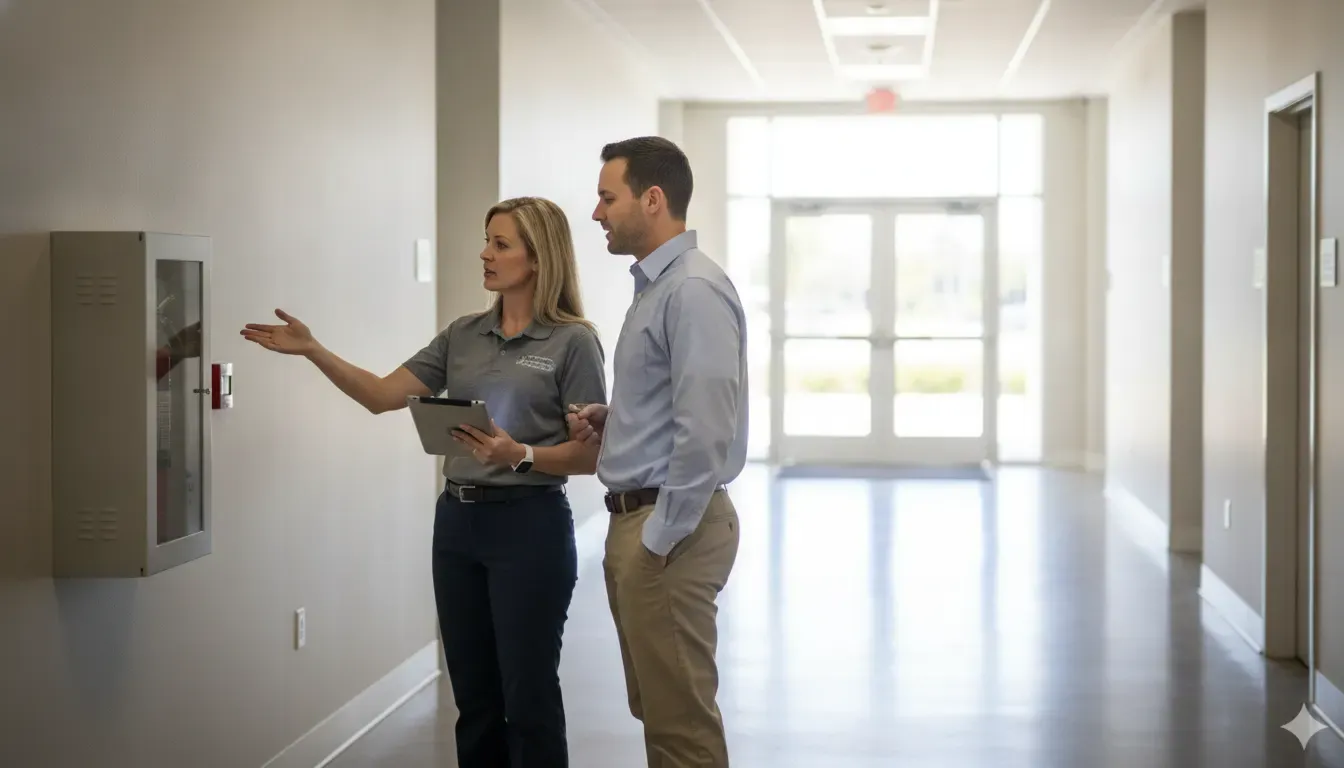
- Re-read the original notice. Check every item, location, deadline, and special instruction. Include attachments and handwritten notes if they are part of the inspection record.
- Perform an internal readiness walk. Look at the cited condition from the inspector’s perspective. Confirm that doors, corridors, equipment, panels, valves, fire lanes, and required access are not obstructed.
- Verify technical documentation. Collect completed service reports, test results, certificates, photographs, plans, product information, and professional sign-offs that apply to the correction.
- Resolve connected issues. Check whether a contractor or building change created a second issue. For example, a revised layout may affect egress, access, occupancy, or another department’s inspection.
- Confirm the appointment or submission. Follow the agency’s exact instructions for requesting reinspection. Keep confirmation numbers, emails, and the scheduled date with the case file.
- Assign an informed representative. The owner, manager, or consultant at the inspection should have the notice, correction matrix, records, and authority to coordinate follow-up.
Local procedures differ, so do not promise that one form, one fee, or one inspection will apply statewide. The Florida State Fire Marshal inspections page describes state inspection work, but a local fire department may direct a different process for a privately owned property.
What happens if the property fails reinspection?
A failed reinspection does not always mean the entire case must start over. It means the authority found an unresolved item, an incomplete correction, a documentation problem, or a condition that did not match the expected result. Obtain the updated findings in writing, correct the remaining scope, and follow the authority’s instructions for the next verification.
- Request or preserve the updated inspection report and identify every item still open.
- Compare the new findings with the original notice and the work already completed.
- Ask the responsible professional why the correction did not satisfy the requirement.
- Determine whether the issue is physical, technical, procedural, or documentation-related.
- Update the correction matrix and schedule the remaining work in priority order.
- Confirm whether a new reinspection request, fee, hearing, extension, or operating restriction applies.
Do not respond to a failed reinspection by repeating the same appointment without changing the underlying condition or evidence package. If the finding is unclear, a professional can help separate a genuine correction from a disagreement about scope and identify what the enforcing authority needs next.
How do you close a fire-department compliance case?
Case closeout should be documented by the authority that issued the notice. After the final correction is accepted, save the inspection result, approval, closure letter, portal status, release, or other written record that shows the matter is closed. Keep that record with the property file because future inspections, sales, refinancing, or management changes may require it.
Before treating the case as finished, confirm:
- Every item on the original notice is marked corrected or closed.
- Any related Building, Code Enforcement, or trade requirement has been addressed.
- Required inspection reports, certificates, plans, and photographs are stored.
- The final reinspection result or closeout communication is saved.
- Any restrictions, fire-watch directions, tags, or temporary conditions have been formally released.
- The owner, manager, association, tenant, and relevant professionals know what maintenance or follow-up remains.
A contractor invoice or a photograph of a repair may support the file, but it is not automatically proof that the fire department closed the case. Look for the authority’s own confirmation and ask how the status will appear in its records.
When should a Florida property owner get professional help?
Professional help is especially valuable when the notice involves multiple trades, an occupied property, a sale or closing deadline, a stop-use or closure concern, a technical system, missing records, unpermitted work, or disagreement about what correction will satisfy the authority. The right professional can organize the case without replacing the jurisdiction’s authority to inspect and decide.
Violation Clinic works with Florida property owners on Building Department, Fire Department, and Code Enforcement matters. Its team includes licensed building officials, inspectors, plan reviewers, architects, and engineers, and the company manages compliance projects from assessment through documentation and municipal coordination. Review the available Florida violation and compliance services and share the notice when asking for an initial case review.
For owners in Miami-Dade, Broward, Palm Beach, or other Florida jurisdictions, local experience can help identify which agency owns the case, what records are missing, and which correction professionals should be involved. It does not eliminate the need to follow the notice. It helps turn a confusing notice into a controlled remediation process.
Contact Violation Clinic to organize your Florida fire-department compliance next steps.
Fire Department Compliance in Florida: Frequently Asked Questions
Florida fire-department compliance is handled through the notice, local enforcement process, qualified correction work, and documented verification. Because requirements vary by authority and property, owners should use these answers as a starting point, then confirm the exact instructions on the notice and with the issuing agency.
Does every fire-department notice require the same correction process?
No. A notice may concern a life-safety condition, maintenance record, occupancy or layout change, fire-protection system, hazardous material, or another local requirement. The issuing agency, property type, severity, and wording of the notice determine the correction and reinspection steps.
Can a property owner schedule reinspection before all work is complete?
Usually, the safer approach is to complete the cited work and assemble the requested documentation first. Scheduling rules vary, but an early appointment can lead to another failed inspection, additional delay, or fee. Follow the authority’s instructions and confirm what must be ready.
What records should an owner keep after a fire violation is resolved?
Keep the original notice, inspection reports, correction list, professional invoices and reports, test results, certificates, photographs, plans, portal confirmations, reinspection results, and written closeout. Organize each record by the cited item so a future owner or manager can understand the resolution.
Does a contractor’s completion invoice prove fire-code compliance?
No. An invoice may show that work was performed, but the enforcing authority decides whether the cited condition complies. The owner should obtain the required inspection result, approval, release, or other written case-closeout record.
What if the notice is unclear or the inspector and contractor disagree?
Preserve the written notice and request clarification from the issuing authority. A qualified compliance professional can review the cited facts, compare them with the proposed correction, coordinate the right specialist, and help prepare a response without promising an outcome the authority has not approved.