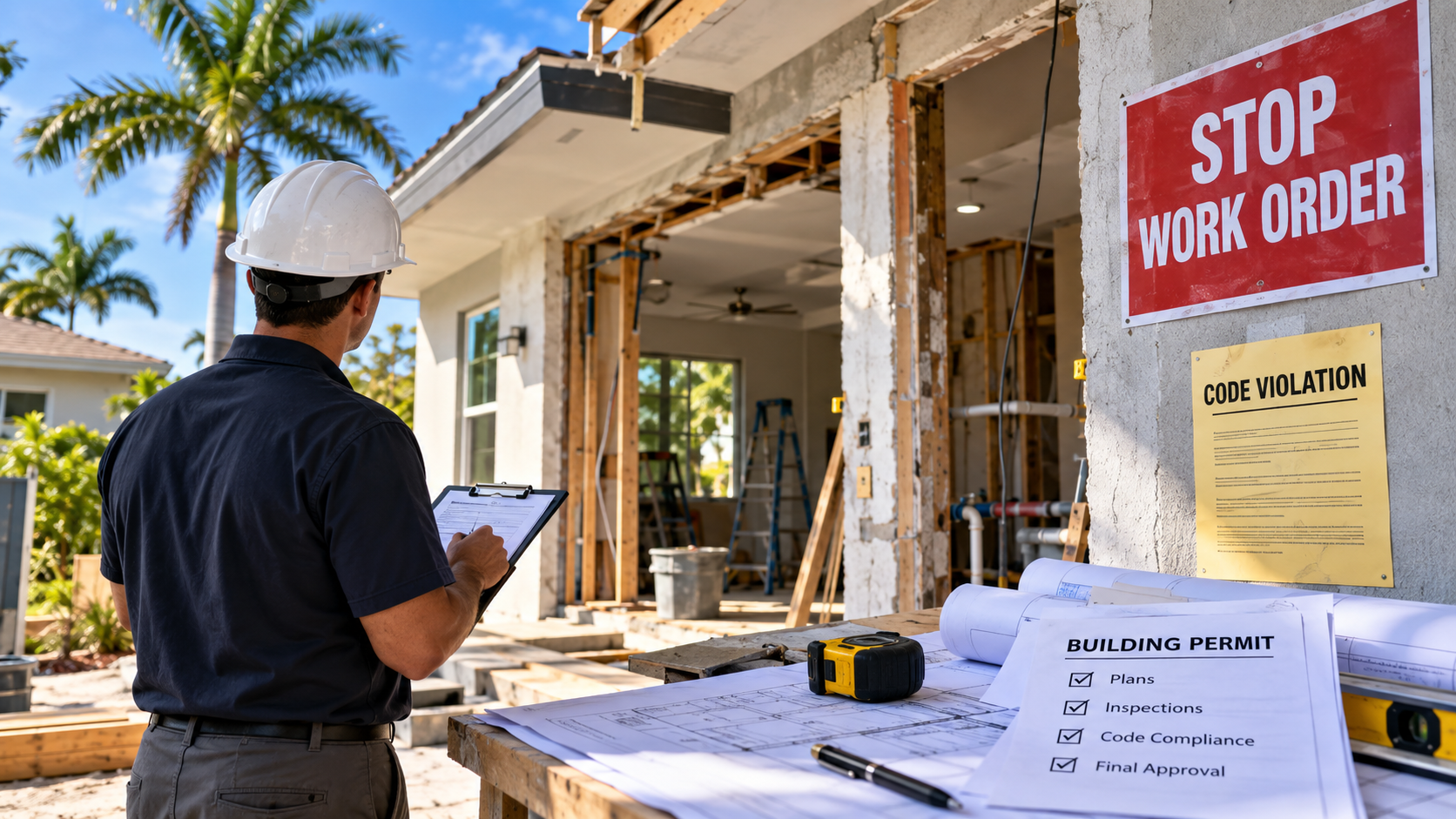
Active building violations can quickly turn a routine construction project into a costly compliance problem. Unpermitted construction, zoning violations, neglected property maintenance, unsafe conditions, and missed inspections are among the issues that can lead to notices, fines, stop work orders, and other enforcement action.
If you are dealing with an active violation, the most important step is to identify exactly what the local building department or code enforcement agency requires before attempting to correct the problem.
Why Unpermitted Construction Becomes a Violation
Under the Florida Building Code, work that requires a permit generally must receive that permit before construction begins. Required construction is also subject to inspection so officials can verify compliance with applicable codes.
An owner may discover a problem after an addition, renovation, electrical installation, plumbing modification, structural alteration, or other work was completed without the required approval. In some situations, an expired permit or missed inspection can create a similar compliance issue.
Other common causes include:
- Zoning violations: The use, placement, size, or configuration of a property may conflict with local zoning requirements.
- Neglected maintenance: Deteriorated exterior surfaces, damaged structures, debris, or other property conditions can attract code enforcement attention.
- Unsafe conditions: Structural, electrical, fire, or other safety concerns can result in Unsafe Structure Violations and additional enforcement.
- Missed inspections: Required inspections are part of the permitting process. Construction may need to remain accessible for inspection until the applicable work is approved.
What to Do When Construction Is Already Unpermitted
Start by reviewing the violation notice and permit history. Determine which department issued the notice, what code or ordinance is cited, whether a Stop Work Order is active, and what documentation is required.
Do not continue construction simply because most of the work is already finished. Florida law specifically identifies proceeding with work without applicable local permits and inspections as a disciplinary issue for licensed contractors.
Depending on the situation, the resolution may involve obtaining an appropriate permit, preparing plans, exposing concealed work for inspection, correcting deficiencies, scheduling inspections, and completing the required approvals.
If a Stop Work Order has been issued, Stop Work Order Removal generally requires addressing the underlying compliance issue and obtaining authorization from the appropriate authority before work resumes. Learn more about the process in Violation Clinic’s guide to Stop Work Order Removal.
Preventing Future Code Violations
A proactive compliance routine can reduce the risk of expensive surprises.
Obtain permits before construction. Check with the local building department before beginning work and confirm which permits and approvals apply.
Schedule required inspections. Keep track of inspection stages and make sure work is not covered before required inspections are completed.
Maintain the property. Address visible deterioration, damaged structures, unsafe conditions, debris, and other maintenance concerns before they become enforcement issues.
Monitor structural and building systems. Regular professional evaluations can identify problems involving structural components, electrical systems, plumbing, mechanical systems, and other regulated work.
Stay informed about local requirements. Florida follows the Florida Building Code, but local governments also enforce zoning regulations and other ordinances. The Florida Building Commission identifies the current 8th Edition Florida Building Code as effective December 31, 2023, while updates and code development materials continue to be published.
Building Recertification and Required Inspections
Some inspections are not optional maintenance recommendations. They can be legal requirements depending on the property and jurisdiction.
Miami Dade County, for example, requires applicable buildings to complete recertification, and failure to obtain required recertification can result in a $510 initial penalty. Continued noncompliance can result in accumulated penalties of up to $10,000 per violation, along with potential lien action.
Property owners can review Violation Clinic’s Building Recertification Services for assistance with inspections, reports, repairs, and related compliance issues.
Practical Example
Example scenario: A property owner discovers that a previous renovation was completed without the required permit. Instead of continuing to modify the property, the owner reviews the violation notice, obtains the necessary documentation, works with qualified professionals where required, applies for the appropriate permit, corrects deficiencies, and schedules the inspections requested by the local authority.
The exact process varies by jurisdiction and the type of construction involved. A separate example is building recertification. A property owner who receives a recertification notice should not assume that the building’s age or apparent condition eliminates the requirement. The applicable local authority should be contacted and the required inspection and reporting process followed.
When enforcement reaches a formal hearing, professional Special Magistrate Representation may also be appropriate. Violation Clinic lists special magistrate representation, violation remediation, inspections, permit resolution, and related compliance services among its offerings.
Conclusion
Resolving an active unpermitted construction violation starts with understanding the notice, stopping unauthorized work, identifying the applicable requirements, and following the local correction process. Permits, inspections, property maintenance, structural safety, zoning compliance, and required recertification all play an important role.
For more complex situations involving Unsafe Structure Violations, permit problems, occupancy issues, or enforcement hearings, professional guidance can help property owners understand the steps required to move toward compliance. Violation Clinic provides Florida code compliance services, including Certificate Of Occupancy Assistance, violation remediation, recertification support, and representation before enforcement bodies.
Related Resources
- Stop Work Order Removal Steps for Florida Projects
- How to Find Violations on a Property
- How Property Owners Can Prevent Code Fines
- Importance of Building Recertification in Florida
Authoritative Resources:
Florida Building Commission
Florida Building Code and Standards
Florida Statutes, Chapter 489
Miami Dade County Building Recertification
At ViolationClinic.com, we specialize in helping property owners navigate the recertification process smoothly. Whether you need assistance with inspections, violations, or compliance issues, our team is here to help. Don’t wait until it’s too late, take action today to protect your investment and ensure the safety of your building.
For more information or assistance, contact us at ViolationClinic.com!