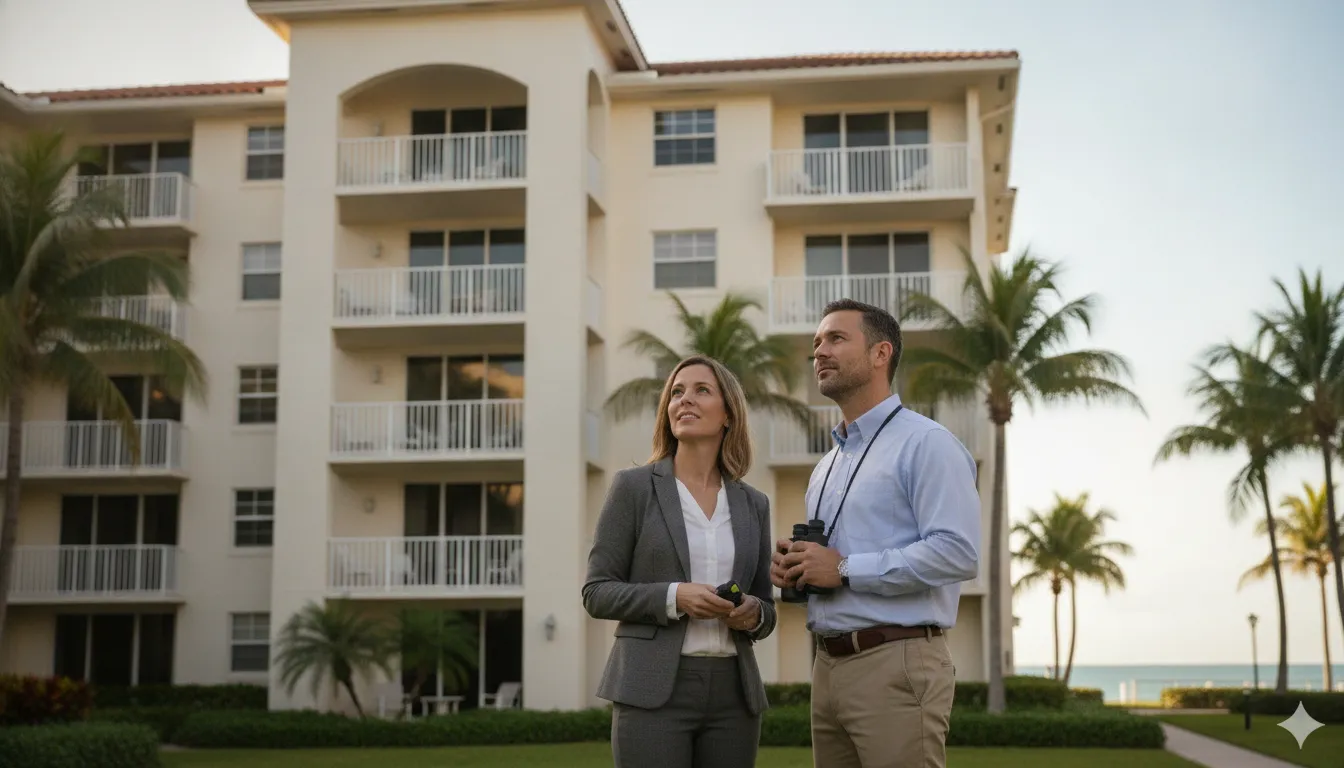
A 25-year building recertification is an aging-building inspection milestone that may apply to certain Florida condominium and cooperative buildings, but it is not a blanket requirement for every property in the state. If you are researching a 25 year building recertification, start by confirming which local authority issued the notice. The exact trigger, report contents, and deadline depend on the local enforcement agency, building type, height, certificate of occupancy date, and local conditions.
Get help reviewing your building recertification deadline.
What is a 25-year building recertification?
A 25-year building recertification is a jurisdiction-specific safety review that occurs when a qualifying building reaches 25 years of age. Depending on the local program, the review may require structural and electrical reports prepared by licensed design professionals, followed by corrections and an updated submission if deficiencies are found.
Florida's statewide milestone inspection law generally uses a 30-year starting point for qualifying residential condominium and cooperative buildings that are at least three habitable stories tall. The law also allows a local enforcement agency to require the first inspection at 25 years when local circumstances justify it. The Florida Department of Business and Professional Regulation summarizes the two possible schedules as 30 years, or 25 years when the local agency has adopted that earlier trigger. See the Florida DBPR milestone inspection guidance and Florida Statutes section 553.899 for the controlling framework.
Does the 25-year requirement apply to every Florida building?
No. A 25-year requirement is not automatically triggered by the age of every Florida home or commercial building. The first question is whether the building falls within a state or local inspection program. The second is whether the local authority has selected 25 years rather than 30 years for the initial inspection.
- Building use and ownership
- Florida's milestone inspection statute focuses on residential condominium and cooperative buildings, including mixed-ownership buildings, that meet the applicable height threshold. A local recertification ordinance may cover a different set of structures, so owners should confirm the rule with the authority that issued the notice.
- Height
- The statewide milestone inspection framework applies to buildings with three or more habitable stories. Local recertification programs may use additional thresholds, such as height, occupancy, or building area.
- Age calculation
- The building age is generally measured from the date the certificate of occupancy was issued. Do not estimate the trigger only from the year construction began. Locate the certificate of occupancy and ask the local building department how it calculates the deadline.
- Local conditions
- A local enforcement agency may set a 25-year trigger when it determines that local circumstances require an earlier inspection. Coastal exposure and local building conditions can affect the schedule, but only the applicable authority can confirm whether the rule applies to a specific property.
For example, Miami-Dade County states that three-story-or-taller condominium and cooperative buildings within three miles of the coastline, built in or after 1998, reach a recertification trigger at 25 years and repeat the process every 10 years. Other Miami-Dade buildings built in or after 1993 generally follow a 30-year schedule. That is a local rule, not proof that every Florida building has a 25-year obligation. Review the Miami-Dade County recertification requirements before relying on an age milestone.
Which records should owners gather before the inspection?
Start with records that help the design professional understand the building's original construction, previous repairs, and current condition. The exact checklist varies, but organized records reduce duplicate investigation and make it easier to connect an observed deficiency to an approved repair, permit, or final inspection.
- Certificate of occupancy and any later certificates or changes of use.
- Original plans, approved revisions, surveys, and available as-built drawings.
- Previous structural, electrical, milestone, or building recertification reports.
- Open and closed permits, inspection approvals, and final inspection records.
- Engineering reports, repair scopes, invoices, warranties, and photographs of completed work.
- Electrical service information, equipment records, maintenance logs, and prior electrical testing.
- Roof, balcony, parking structure, guardrail, illumination, drainage, and waterproofing maintenance records when applicable.
- Notices from the building department, code enforcement, association, insurer, or other authority.
Do not assume that a folder of old reports proves current compliance. Give the professional the records, then allow the current inspection to determine what can be relied on. Missing documents do not necessarily stop the process, but they can make the review slower and may require additional field investigation.
What happens during a 25-year recertification inspection?
The inspection process usually begins with confirming the property's jurisdiction, scope, age, and required forms. The licensed professional then reviews accessible structural and building systems, documents conditions, and prepares the report required by the local authority. Some programs use separate structural and electrical certifications.
- Confirm the scope. Verify the property address, certificate of occupancy date, building height, ownership type, local trigger, required forms, and submission deadline.
- Review available records. The engineer or architect compares plans, previous reports, permits, repairs, and notices with the current building condition.
- Inspect structural components. The review may include primary structural members and other components identified by the local inspection procedure. A Florida milestone inspection is intended to evaluate structural deterioration and life safety, not to certify that every part of a building complies with every provision of the Florida Building Code.
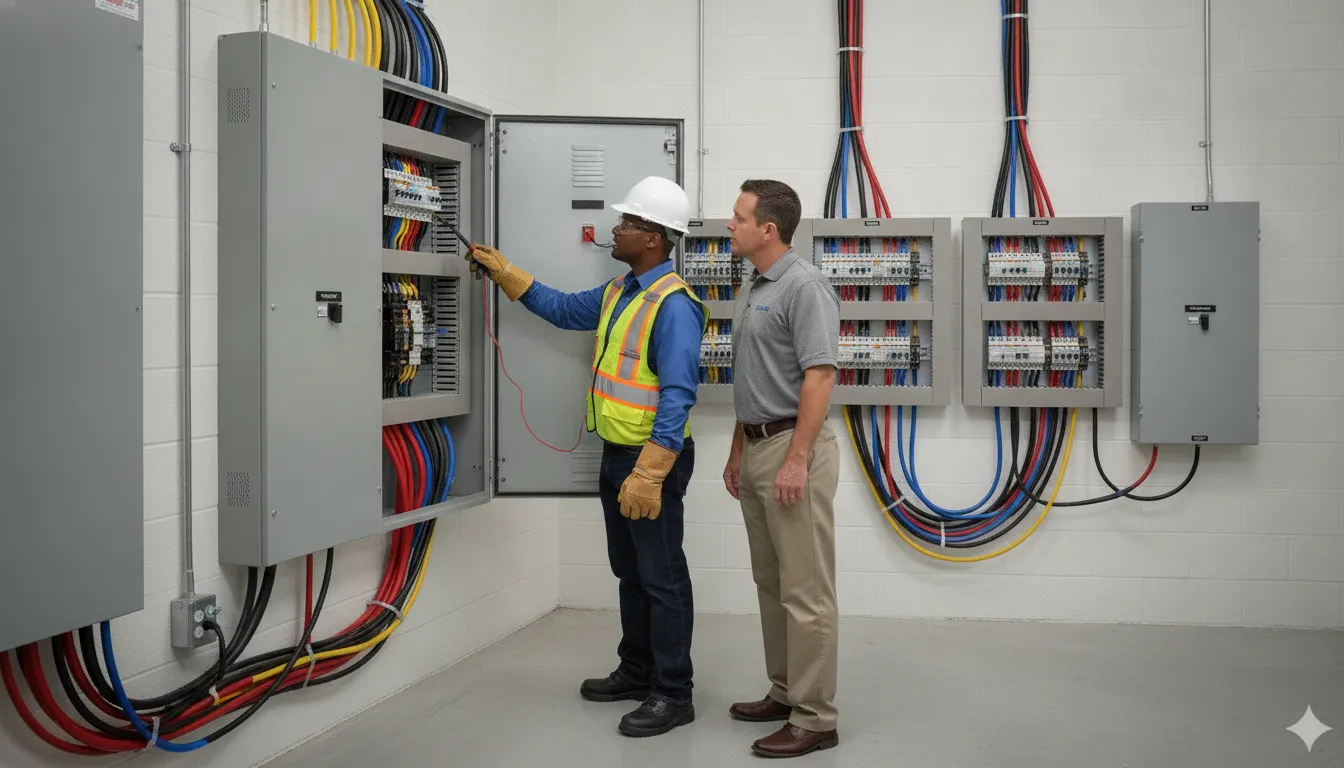
- Inspect electrical systems when required. A local building recertification program may require an electrical report in addition to the structural report. The professional may examine service equipment, distribution, grounding, visible wiring, life safety systems, and other items required by the jurisdiction.
- Document findings. The report identifies observed conditions, supporting photographs, required repairs or further evaluation, and the professional's conclusions under the applicable form and standard.
- Submit the report. The owner, association, or authorized representative submits the signed report and any required supporting documents through the local process.
Requirements can be more detailed in coastal or high-risk jurisdictions. Miami-Dade's current guidance, for example, describes updated reporting requirements, photo documentation, and additional electrical review for certain systems. Follow the local form and instructions rather than using a generic online checklist.
What if the inspection finds deficiencies?
A deficiency does not automatically mean that a building must be vacated, and a passing visual observation does not eliminate the need to address a required repair. The next step depends on the condition, the local code process, whether a permit is required, and the professional's conclusion about safety and continued occupancy.
- Clarify the finding. Ask whether the report identifies a maintenance issue, a repair, additional testing, a permit issue, or a condition requiring immediate action.
- Separate urgent safety concerns. Follow any direction from the licensed professional or building official about unsafe or uninhabitable conditions before planning routine repairs.
- Obtain required permits. If corrective work requires a permit, use the jurisdiction's process before starting construction. Do not treat recertification as permission to perform unpermitted work.
- Coordinate qualified contractors and professionals. Match the repair scope to the required license, engineering responsibility, and inspection sequence.
- Schedule final inspections. Keep approved permits, passed finals, invoices, and photographs so the design professional can verify the completed work.
- Submit an updated report when required. Some local programs require a revised professional report and cover letter after repairs are complete. Miami Beach's official guidance describes this type of follow-up process for deficiencies noted in an initial report.
Keep a single deadline tracker for notices, report delivery, permit applications, inspections, and resubmissions. A repair plan is only useful if the owner can show the authority what was corrected and when.
What should owners do after receiving a recertification notice?
Treat the notice as a project deadline, not as a suggestion to start researching later. Read the issuing authority, property address, cited age or trigger, requested reports, forms, submission method, and due date. Then assemble the right professionals and records before the deadline becomes urgent.
- Verify the notice. Confirm it belongs to the correct parcel and building, then call or check the issuing authority's official recertification page if any detail is unclear.
- Calculate the available time. Use the date on the notice and the local submission rule. Miami-Dade states that required recertification reports are due within 90 days of the notice, but another jurisdiction may use a different period.
- Confirm the required scope. Find out whether the authority wants a structural report, electrical report, milestone inspection, additional component inspections, photographs, or a specific digital form.
- Book the inspection team early. Ask the architect or engineer about availability, building access, records needed, likely report timing, and how deficiencies will be handled.
- Plan for correction work. If the report identifies repairs, coordinate permits and inspections immediately. Waiting to choose a repair path can consume the submission window.
- Document every submission. Keep the notice, receipts, uploaded files, emails, permit numbers, inspection results, and approval letter in one property record.
Owners who are already past the stated deadline should not ignore the notice or assume that a late report will be accepted automatically. Contact the authority, identify the current status, and get professional help organizing the fastest compliant next step.
How is a 25-year milestone different from 30-, 40-, and 50-year programs?
The number in a recertification topic describes an age trigger, not a universal Florida checklist. A 25-year article should answer why an earlier trigger may apply, while 30-, 40-, and 50-year pages may address different local schedules, property cohorts, or county procedures. Always identify the authority and building-specific rule before choosing a report path.
- 25-year building recertification
- An earlier milestone that may apply when a local enforcement agency has adopted a 25-year trigger or when a local recertification program covers a qualifying property. Miami-Dade's coastal condominium and cooperative rule is a clear example.
- 30-year building recertification
- A common initial schedule in Florida's statewide milestone inspection framework and in local recertification programs. See Violation Clinic's Florida 30-year building recertification guide for that separate topic.
- 40-year building recertification
- A county or municipal program may use a 40-year label, but the applicable rule can change as local requirements are updated. It should not be substituted for a 25-year notice without checking the local authority.
- 50-year building recertification
- An older-building milestone that can have a different property history and local procedure. The age number alone does not determine the report scope. Review the 50-year building recertification guide only when that is the relevant trigger.
For a broader explanation of what inspectors may review, see how to read a building structural inspection report. For a property with an active violation or unresolved permit issue, the building code violation remediation service may also be relevant, but recertification and violation remediation are not the same process.
Talk with Violation Clinic about your recertification notice and next steps.
Frequently asked questions
These answers provide a starting point, not a substitute for the notice, local ordinance, or advice from the licensed professional responsible for the inspection.
Is 25-year building recertification required statewide in Florida?
No. Florida's milestone inspection law establishes a statewide framework for qualifying condominium and cooperative buildings, while the initial age can be 25 or 30 years depending on the local enforcement agency. Other local recertification programs can have their own coverage and forms.
What is the difference between a milestone inspection and recertification?
A milestone inspection is a statutory structural inspection focused on whether substantial structural deterioration exists and whether the building's structural condition supports continued safe use. A local recertification program may require both structural and electrical reports, specific forms, photographs, and a certification submission.
What records are most important to find first?
Start with the certificate of occupancy, prior inspection reports, approved plans, permits and final inspections, repair records, and any notice from the authority. Electrical maintenance records and prior testing can also help when the local program requires an electrical report.
What happens if a report identifies repairs?
Ask the professional to identify the repair, permit, testing, and follow-up reporting requirements. Complete permitted work, schedule required final inspections, preserve the evidence, and submit an updated report or cover letter if the local process requires one.
Can a property owner wait until the deadline to schedule an inspection?
Waiting creates avoidable risk. Licensed professionals may need time to review records, inspect the property, prepare signed reports, coordinate repairs, and resubmit corrected documentation. Schedule as soon as the notice or likely trigger is confirmed.
What should I do if my deadline has already passed?
Do not ignore the notice. Confirm the building's current status with the issuing authority, gather the requested records, and obtain professional help with the inspection, repair, permit, and submission sequence.
Contact Violation Clinic to plan your building recertification response.