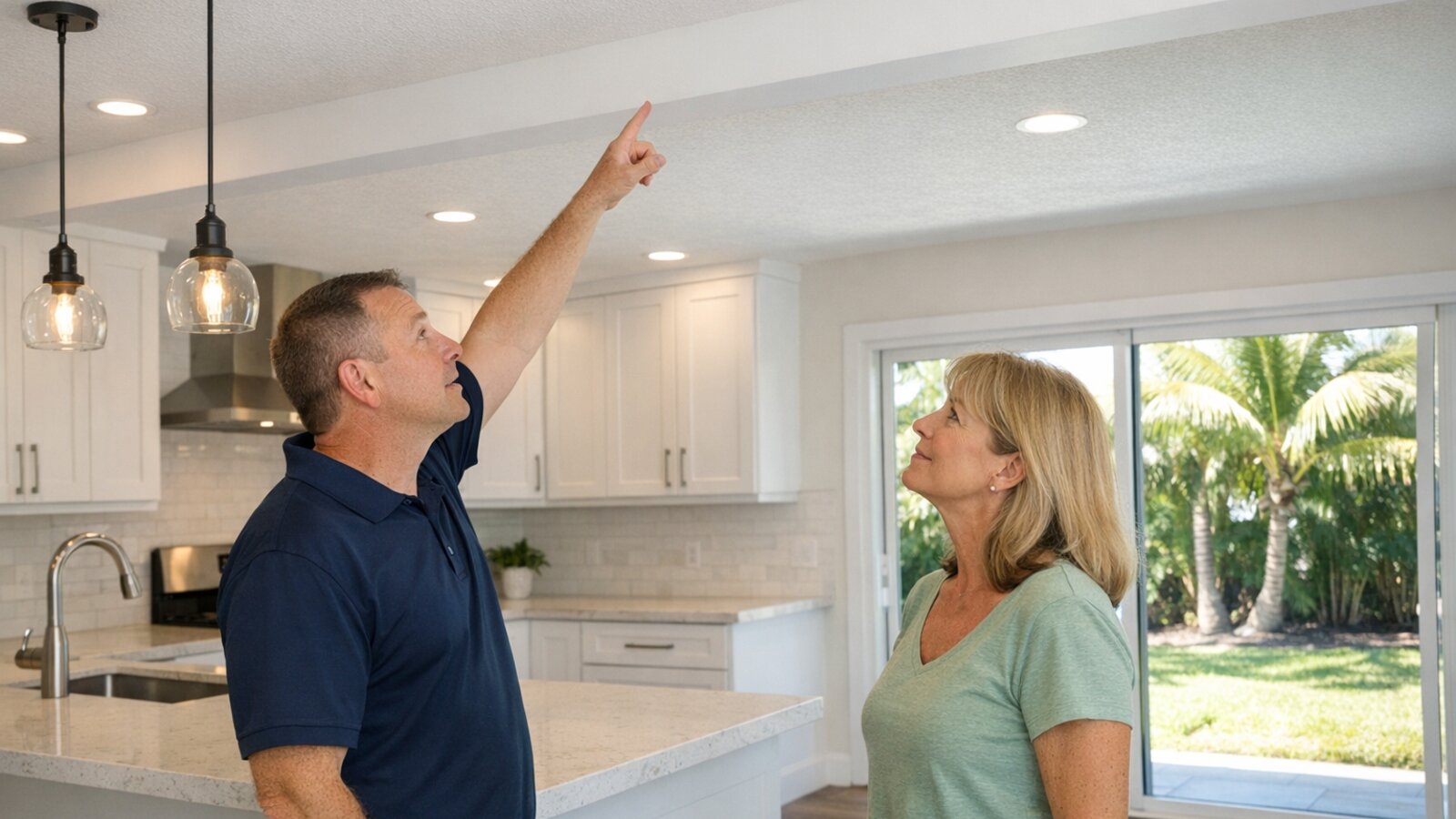
Kitchens are among the most common renovations in South Florida homes, and they are easy to finish without a permit because the completed room can look like nothing more than new cabinets and counters. If you own a property with an unpermitted kitchen remodel in Florida, whether you did the work yourself, hired someone who never pulled a permit, or bought the house that way, the issue is fixable in most cases. This guide explains which parts of a kitchen job usually need review, how the gap tends to surface, and how owners in Miami-Dade, Broward and Palm Beach bring the work into the record. Violation Clinic is a private compliance consulting company, not a government agency, and the local building department always decides what it will accept.
Which kitchen work usually needs a permit
Under section 553.79 of the Florida Statutes, construction, alteration and repair work is permitted through the local enforcing agency, and each city or county draws its own line between ordinary maintenance and work that needs review. Replacing cabinet doors, painting or installing a new countertop on the same base cabinets is usually on the maintenance side. A kitchen remodel tends to cross the line once it changes a regulated system:
- Electrical: new circuits for appliances, added countertop receptacles, under-cabinet or recessed lighting on new wiring, or a panel change to carry the new load.
- Plumbing: moving the sink, adding an island sink or prep sink, or running new supply and drain lines for a dishwasher or ice maker in a new location.
- Gas: extending or relocating a gas line for a range or cooktop.
- Mechanical: a new range hood that vents to the exterior, especially through a new wall or roof penetration.
- Structural: removing or opening a wall to create an open plan, or changing a window or door opening.
The specific triggers vary by jurisdiction, so treat this list as a way to describe your project, not as a ruling on it.
Cabinet swap or regulated remodel: sorting your own project
The fastest way to understand where you stand is to compare the kitchen before and after, system by system. Ask whether the sink, range or refrigerator moved, whether any wall came down, whether new circuits were added, and whether a hood now exhausts outside. Owners who answer no to all of those often have a smaller conversation than they feared. Owners who answer yes to several, particularly the open-wall question, should expect the department to look closely at the structural side.
Open-concept conversions deserve a separate note. Removing a wall between the kitchen and living room is common in older South Florida homes, and some of those walls carry roof or floor loads. Whether a removed wall was load-bearing is a question for a licensed design professional, and the answer shapes everything that follows.
How an unpermitted kitchen comes to light
- A sale. A buyer’s inspector notices a modern kitchen in a house whose permit history shows no recent work, and a buyer, lender or title company asks for records.
- An insurance claim. A dishwasher leak, a kitchen fire or water under the cabinets can lead an adjuster to ask who installed the work and whether it was permitted.
- A complaint or a site visit. Dumpsters, contractor vehicles and weeks of noise can prompt a call, and an inspector on site for another reason may notice new work.
- A later application. When you apply for a roof, windows or an addition, the department may compare existing conditions against the file.
If the kitchen was part of a larger job that also touched a bathroom, our guide to an unpermitted bathroom remodel in Florida covers the plumbing and waterproofing questions specific to that room.
Unpermitted kitchen remodel in Florida: the paths to legalize it
First find out whether a code case already exists. If the property has a notice of violation, the correction period and hearing process described in section 162.06 of the Florida Statutes may set your deadlines, and our Florida code violation help page explains how we help owners read a notice and plan a response.
If there is no case, many departments accept an application after the work is done. Our overview of the after-the-fact permit process in Florida explains the general sequence. For a kitchen that typically means separate trade reviews for electrical, plumbing, gas or mechanical work, plus a building review if anything structural changed. A licensed contractor for each trade, or the owner acting as an owner-builder where the jurisdiction allows it, generally has to take responsibility for the application and for any corrections.
Sometimes the record shows a permit was pulled but never closed. That is an open or expired permit rather than unpermitted work, and the route through expired permit resolution is usually shorter because the job is already in the system.
Verifying what is behind the cabinets
Finished cabinets and backsplashes hide most of what an inspector wants to see. Departments handle concealed work in different ways: some accept photographs taken during construction, some accept written verification from a licensed contractor or engineer, and some require limited openings so an inspector can look at wiring, drains or framing. Electrical work is often the easiest to verify, since panels and receptacles can be tested. A removed wall is often the hardest, because the department may want a design professional to document the beam or header that replaced it.
When corrections are required
If inspection finds something that does not meet code, such as missing protection on a countertop circuit or an undersized beam, the contractor corrects it and the inspection is repeated. Corrections on a kitchen are often limited to one trade, which is why sorting the job by system at the start saves time.
A practical checklist before you call anyone
- Search the permit portal for the property under its address and folio number, including any older address format.
- List every change made to the kitchen, grouped by electrical, plumbing, gas, mechanical and structural.
- Gather the contractor’s contract, invoices, license number and any change orders.
- Collect photographs from before and during the work, especially any taken with walls or ceilings open.
- Keep appliance and range hood specifications, since installation requirements can matter during review.
- Confirm whether any notice, fine or lien is recorded against the property.
- If a sale is pending, tell your real estate attorney and check the contract’s dates before deciding on a path.
Owners preparing to list should read our guide to unpermitted work before closing in Florida, because a records gap found during a contract period moves on the buyer’s timeline rather than yours.
Mistakes that make the kitchen harder to legalize
Treating the remodel as one item
A kitchen is often several separate scopes. Lumping them together can make a simple electrical approval wait behind a structural question. Sort them so each piece can move on its own schedule.
Ripping out finishes too early
Removing new cabinets or tile before you know what the department needs can cost more than the legalization itself and can destroy evidence of how the work was built.
Relying on the installer’s word
A contractor saying a permit was pulled is not the same as a permit in the file. Check the record directly.
Ignoring the wall that came down
Owners focus on appliances and outlets and forget the structural change that made the open layout possible. That is usually the item reviewers care about most.
Frequently asked questions
Do I need a permit to replace kitchen cabinets and countertops?
Often not, if nothing electrical, plumbing, gas or structural changed. Rules differ by city and county, so confirm with the department that covers your address.
Can I get a permit after the kitchen is finished?
Many departments accept after-the-fact applications. Expect the review to address concealed work, and expect a licensed contractor to be involved for each regulated trade.
What if the previous owner remodeled the kitchen?
In most jurisdictions the permit status stays with the property, so the current owner usually handles legalization. Your options and any claim against the seller are questions for your attorney.
Will an unpermitted kitchen stop my sale?
It can complicate a sale, because buyers, lenders and title companies may ask for records. Whether it stops a closing depends on the contract and on what the records show.
Is removing a kitchen wall always a problem?
Not always. A non-structural partition is usually simpler. A load-bearing wall typically needs a design professional to document the replacement support before the department will sign off.
Send us your kitchen records
If your kitchen was remodeled without a permit, contact Violation Clinic privately with the property address, any notice you have received, the contractor’s paperwork and whatever permit records you found. We are a private firm, not a government office. We will review what you have and explain the realistic options before you open a wall or file an application.