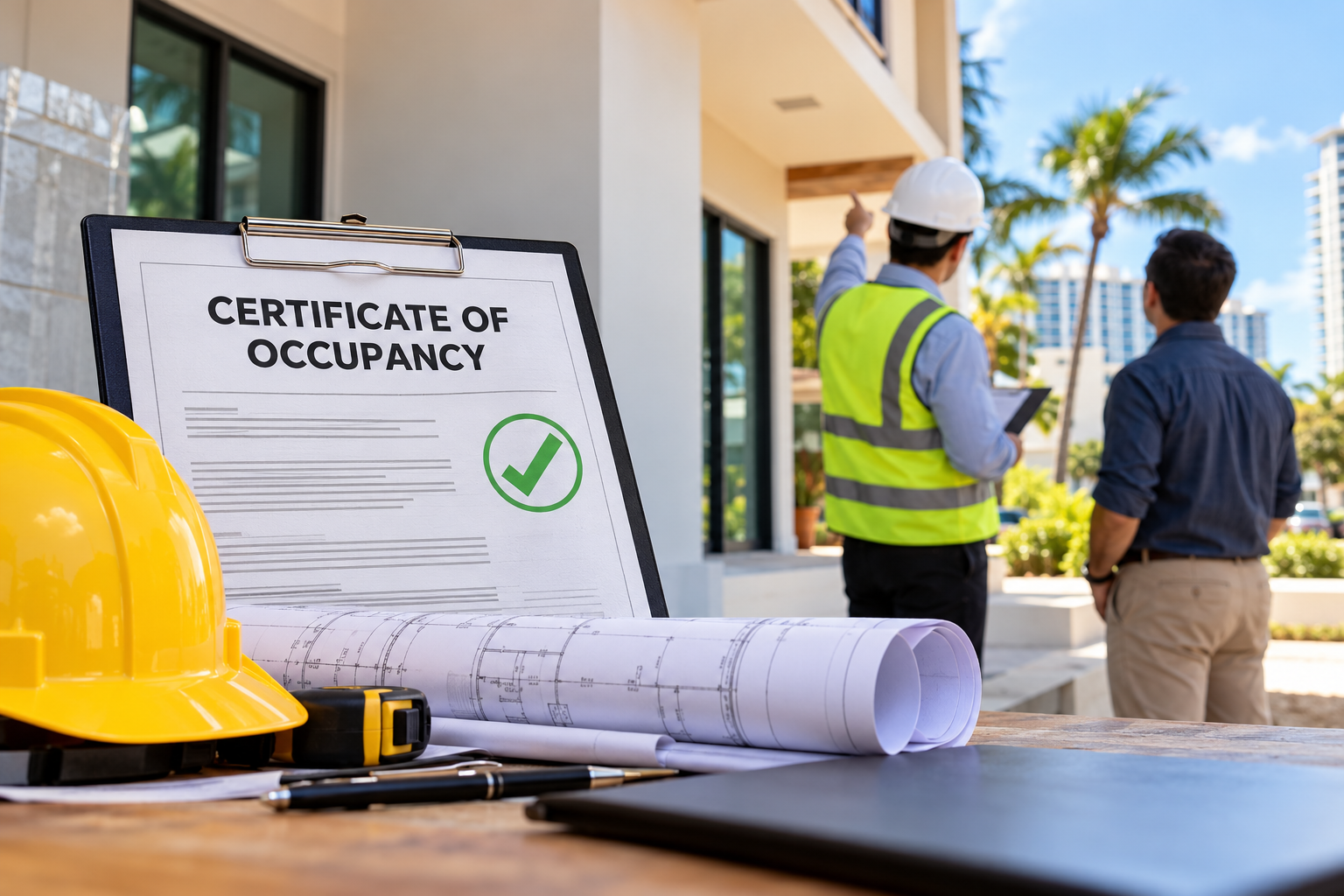
Certificate of Occupancy Assistance Guide
A Certificate of Occupancy (CO) confirms that a building is approved for a specific occupancy under the applicable requirements of the local building authority. When final inspections, permits, or required documentation remain outstanding, property owners may face delays, enforcement notices, and unexpected expenses.
Understanding the process early can help you avoid compliance problems and keep your property ready for its intended use. This guide explains common violations, practical prevention steps, and when Certificate Of Occupancy Assistance may be necessary.
What Can Cause Building Code Violations?
Several issues can prevent a property from meeting local building requirements.
- Unpermitted construction: Renovations, additions, electrical work, or plumbing modifications completed without required permits may need additional documentation, inspections, or corrective work. Florida Statutes Section 553.79 outlines permit and inspection requirements.
- Zoning violations: Unauthorized property uses, setbacks, additions, or occupancy arrangements may conflict with local zoning ordinances. Review our guide to understanding zoning violations.
- Neglected property maintenance: Deteriorating exterior surfaces, accumulated debris, damaged walkways, and overgrown landscaping can trigger enforcement action when local maintenance rules are violated.
- Unsafe conditions: Structural deterioration, exposed electrical components, or other hazards can lead to Unsafe Structure Violations and corrective orders.
- Missed inspections: Incomplete inspections or unresolved permit records can delay final approval and occupancy authorization.
How to Prevent Fines and Occupancy Delays
A proactive approach makes property compliance easier to manage.
1. Obtain the Required Permits
Before starting construction or renovations, contact your local building department to confirm which permits apply. Keep approved plans, permit records, contractor documentation, and inspection reports organized.
2. Schedule Inspections on Time
Follow the inspection schedule established by the local authority. Under the Florida Building Code, Building, Section 110, permitted construction is subject to applicable inspection requirements.
Address failed inspections promptly and obtain the required approvals before assuming the work is complete.
3. Maintain Property Safety and Appearance
Inspect roofs, exterior walls, drainage systems, walkways, and common areas regularly. Address deterioration before it becomes a larger safety concern or violates local property maintenance requirements.
4. Verify Structural and Building System Safety
Arrange qualified professional assessments when structural, electrical, plumbing, or mechanical concerns arise. Depending on the project and jurisdiction, corrective work may require permits and additional inspections.
5. Stay Current With Local Regulations
Florida has a statewide building code, but local zoning ordinances, administrative procedures, and specific inspection requirements also apply. Consult the Florida Building Commission’s code resources and your local building department.
Building Recertification: A Requirement You Should Not Ignore
Certain buildings must undergo mandatory safety inspections and recertification under applicable local regulations. Requirements depend on the property’s location, age, classification, and governing ordinance.
For example, Miami-Dade County’s official recertification guidance states that failure to meet applicable requirements can result in a $510 initial penalty, with additional accumulated penalties potentially reaching $10,000 per violation. Unresolved cases may also result in lien collection.
These figures apply to the relevant Miami-Dade recertification enforcement process, not automatically to every Florida property.
Explore Violation Clinic’s Building Recertification Services for assistance coordinating inspections, documentation, and compliance steps.
Practical Examples: Resolving Common Compliance Problems
The following are illustrative examples, not documented Violation Clinic client outcomes.
Example 1: An unfinished renovation
A property owner discovers that a previous renovation has no final inspection approval. The owner reviews the permit history, consults the building department, obtains any required permits, corrects identified deficiencies, and arranges the necessary inspections.
Example 2: An overdue recertification
A building owner receives a recertification notice but has not arranged the required engineering assessment. The owner contacts a qualified professional, confirms the deadline, coordinates the inspection, and submits the required reports and repair documentation.
Both situations demonstrate why early action can prevent avoidable delays and escalating penalties.
When Professional Assistance Can Help
Some compliance matters involve several permits, technical reports, inspections, and enforcement deadlines. Violation Clinic helps property owners navigate these processes and understand their next steps.
Depending on the circumstances, assistance may include Certificate Of Occupancy Assistance, Stop Work Order Removal, Special Magistrate Representation, and support with Unsafe Structure Violations or Building Recertification.
The appropriate process depends on the property’s condition and the requirements of the responsible authority. Final approval remains subject to the applicable agency’s requirements.
Summary and Conclusion
Obtaining occupancy approval is easier when permits, inspections, maintenance, and safety requirements are managed from the beginning. Property owners should verify local regulations, maintain accurate records, address deficiencies promptly, and meet applicable recertification deadlines.
If you have unresolved permits, an occupancy approval delay, or a building violation, Violation Clinic can help you understand the compliance process and identify practical next steps.
Visit ViolationClinic.com to learn more about building code compliance assistance.
Related Posts and Resources
- How to Resolve Active Unpermitted Construction Violations
- How to Check for Outstanding Violations on Your Property
- How Property Owners Can Prevent Code Fines
- Steps to Legalize Unpermitted Construction Work
- Building Recertification Services
At ViolationClinic.com, we specialize in helping property owners navigate the recertification process smoothly. Whether you need assistance with inspections, violations, or compliance issues, our team is here to help. Don’t wait until it’s too late, take action today to protect your investment and ensure the safety of your building.
For more information or assistance, contact us at ViolationClinic.com!