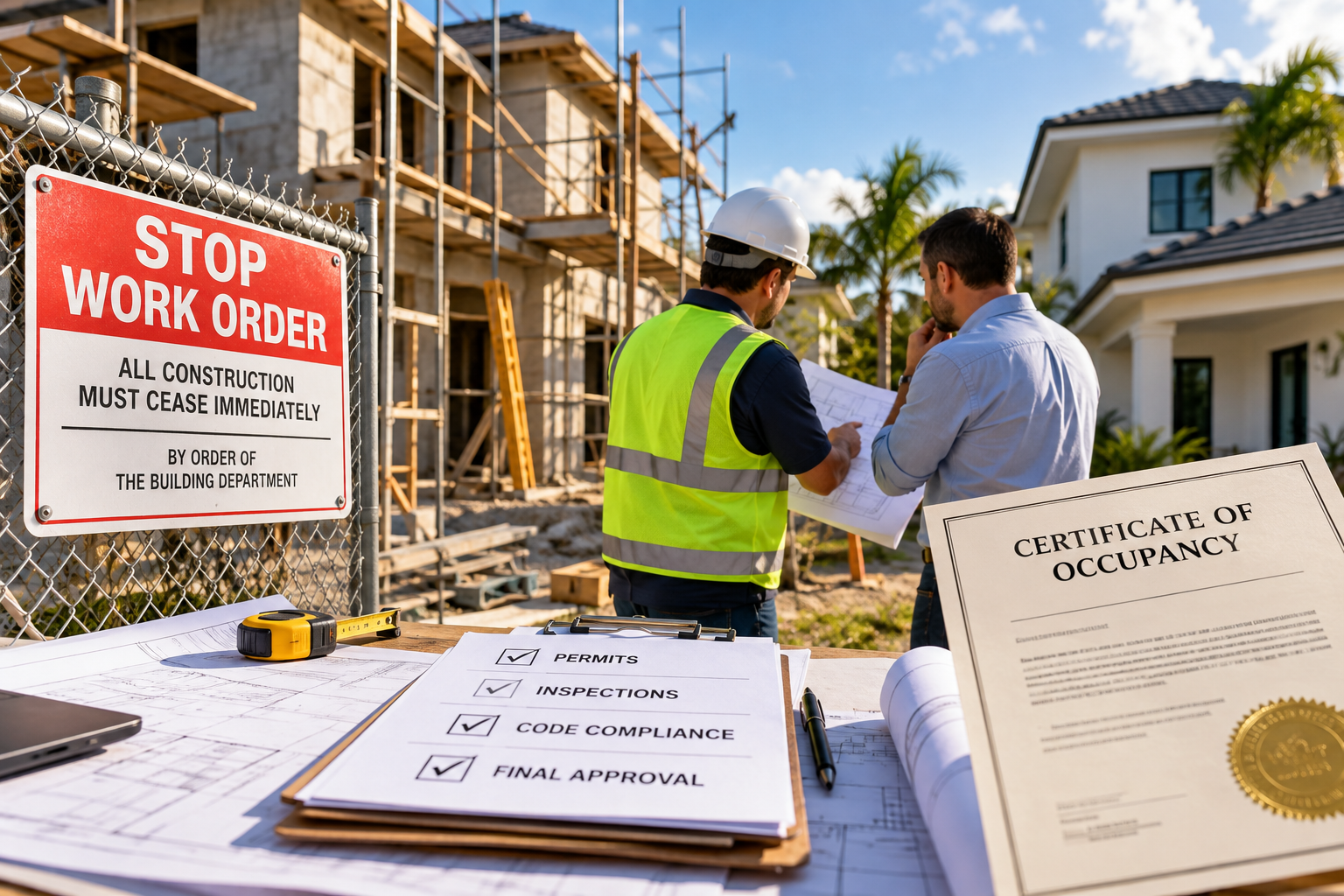
Construction projects can run into trouble long before the final inspection. An overlooked permit, an unexpected zoning issue, or a missed inspection can lead to fines, construction delays, and complications when selling or refinancing a property. In Florida, understanding local building regulations and addressing problems early can make a significant difference.
Whether you need Stop Work Order Removal, Certificate Of Occupancy Assistance, or help resolving Unsafe Structure Violations, the first step is understanding what caused the problem and what your local building department requires to resolve it.
Common Reasons Properties Receive Code Violations
Several issues can put property owners at risk of enforcement action.
- Unpermitted construction: Additions, structural changes, electrical upgrades, or plumbing work may require permits. Work completed without required approvals can result in a stop work order and corrective requirements.
- Zoning violations: Building too close to a property line, exceeding permitted height limits, or using a property in a way that conflicts with local zoning rules can prevent approval.
- Neglected property maintenance: Deteriorating roofs, damaged exterior features, overgrown vegetation, and accumulated debris may violate local property maintenance ordinances.
- Unsafe conditions: Structural deterioration, exposed electrical wiring, and fire hazards can trigger enforcement action when they threaten occupants or the public.
- Missed inspections: Completing work without scheduling required inspections or obtaining final approval can leave permits unresolved and delay a Certificate of Occupancy.
Florida’s building regulations include provisions for stop work orders when covered construction violates applicable requirements or presents dangerous conditions. Owners should consult the Florida Building Code and their local building department to determine which rules apply to their projects.
For additional guidance, read Violation Clinic’s Guide to Handling Building Violation Notices.
From Stop Work Order Removal to Final Approval
Receiving a stop work order does not necessarily mean a project cannot move forward. However, work must not resume until the responsible authority’s requirements for doing so have been satisfied.
A practical resolution process includes:
- Review the order. Identify the cited violation, applicable code section, compliance deadline, and conditions for resuming work.
- Assess the property. Determine whether the issue requires revised plans, engineering evaluations, repairs, or additional documentation.
- Obtain the necessary permits. If work was performed without approval, ask the building department about the process for legalizing the existing work or correcting it.
- Complete corrective work. Use appropriately qualified professionals for structural, electrical, plumbing, and other regulated work.
- Schedule required inspections. Make the property accessible and ensure the work is ready for review.
- Confirm written clearance. Obtain the required approvals before resuming construction or treating the violation as resolved.
Certificate Of Occupancy Assistance may also be necessary when a project is complete but outstanding inspections, permits, or agency approvals prevent the issuance of a certificate. Under Florida Statutes, Section 553.791, applicable procedures govern certain requests for certificates of occupancy or completion and the handling of identified deficiencies. The exact process depends on the project and jurisdiction.
Special Magistrate Representation and Unsafe Structure Violations
Some violations require more than construction work. When an owner receives a formal hearing notice, misses a compliance deadline, or faces escalating penalties, understanding the local enforcement process becomes especially important.
Special Magistrate Representation can involve organizing permits, inspection records, photographs, engineering reports, correspondence, and evidence of corrective action for a hearing. Owners should verify the hearing procedure and representation requirements with the relevant jurisdiction and obtain legal advice when appropriate.
Unsafe Structure Violations require particular attention because structural instability, fire hazards, or other dangerous conditions may create immediate risks. Depending on the findings, authorities may require repairs, restrict occupancy, or take other enforcement action. Safety concerns should be assessed by qualified professionals rather than dismissed as paperwork issues.
Review Violation Clinic’s step by step guide to clearing a building violation for additional guidance.
Building Recertification: Deadlines and Potential Fines
Building Recertification is an important compliance obligation for properties covered by applicable local recertification requirements. Certain buildings must undergo inspections and submit reports to demonstrate that required building components meet applicable safety standards.
Miami-Dade County provides a clear example of the financial consequences of missing a required recertification deadline. Its official Building Recertification guidance states that failure to comply may result in an initial $510 penalty and additional accumulated penalties of up to $10,000 per violation. Continued noncompliance may also lead to lien collection proceedings.
These amounts are specific to the applicable Miami-Dade enforcement process, not a universal statewide fine schedule. Requirements and penalties must be confirmed with the local authority.
Property owners can learn more through Violation Clinic’s Building Recertification Services.
Practical Ways to Prevent Construction Violations
Prevention is usually less disruptive than correcting a violation after enforcement begins.
- Obtain permits before starting work. Confirm requirements with the local building department instead of relying on assumptions.
- Schedule inspections on time. Track every inspection milestone, including final inspections and permit closeout.
- Maintain property appearance and safety. Address damaged exterior features, vegetation, debris, and other maintenance concerns promptly.
- Check structural and building systems. Arrange qualified evaluations when you notice cracks, water intrusion, electrical hazards, or deteriorating components.
- Stay informed about local regulations. Review applicable Florida Building Code provisions, zoning ordinances, and municipal requirements before changing a property’s structure or use.
- Keep organized records. Store permits, approved plans, inspection results, notices, photographs, and correspondence together.
These habits help owners identify potential issues before they develop into costly compliance problems.
Practical Examples: What Compliance Looks Like
The following scenarios are illustrative examples, not documented Violation Clinic client results.
Example 1: Unpermitted renovation. A property owner discovers that a previous renovation lacks the required permit. The owner reviews the notice, consults qualified professionals, submits the necessary documentation, completes any required corrections, and arranges inspections. Final approval depends on the work meeting applicable requirements.
Example 2: Missed final inspection. A contractor finishes a project but fails to schedule the final inspection. The owner contacts the building department, confirms the permit status, arranges any necessary inspection, and addresses outstanding deficiencies before seeking permit closure.
Example 3: Overdue building recertification. A property owner receives a recertification notice and discovers that a deadline has passed. By contacting the appropriate authority, arranging the required professional evaluation, and following the reporting process, the owner can work toward compliance while addressing any outstanding penalties.
Each situation reinforces the same lesson: prompt communication, accurate documentation, and a clear corrective plan can help prevent additional complications.
Conclusion: Make Compliance Part of Every Construction Plan
Moving from Stop Work Order Removal to a Certificate of Occupancy requires more than completing construction. Owners must address the underlying violation, satisfy permit and inspection requirements, and obtain the approvals necessary to close out the matter.
From zoning concerns and Unsafe Structure Violations to Special Magistrate Representation and Building Recertification, early action can help protect property safety, project schedules, and long term investments.
Violation Clinic provides a starting point for understanding building compliance challenges and the steps that may be required to address them. Review the available resources, consult the appropriate local authorities, and seek qualified professional assistance when a property issue becomes complicated.
Related Posts and Resources
- Guide to Handling Building Violation Notices
- How to Stay Code Compliant During Projects
- How to Work with Inspectors for Faster Compliance
- How to Resolve Active Unpermitted Construction Violations
- Florida Building Code
- Miami-Dade County Building Recertification
At ViolationClinic.com, we specialize in helping property owners navigate the recertification process smoothly. Whether you need assistance with inspections, violations, or compliance issues, our team is here to help. Don’t wait until it’s too late, take action today to protect your investment and ensure the safety of your building.
For more information or assistance, contact us at ViolationClinic.com!