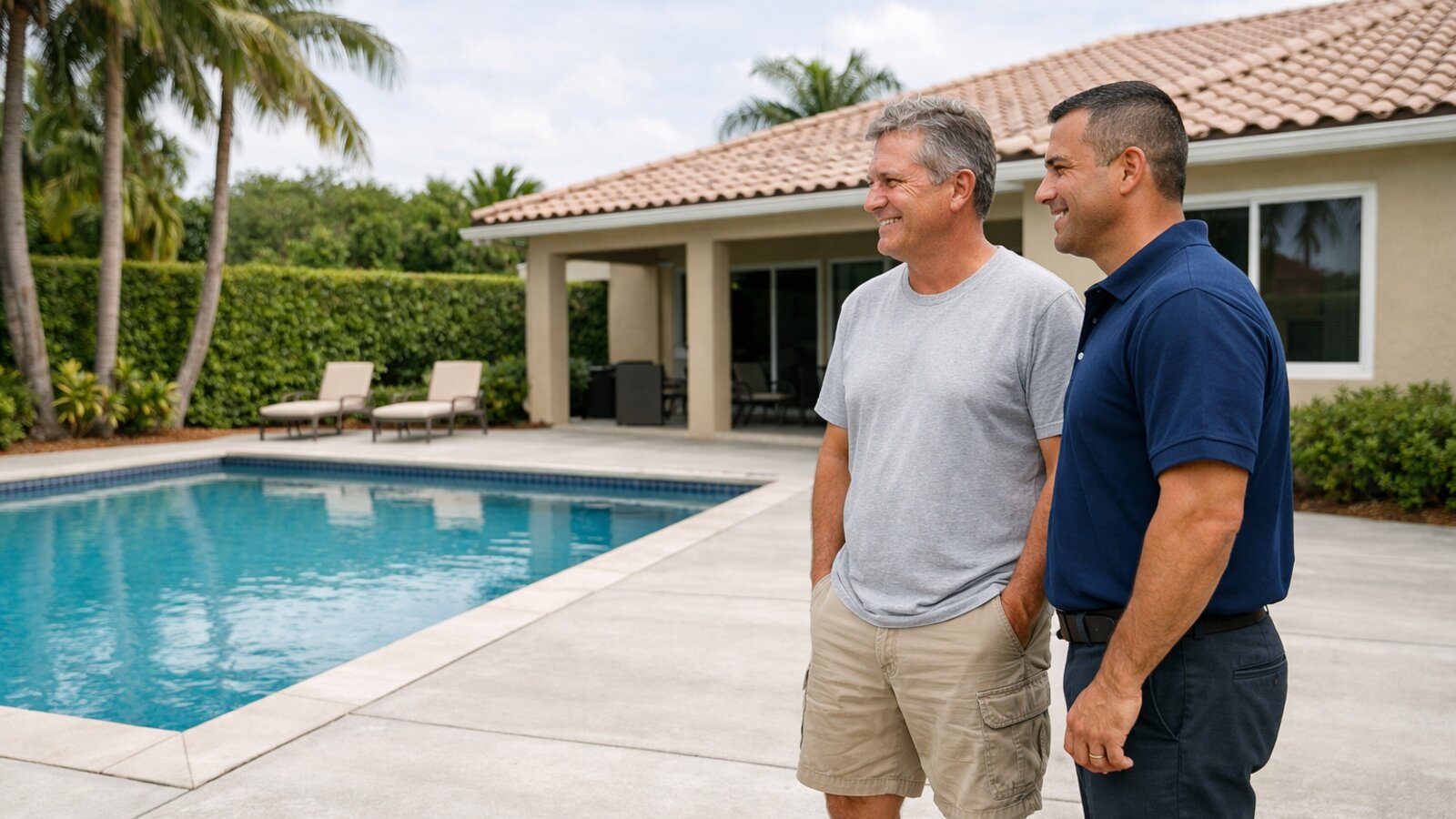
A backyard pool is one of the most valuable features a South Florida home can have, until someone asks for the permit. Many owners discover the problem only when a buyer’s inspector, an insurer or a lender compares the pool in the yard with the permit history on file and finds nothing, or finds a permit that was opened years ago and never passed final inspection. An unpermitted pool in Florida is more than a paperwork gap, because the shell, the electrical bonding, the equipment and the safety barrier all affect the people who use it. This guide explains how owners in Miami-Dade, Broward and Palm Beach commonly approach the problem. Violation Clinic is a private consulting company, not a government agency, and this article is general information, not legal or engineering advice.
What counts as an unpermitted pool
In practice, owners run into one of three situations:
- No permit at all. The pool, spa or deck was built by a previous owner or an unlicensed builder and never appeared in the building department’s records.
- A permit that never closed. A permit was issued, but the final inspection never happened or failed, and the permit later expired. On paper the pool is unfinished work.
- Permitted pool, unpermitted changes. The original pool was approved, but later work, such as a deck extension, a new heater or heat pump, a gas line, new lighting, a screen enclosure or a spa added later, was done without permits.
Each scenario leads to a different conversation with the building department, so the first job is to work out which one you have. If the open item is an expired pool permit rather than missing work, our page on expired permit resolution explains how those files are usually reopened and closed.
Why pool work usually needs permits
Section 553.79 of the Florida Statutes generally requires a permit from the local enforcing agency before anyone constructs, erects, alters, modifies, repairs or demolishes a building in Florida. An in-ground pool typically touches several trades: the structural shell and deck, electrical work for pumps, lights and bonding, plumbing for circulation, and sometimes gas or mechanical work for heaters. Local building departments decide which permits and inspections a given pool needs, and the requirements vary between municipalities.
Safety is the bigger reason. Under the Residential Swimming Pool Safety Act (section 515.27), a new residential pool must have at least one approved safety feature, such as a compliant barrier, an approved safety cover, door and window exit alarms, self-closing and self-latching doors, or a qualifying pool alarm, in order to pass final inspection. Section 515.29 describes barrier characteristics, including a height of at least four feet on the outside and gates that open outward and are self-closing and self-latching. Electrical bonding and grounding, which inspectors normally check during construction, help protect swimmers from shock. A pool that never went through those inspections may be fine, or it may have hidden defects that nobody has checked.
How an unpermitted pool usually comes to light
- A sale. The buyer’s inspector, appraiser or title review compares the improvements with the permit history. Pools are easy to spot on aerial images and appraisal photos.
- A refinance or insurance review. Lenders and insurers may ask for permit records for the pool, the screen enclosure or recent equipment changes.
- A new permit for other work. When you apply for a roof, addition or remodel permit, the reviewer may notice improvements that are not in the file.
- A complaint or a code inspection. A neighbor’s concern about drainage, noise from equipment or an unsecured yard can lead to a notice of violation.
Whichever way it surfaces, the useful response is the same: find out exactly what the municipality has on record, then plan a path to approved, closed permits before a closing date or compliance deadline forces rushed decisions.
Legalizing an unpermitted pool in Florida: the usual path
Each jurisdiction sets its own procedures, so confirm the details locally. In general, owners move through these stages:
1. Pull the permit and violation history
Request the property’s permit records, including any expired or cancelled permits, and check for open code enforcement cases. Older pools sometimes turn out to have been permitted under a previous address format or owner name, which changes the strategy entirely.
2. Have the pool evaluated by licensed professionals
A licensed pool contractor, and where the jurisdiction requires it a Florida-licensed engineer, documents the existing conditions: shell, steel and deck, equipment pad, plumbing, electrical bonding and grounding, and the safety feature. Some departments accept an engineer’s evaluation of conditions that can no longer be seen; others may ask for testing or limited exposure of buried work.
3. Prepare and submit an after-the-fact permit
The contractor of record usually submits as-built drawings, a site plan or survey showing setbacks and the barrier, equipment details and any engineering letters. Our guide to the after-the-fact permit process in Florida covers how these applications generally work. Expect plan review comments and possibly zoning questions about setbacks, lot coverage or the screen enclosure.
4. Correct deficiencies and pass inspections
Common corrections include adding or upgrading a barrier or alarm, fixing bonding, replacing equipment that lacks approvals, or adjusting a deck or enclosure that does not meet setbacks. Once corrections are complete, inspectors verify the work and the permits can be finaled.
5. Close every related permit and violation
Make sure the pool, electrical, plumbing, gas and enclosure permits all show as finaled, and that any notice of violation is formally closed. A pool that is legal but still has an open violation can continue to cause problems at closing.
Checklist: what to gather before you start
- The property address, folio or parcel number, and any notice of violation you have received.
- Any permit numbers, inspection records or contracts from the original pool builder.
- A recent survey showing the pool, deck, equipment pad and fences.
- Photos of the pool, deck, equipment, electrical panel, gates and doors that open toward the pool.
- Records of later work: heaters, pumps, lighting, enclosures or resurfacing.
- Your timeline: a listing date, closing date, refinance deadline or compliance date.
- Names of the licensed contractor and engineer who will take responsibility for the work.
Having this in hand before the first meeting with a contractor or the building department shortens the process and reduces surprises.
What makes these cases harder
Some pools are more difficult to legalize than others. Pools built close to property lines or easements may raise zoning issues that a building permit alone cannot solve. Pools in flood zones or on waterfront lots may involve additional review. When the original builder is unknown, evidence about steel and the shell can be limited, and a department may ask for more engineering support. Screen enclosures add wind-load questions in hurricane-prone areas. None of these issues makes legalization impossible, but they explain why timelines vary and why it helps to understand the obstacles before you commit to a closing date. If you are already in a sale, our article on unpermitted work before closing in Florida explains how owners and agents typically handle these issues during a transaction, and the broader guide on how to legalize unpermitted work in Florida covers the general process for other improvements.
Should you keep using the pool in the meantime?
That is a safety question. If there is any doubt about the barrier, gate latches, door alarms or electrical bonding, ask a licensed contractor to check them before anyone swims, and keep children away from the water until the safety feature is confirmed. If a notice of violation has been issued, read it carefully for any instruction about use and follow it.
Frequently asked questions
Can I sell a house with an unpermitted pool in Florida?
Often you can, but the pool may affect inspections, financing, insurance and negotiations. Buyers and lenders may ask for repairs, credits or proof of permits. Addressing it before listing usually gives the seller more control over the timeline.
Will the building department make me remove the pool?
Many jurisdictions look first at whether the pool can be documented and corrected to meet code, but the outcome depends on the jurisdiction, the condition of the pool and issues such as setbacks or easements. A professional evaluation is the best way to understand the realistic options.
Is a pool permit that was never finaled the same as no permit?
Not quite. An open or expired permit gives you a file to work from, which can make resolution simpler. Depending on the jurisdiction, the permit may be reactivated, renewed or replaced with a new application before final inspections.
Does the pool barrier law apply to older pools?
The Residential Swimming Pool Safety Act applies to new residential pools, but when an unpermitted pool is legalized, the building department will generally expect it to meet the safety requirements that apply at final inspection. Ask your contractor which safety feature is right for your layout.
Get private help with an unpermitted pool
If you have a notice, a pending sale or simply a pool with no permit on record, Violation Clinic can help you understand your options and coordinate the path to closed permits. Contact Violation Clinic privately and share the notice, the property address and any permit records or pool paperwork you have, and we will review your situation confidentially.