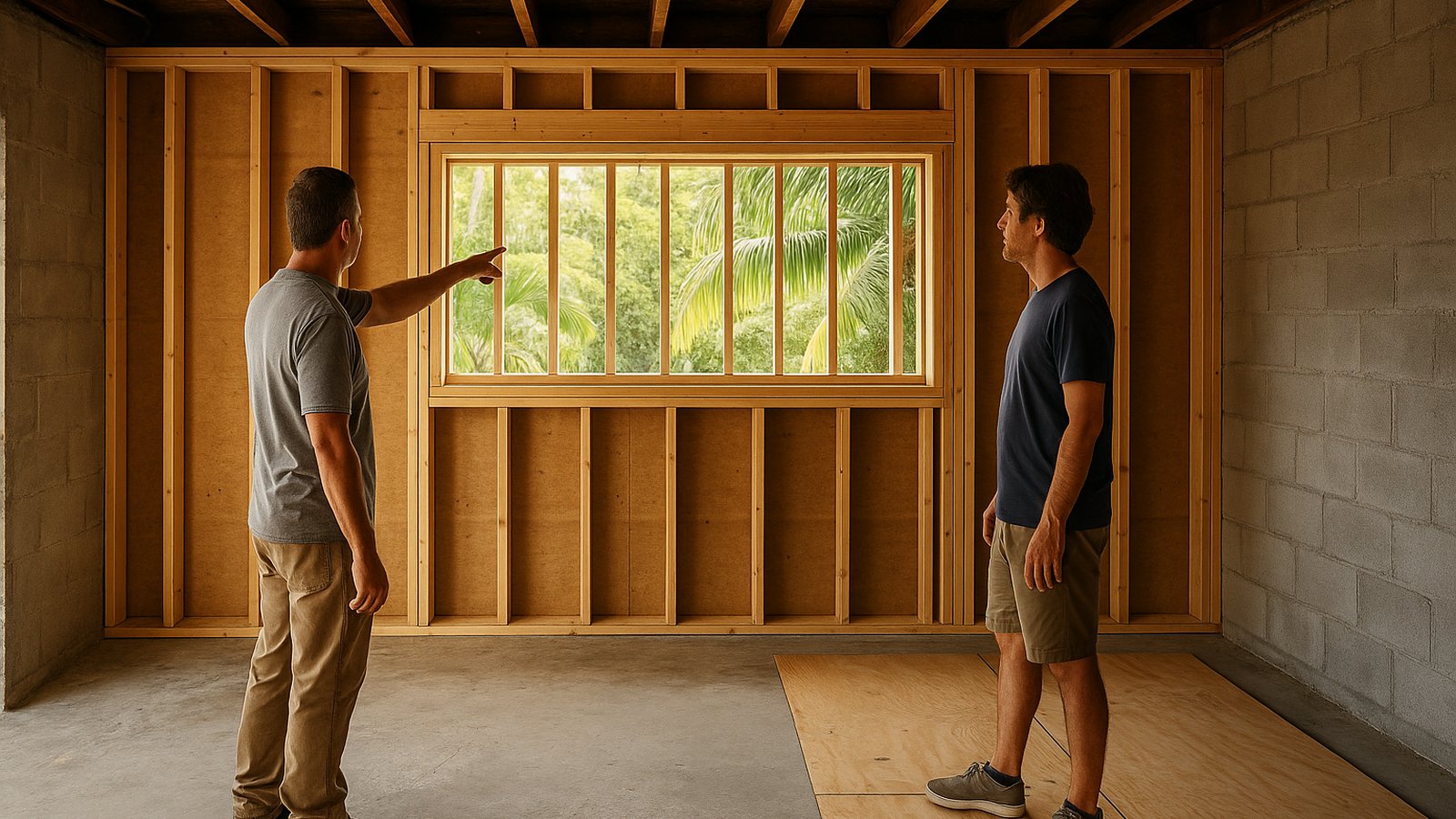
Turning a garage into a bedroom, an efficiency or a family room is one of the most common home changes in South Florida, and one of the most common to be done without permits. Many owners only learn about an unpermitted garage conversion years later, when a code notice arrives, a buyer’s inspector asks questions, or an appraiser will not count the extra room. This guide explains how the problem usually surfaces in Miami-Dade and Broward, why building departments treat it seriously, and the two realistic paths forward: legalize the space or restore the garage. Violation Clinic is a private consulting firm, not a government agency, and the exact requirements always depend on the city or county that has jurisdiction over the property.
How a converted garage usually comes to light
Garage conversions are easy to spot from the street and easy to spot on paper. The property records still describe a garage, but the front of the house now shows a wall, a window or a door where the overhead door used to be. That mismatch tends to surface in a few predictable ways:
- A code enforcement or building notice. A field inspector, a complaint or an unrelated permit application can lead to a work-without-permit violation.
- A buyer’s due diligence. Home inspectors and buyer’s agents often compare the living area on the listing with the permit history and the property appraiser’s records.
- An appraisal. Appraisers may decline to count unpermitted space as living area, which can change the value a lender will accept.
- Insurance. An insurer’s inspection or a claim on that part of the house can raise questions about work that was never permitted or inspected.
- A new permit for something else. Applying for a roof, windows or an air-conditioning change-out can prompt a reviewer to notice the conversion.
Florida law is direct on the underlying point. Under Section 553.79, Florida Statutes, a building may not be constructed, altered or modified without first obtaining a permit, unless another law provides otherwise. Enclosing a garage and turning it into living space is an alteration, so the question is rarely whether a permit was needed. It is what the property needs now to be brought into compliance.
Why an unpermitted garage conversion is a compliance problem
A garage is built to different expectations than a bedroom. When the space changes use, a long list of building, fire and zoning rules starts to apply, and none of them were reviewed if the work was never permitted. Common issues include:
Life-safety items
- Emergency escape. A room used for sleeping generally needs an emergency escape and rescue opening of adequate size and sill height.
- Smoke alarms. New sleeping rooms usually trigger smoke alarm requirements, which may also affect the rest of the house.
- Electrical. Added outlets, lighting, a window unit or a mini-split are often wired without inspection. Circuits, protection devices and the panel’s capacity all need review.
- Ceiling height, light and ventilation. Habitable rooms have minimum height, natural light and ventilation expectations that a garage may not meet as built.
- Floor and moisture. Garage slabs are often lower than the house floor and may lack the treatment expected under living space.
The old garage-door opening
The wall that fills the former overhead-door opening is often the most important structural item. Miami-Dade and Broward sit in the High Velocity Hurricane Zone, which Miami-Dade’s construction materials brochure describes as carrying the most stringent requirements of the Florida Building Code. Exterior building-envelope products such as windows and doors generally need product approval (or an equivalent approval accepted by the local building department) for use there. An infill wall framed with whatever was on hand, or a window installed without an approved product, may need to be engineered, documented, opened for inspection or replaced.
Use, zoning and parking
Use is a separate question from construction. A family room attached to the main house is treated differently from an efficiency with its own entrance, kitchen and tenant. Many single-family zoning districts limit separate dwelling units, and removing a garage may affect required off-street parking. Whether a second unit can be approved at all, and on what conditions, depends on the local zoning code. In some cases the building work can be legalized but the separate-unit use cannot.
Your options: legalize the space or restore the garage
Most owners end up choosing one of two paths. Which one fits depends on what is behind the walls, what the zoning allows and what the owner wants to do with the property.
Option 1: Legalize with an after-the-fact permit
Legalizing usually means applying for a permit for work that already exists. Most jurisdictions expect drawings of the existing conditions, often prepared by a licensed architect or engineer, showing the infill wall, openings, electrical work and any plumbing or mechanical changes. Inspectors may need to see framing, connections or wiring, so some drywall or finishes may have to be opened. Any item that does not meet code is corrected and re-inspected before the permit can be closed. Our guide on how to legalize unpermitted work in Florida walks through that sequence in more detail, and the article on the after-the-fact permit process in Florida explains how it differs from an expired permit.
Who signs the application matters. For a one- or two-family home, Florida’s owner-builder exemption in Section 489.103, Florida Statutes applies only when the owner acts as their own contractor, directly supervises the work on site, and the home is for the owner’s own use and occupancy, not offered for sale or lease. Selling, leasing or offering the property for sale or lease within one year after the work is completed creates a presumption that the work was done for sale or lease. A landlord legalizing an efficiency that is rented out, or a seller preparing to list, should confirm with the building department whether a licensed contractor must pull the permit.
Option 2: Restore the garage
When the space cannot meet code, the zoning does not allow its current use, or legalization would require more rework than the room is worth to the owner, restoring the garage is often the cleaner route. Restoration still normally requires a permit, sometimes described as a demolition or alteration permit, to remove the unpermitted work and return the opening and systems to an approved condition. The work then has to pass its own inspections so the record shows the violation was resolved.
Step-by-step checklist for an owner
- Read the notice carefully. Note the case number, the cited sections, the compliance deadline and any hearing date. Deadlines vary by jurisdiction.
- Confirm who has jurisdiction. A property in an incorporated city is usually handled by that city’s building and zoning departments, not the county.
- Pull the permit and property history. Look for any permit, even an old or expired one, that touched the garage, and compare the recorded square footage with what is on site.
- Document the existing conditions. Photographs and measurements of the room, the infill wall, windows, electrical and any kitchen or bathroom fixtures help the design professional and the reviewer.
- Check zoning before spending on plans. Confirm whether the intended use, especially a separate unit, is allowed and whether parking is affected.
- Decide: legalize or restore. Base the decision on the code findings, the zoning answer and your plans for the property.
- Prepare and submit the permit package. Use drawings and product approvals that fit the chosen path.
- Complete corrections and inspections. Expect some openings for inspection and possible rework.
- Close everything out. Make sure the permit is finaled and the violation case is formally closed, and keep copies of both.
If the case has already moved into a hearing or fines have started to accrue, see how special magistrate representation works before the hearing date.
Selling or buying a home with a converted garage
An unpermitted garage conversion tends to come up late in a transaction, often after the buyer’s inspection or the appraisal. Sellers who know about the conversion are usually better off checking the permit history before listing, so they can decide whether to legalize, restore or disclose and negotiate. Buyers who discover it during due diligence should ask for permit records, have the space evaluated and understand that the responsibility to fix it generally follows the property, not the person who did the work.
Closings are frequently built around these issues with repair agreements, credits or escrow holdbacks, but each option depends on the lender, the title company and the contract. Our guide to unpermitted work before closing in Florida covers the transaction side, and if you already bought the house, read what to do when a previous owner did unpermitted work. Legal questions about disclosure or claims against a seller belong with a real estate attorney.
Frequently asked questions
Can an unpermitted garage conversion be legalized?
Often, yes, if the construction can be shown to meet the applicable code and the zoning allows the use. Expect drawings of the existing work, possible openings for inspection and corrections. If the use is not allowed, restoring the garage may be the only path.
Do I need an architect or engineer?
Many jurisdictions require drawings by a licensed design professional for this kind of work, particularly for the infill wall in the High Velocity Hurricane Zone. Ask the reviewing department what it requires for your specific scope.
Can I rent the converted garage as an efficiency?
Only if the local zoning and building codes allow a separate unit on that property and the unit is permitted for that use. Rules differ between Miami-Dade, Broward and their individual cities.
Will the violation stop my sale?
It may delay or complicate a sale, depending on the lender, the title search and the buyer. An open violation case or an unresolved permit is easier to deal with before listing than after a contract is signed.
Get private help with a converted garage
An unpermitted garage conversion is usually solvable, but the right path depends on the property, the jurisdiction and what you want to do next. Violation Clinic is a private compliance consulting firm that helps owners, buyers, sellers and landlords in Miami-Dade and Broward review the records, choose between legalizing and restoring, and coordinate the work through to a closed case. Contact Violation Clinic privately with the notice you received, the property address and any permit records you have, and we will tell you what the file shows and what options appear to be available.